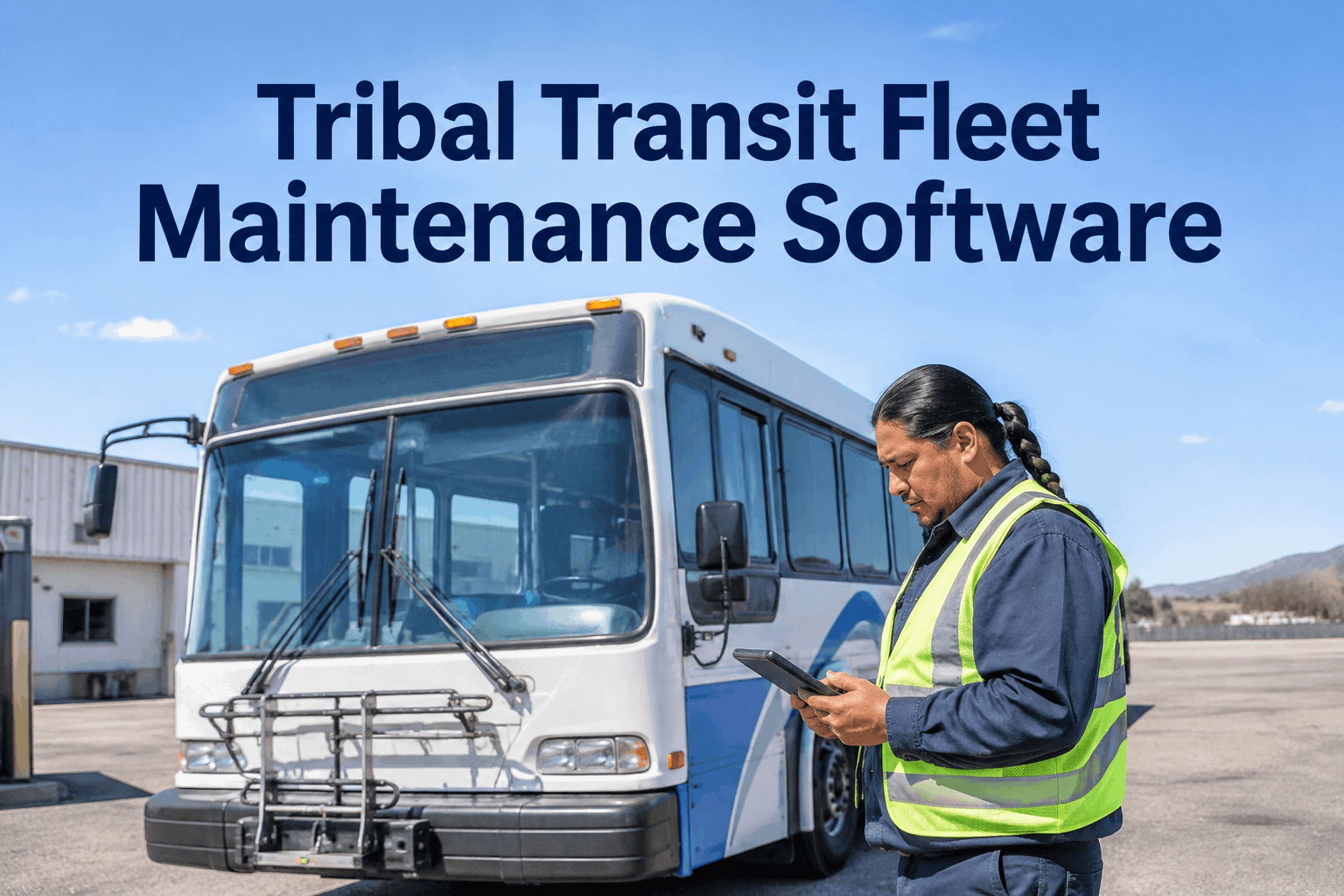
On a tribal transit system, the bus is not a convenience — it is how an elder gets to a clinic, a student gets to school, and a worker gets to a job, often across long rural miles with no other option. When you run three or four buses and one goes down, a quarter of that lifeline stops. Tribal transit fleet maintenance software keeps the small fleet running and the grant reports clean, and you can see how in a quick demo.
Tribal Transit Fleet Maintenance Software
A tribal transit fleet is small, hard-run, and the only ride in a rural service area. Tribal transit fleet maintenance software keeps each bus reliable, plans service around remote parts and weather, and keeps the records your FTA funding depends on.
Why Tribal Transit Maintenance Is Its Own Challenge
A tribal transit fleet runs under conditions a city system never faces. Four of them shape every maintenance decision.
A small fleet has no slack
With three or four buses and no spare, one breakdown is a quarter of your service gone. There is no reserve coach to roll out — the route simply does not run.
Aging buses, hard miles
Tribal fleets often run older vehicles on long rural routes and rough roads. High miles and harsh conditions mean more breakdowns unless preventive maintenance stays ahead.
Parts are a long way off
In a remote service area, a part that is not on the shelf can keep a bus parked for days. Stocking the right parts ahead is the difference between an hour down and a week.
The grant reports are due
FTA Tribal Transit funding comes with reporting, including the National Transit Database. The service and mileage records that back those reports have to be clean and ready.
On a small rural fleet, keeping a bus running is not about efficiency — it is about whether the community gets its ride at all.
Why One Bus Down Hits a Tribal Fleet So Hard
The same breakdown that a big agency barely notices takes out a quarter of a tribal fleet. The math is why preventive maintenance matters more here, not less.
That is why a tribal transit operation leans on scheduled service and early warning, not luck — walk through preventive scheduling for a small fleet in a demo.
What Tribal Transit Maintenance Software Tracks
These are the things that keep a small rural fleet running and the grant reporting ready. A real tribal fleet maintenance software keeps them in one place.
Swipe sideways to see all columns
Your Tribal Transit Readiness Checklist
Run this against your fleet before the next service week. The red items are what cut a route; the green items are what keep the community moving.
- PM scheduled for every busService by mileage or date, flagged early, so an aging bus never fails mid-route.CRITICAL
- Digital pre-trip on every runDrivers catch defects in the yard before a bus heads out on a long rural route.CRITICAL
- Failed items become work ordersA flagged defect routes straight to the mechanic — nothing lost between shifts.PLAN
- Long-lead parts stocked aheadReorder alerts keep remote-area wear parts on the shelf, not days out on order.PLAN
- Live view of what is road-readyYou know before the service day whether every scheduled trip can be covered.PLAN
- Records ready for FTA and NTDDated service and mileage history per bus, exportable when reporting is due.PLAN
If the two critical lines are still on paper, that is where a cut route comes from — sign up free and put the whole fleet on one board.
How BusCMMS Keeps a Tribal Transit Fleet Reliable
BusCMMS is built for bus fleets and fits a small, grant-funded operation with one shop and a long service area. Three capabilities carry the load.
PM that stays ahead
Service scheduled by mileage or date and flagged before it slips, so an aging bus is in the shop on your terms, not stranded on a route.
Pre-trip to work order
Digital inspections any driver can run; a failed item becomes a work order your mechanic sees at once, catching defects in the yard.
Reports that feed the grant
Dated service and mileage history per bus, exportable on demand — so NTD and FTA reporting is a pull from the system, not a scramble.
It fits the teams that run tribal and rural transit — your public transportation operation, on the passenger transit fleet page. To set it up for your fleet, book a demo and bring your bus list.
What Staying Ahead of Maintenance Is Worth
On a small rural fleet, every prevented breakdown is a route that still runs. Three ways one system moves that.
Routes that keep running
Catching PM before it slips keeps a bus available, so an elder's ride and a student's trip do not disappear for the day.
Fewer long remote downtimes
Parts stocked ahead and defects caught early turn a week-long wait into an afternoon fix.
Grant reporting made simple
Clean, dated records mean the NTD and FTA numbers come out of the system instead of out of a shoebox.
For a fleet this size, maintenance is service reliability by another name.
From a Tribal Transit Director
Key Takeaways on Tribal Transit Maintenance
Tribal transit fleet maintenance software earns its keep by keeping a small fleet reliable and the reporting ready. Four things to keep in mind.
Small fleets have no slack
One bus down is a quarter of the service — prevention matters more here, not less.
Catch it in the yard
A pre-trip defect is a quick fix; the same defect on a remote route is a stranded bus.
Stock parts ahead
In a remote service area, parts on the shelf turn a week of waiting into an afternoon.
Records feed the grant
Dated service and mileage history makes NTD and FTA reporting a pull, not a scramble.
Run a tribal transit fleet off a system that keeps every bus ahead of its next service and every record ready for reporting, and the ride the community depends on keeps showing up — which, for a tribal transit program, is the whole point.