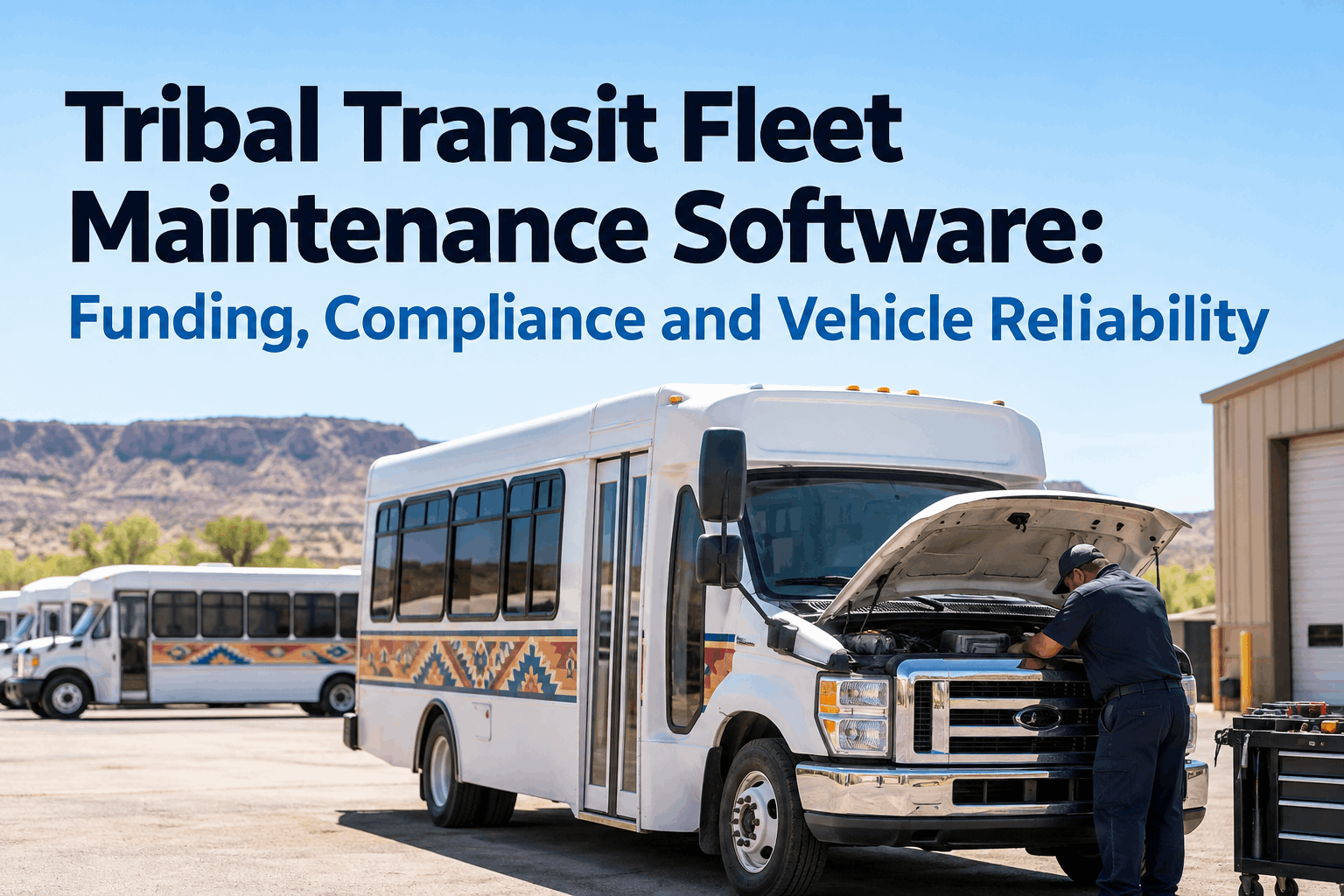
Tribal transit fleet maintenance software helps transportation teams keep essential vehicles available across long routes, limited shop capacity and changing service demands. For a tribal transit agency, a missed preventive maintenance service or unresolved inspection defect can affect more than one bus—it can disrupt access to appointments, jobs and community services. The right maintenance process connects vehicle readiness, repair history and supporting records without adding unnecessary administrative work.
Keep Community Transportation Moving—Even With a Small Fleet
Plan service, capture vehicle defects and organize maintenance evidence in one workflow. See how BusCMMS can help your team spend less time chasing records and more time keeping vehicles ready.
Why Tribal Transit Maintenance Needs a Different Approach
Some tribal transit systems cover dispersed communities and long rural distances with limited backup vehicles. When a vehicle needs repair, the challenge is not only fixing it; the team must also know what service is affected, whether another vehicle is available and when the original vehicle can return.
Long service distances
Mileage accumulates quickly. Mileage-based and calendar-based preventive maintenance schedules help keep service visible.
BusCMMS: PM schedulingLimited spare capacity
A single vehicle out of service can affect planned trips. Review open defects and repair status before assigning vehicles.
BusCMMS: defect and work-order recordsSmall administrative teams
Records may sit in notebooks, email or separate spreadsheets. Central vehicle histories reduce the effort needed to reconstruct repairs.
BusCMMS: maintenance historyInstead of adding another spreadsheet, see how BusCMMS brings routine maintenance records together.
Build a Vehicle Readiness Board That Supports Dispatch Decisions
A useful readiness board separates recorded maintenance information from the final decision to release a vehicle. A completed inspection does not erase an open safety defect, and an overdue service task should prompt review rather than be ignored.
BusCMMS can help maintenance and operations staff review these records together. Start organizing inspection and repair history by vehicle.
Where FTA Tribal Transit Funding Meets Maintenance Documentation
The Federal Transit Administration's Tribal Transit Program is associated with Section 5311(c) and supports eligible public transportation activities for federally recognized Indian tribes and Alaska Native villages. Funding opportunities, eligible costs, application rules and reporting obligations depend on the specific program and award. Maintenance software should support the records your agency needs—not be presented as a substitute for grant administration.
From Maintenance Work to Reviewable Records
For each award, consult the current FTA notice, grant agreement and recipient requirements. Ask for a demo of vehicle maintenance records and reporting workflows.
Schedule Service Around Miles, Time and Vehicle Needs
Tribal transit fleets may include buses, accessible vans and smaller demand-response vehicles with different duty cycles. One maintenance interval does not fit every model. Build schedules around manufacturer instructions, operating conditions, agency policy and applicable requirements.
Track completed work and overdue tasks rather than relying on memory. Explore preventive maintenance scheduling in BusCMMS.
What Should Tribal Transit Fleet Maintenance Software Actually Do?
Look for software that helps a small team complete daily work, not just produce attractive dashboards. Use this evaluation scorecard when comparing tools and asking vendors for demonstrations.
BusCMMS is designed around maintenance workflows such as PM, inspections and work orders. Confirm any required integrations, exports, permissions or offline capabilities during a live product evaluation rather than assuming they are included.
Start With Three Vehicles Before Expanding Fleetwide
Establish vehicle records
Choose a representative bus, accessible van and high-mileage unit. Confirm asset details, recent service and known defects.
Set maintenance rules
Configure appropriate PM schedules and a consistent process for logging inspection findings and corrective work.
Review real work
Track open repairs, overdue maintenance and the clarity of technician completion notes.
Expand with lessons learned
Adjust templates, train remaining users and bring more vehicles into the same process.
This is an illustrative rollout sequence, not a guaranteed implementation timeline. Discuss a maintenance workflow for your tribal transit fleet.
Five Questions That Turn Maintenance Records Into Action
Which vehicles had the most unplanned downtime?
Which defects appeared more than once?
Which PM tasks are overdue or approaching due dates?
Which repairs are waiting on parts or outside service?
Which maintenance records need review before an oversight request?
Use the answers to prioritize shop work and improve record quality. A dashboard is most useful when someone owns the next action.
Reliable Tribal Transit Starts With Clear Maintenance Records
Tribal transit fleet maintenance software should make everyday work more manageable: know which vehicles need attention, record what technicians did and keep a history that can support future planning and oversight. Start with the maintenance workflow your team already follows, improve its consistency and use BusCMMS to keep the information connected.
Tribal Transit Maintenance Software: Common Questions
Practical answers for tribal transit leaders comparing software, planning maintenance and reviewing funding documentation.
01What does tribal transit fleet maintenance software do?+
It helps teams organize preventive maintenance, inspections, defects, work orders and vehicle service histories. The goal is to make maintenance work easier to schedule, document and review across the fleet.
02Can tribal transit agencies use FTA funding for maintenance software?+
Potential eligibility depends on the specific funding program, award conditions, approved project scope and current FTA guidance. Ask the grant administrator or FTA regional contact to confirm whether a particular software expense is allowable before committing funds.
03How can software help with tribal transit grant compliance?+
Maintenance software can make vehicle inspections, PM completions and repair history easier to retrieve. It does not automatically establish compliance, determine allowable costs or complete grant-specific reporting obligations.
04What should a small rural transit fleet track first?+
Begin with a complete vehicle list, current PM schedules, open safety-related defects, work-order status and recent repair history. Expand reporting once the core records are consistent.
05Does BusCMMS automatically decide whether a vehicle is safe for service?+
No. BusCMMS can help organize inspections, reported defects and repair records. Qualified personnel and the transit agency remain responsible for inspection, repair, applicable regulatory decisions and release-to-service approval.