When the board or a funder asks your agency for its ESG numbers, the carbon figure is only the opening question. They also want to know your fleet's safety record, how reliable service was, how accessible it is, and whether every number traces back to something real. ESG reporting for transit agencies is a three-pillar job, and most of the data lives in your maintenance and fleet operations already. You can see how your maintenance, fuel and inspection data feeds an ESG report in a demo and stop building it from scratch.
ESG Reporting for Transit Agencies, Built on Fleet Data
Environmental, social and governance reporting all stand on the same foundation — your fleet's operational data. Here is how each pillar maps to data you already generate, and how to keep it report-ready.
ESG for a Transit Agency Is More Than Carbon
Environmental metrics get the headlines, but a transit ESG report answers across all three pillars. The industry framework reflects it: APTA Sustainability Commitment signatories quantify and annually report a set of KPIs and track each one over time — covering energy, emissions, vehicle miles, and the service that moves the community. Here is where each pillar's data comes from in a fleet.
Swipe sideways to see all columns.
Seen this way, most of your ESG report is not new data to collect — it is operational data to organize. You can see your fleet data mapped to ESG metrics in a demo.
Governance Is Won or Lost on Traceability
The governance pillar is the one that trips agencies up. It is not a separate dataset — it is whether every figure in the report can be traced back to its source. A number nobody can stand behind is a liability, however green it looks.
When each metric links to a record and a vehicle, your report survives scrutiny instead of inviting it. You can trace an ESG number back to the vehicle in a demo and see the chain hold.
Your ESG Data-Readiness Checklist
Before reporting season, run your operation against this list. Each box ticked is a pillar your report can actually stand on — and most of them come down to how your fleet data is captured.
- Fleet data captured per vehicle, not fleet-wideThe basis of traceability — every figure tied to a specific bus, not an average.GOVERNANCE
- Environmental inputs tracked by fuel typeFuel use, mileage and efficiency — the activity data behind your emissions numbers.ENVIRONMENTAL
- Safety and reliability data loggedInspections, defect resolution and uptime — the social pillar's core evidence.SOCIAL
- Accessibility equipment maintenance trackedWheelchair-lift upkeep recorded — accessibility is a reported social metric, not a footnote.SOCIAL
- Every metric links to a source recordFuel logs, DVIRs and work orders retained, so each number is auditable on request.GOVERNANCE
- Consistent, normalized reporting each cycleSame method and normalization year to year, so trends are real and comparable.GOVERNANCE
The pattern is clear: ESG readiness is mostly data discipline, pillar by pillar. You can see where your ESG data stands in a demo against this list.
How BusCMMS Feeds Your ESG Report
BusCMMS is built for transit fleets, so the operational data an ESG report needs is captured in the normal course of work — not reconstructed at reporting time. It is part of what it does for public transit agencies every day.
Environmental: fuel and efficiency data
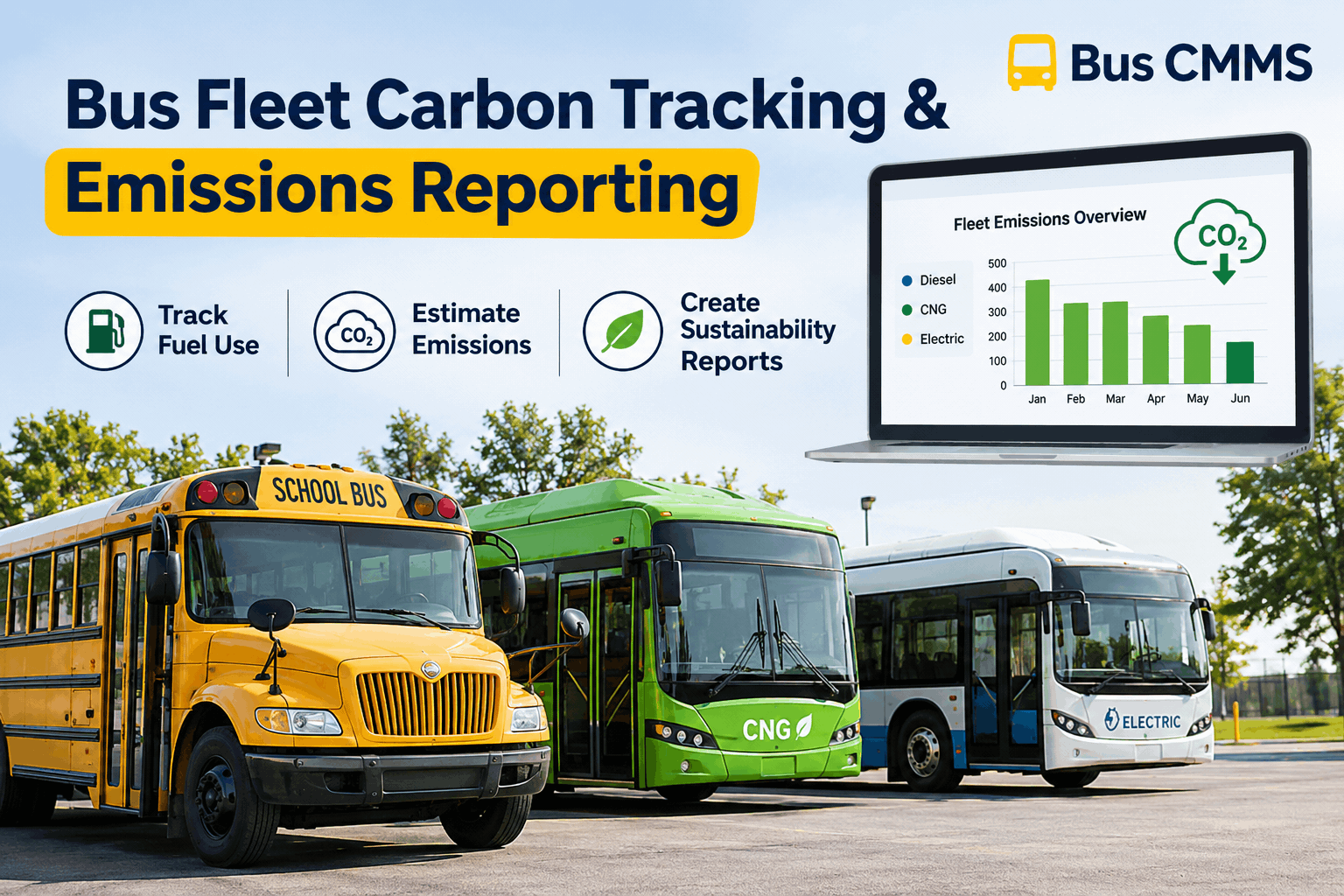
Fuel tracked by type with mileage and efficiency trends — the activity data your emissions and energy metrics are built on.
Social: safety, uptime and accessibility
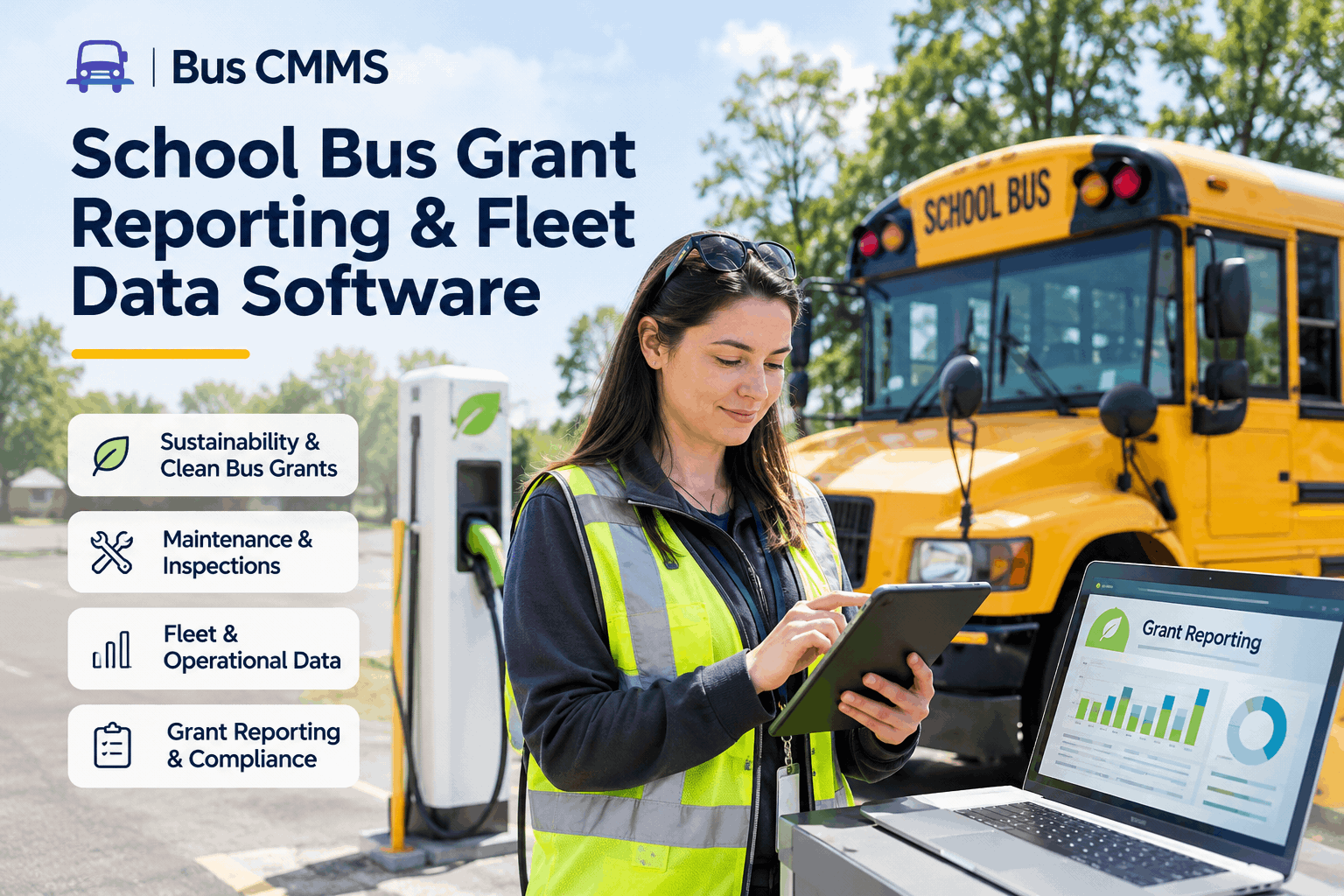
DVIR inspections, defect-to-repair resolution, fleet availability and wheelchair-lift maintenance — the social pillar, on the record.
Governance: traceable, audit-ready records
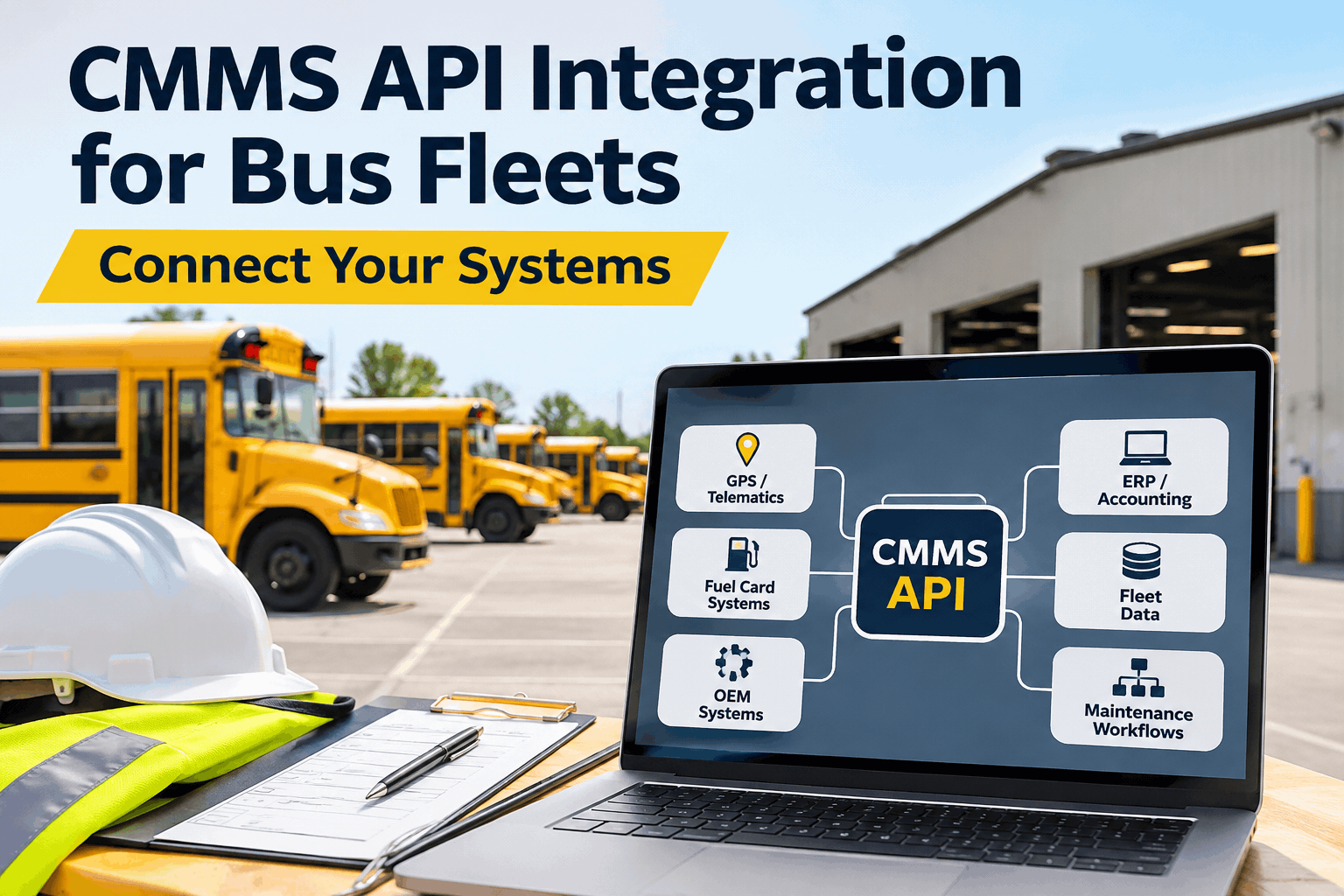
Every figure tied to a vehicle and a record, exportable on demand — so the report rests on evidence you can show.
BusCMMS organizes the operational data; you present it in the framework your agency reports under. Sign up free and start capturing the data today.
A Sustainability Lead's Take
Key Takeaways on Transit ESG Reporting
A transit agency can report ESG credibly when the data underneath it is built for the job. Four things to carry away.
ESG is three pillars, not one
Environmental, social and governance — carbon is only part of the story.
Most of it is operational data
Fuel, inspections, uptime and records already live in your fleet work.
Governance means traceability
Every number must link back to a record and a specific vehicle.
Clean data makes the report
Capture it per bus, per pillar, and reporting becomes assembly, not archaeology.
Treat ESG reporting for transit agencies as a fleet-data discipline first, and the annual report stops being a cross-department scramble. The frameworks are published and the metrics are known — what decides whether your numbers hold up is whether the operational data under them was captured cleanly and tied to the buses that produced it.