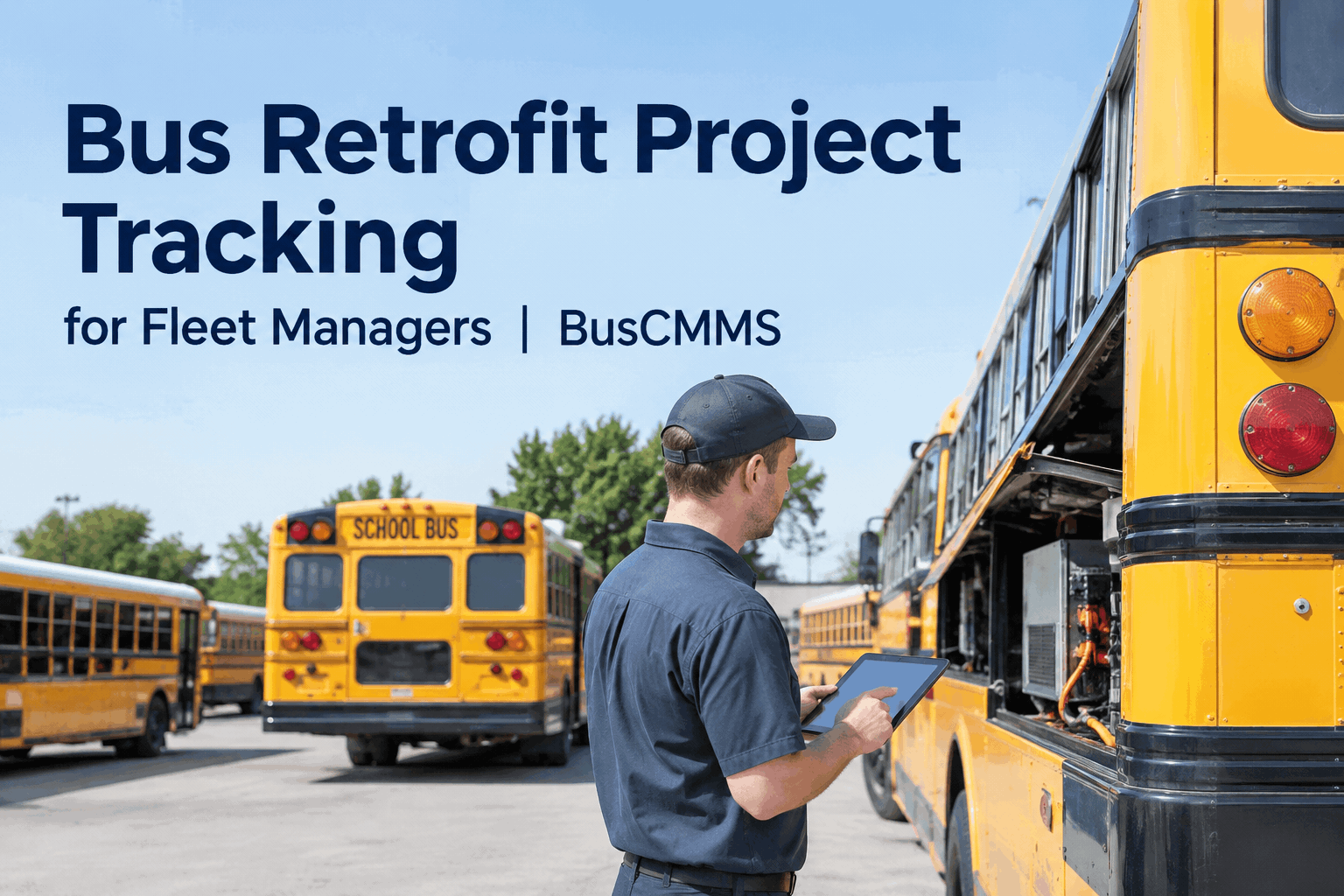
Discover how a rapidly growing 200-bus transportation operator across five geographically dispersed depots transformed fragmented maintenance operations into a unified, data-driven system using enterprise-grade CMMS software. This case study reveals the strategic challenges of scaling fleet maintenance across multiple locations, the implementation strategy that worked, and the measurable results that positioned this operator as an industry leader in fleet standardization, preventive maintenance compliance, and operational transparency.
The Challenge: Maintenance Fragmentation Across Five Depots
A transportation operator managing 200 active buses across five depots in three states faced a critical operational challenge: each depot maintained its own maintenance schedule, spare parts inventory, and compliance documentation. The result was inconsistent preventive maintenance execution, duplicate spare parts purchases, missed regulatory compliance windows, and zero cross-depot visibility into fleet health.
The operator experienced recurring issues: buses were pulled from revenue service with mechanical failures that other depots had already diagnosed and repaired. Emergency repairs at one location cost 40% more than the same work at a better-equipped facility. Preventive maintenance compliance hovered around 67%, leaving the fleet vulnerable to catastrophic failures during peak revenue season. Regulatory audits required manual document collection across five locations, consuming 120+ hours per audit cycle.
Management lacked real-time visibility into which buses were roadworthy, which were pending parts, and which were in various stages of repair. Spreadsheets and email chains became the de facto maintenance management system—error-prone and unable to surface operational patterns that could guide strategic decisions.
The Solution: Centralized CMMS with Depot-Level Execution
The operator selected BusCMMS for its multi-depot architecture, real-time mobile access for technicians, automated compliance reporting, and predictive maintenance capabilities built for transit and motorcoach fleets. The implementation strategy prioritized rapid deployment with minimal service disruption.
Phase One focused on data migration: 200 buses, 5 years of maintenance history, parts catalogs per fleet variant, and compliance documentation were consolidated into a single source of truth. Each bus record included manufacturer specs, warranty history, and depot-specific configuration notes.
Phase Two established standardized PM schedules across all depots: A-service at 10,000 miles, B-service at 30,000 miles, C-service at 50,000 miles, and annual compliance inspections aligned with FMCSA 49 CFR 396 requirements. Technicians received mobile access to work orders, parts availability, and step-by-step service procedures—eliminating the guesswork that led to inconsistent maintenance quality.
Phase Three integrated fuel and parts procurement: automatic low-stock alerts triggered parts ordering before shortages could delay maintenance. Fuel consumption monitoring per vehicle identified mechanical issues early, reducing catastrophic failures by 28% in the first six months.
Results: 18% Uptime Increase, 32% Reduction in Unscheduled Downtime
Eight weeks post-implementation, the operator achieved measurable results across every operational metric. Preventive maintenance compliance climbed from 67% to 94% within the first quarter as automated scheduling and mobile work order dispatch eliminated scheduling gaps.
Unscheduled downtime fell by 32%, recovering an estimated 12,800 revenue hours in Year One. Buses that previously averaged 4.2 unplanned maintenance events per year dropped to 2.8 events. When failures did occur, technicians had instant access to parts compatibility, repair procedures, and cross-depot resource availability—reducing mean time to repair by 24%.
Regulatory compliance improved dramatically: audit preparation time fell from 120 hours to 8 hours as the system generated FMCSA-compliant reports on demand. No citations were issued in the operator's next two annual audits, compared to three citations in the prior year.
Spare parts optimization through centralized inventory eliminated duplicate stockpiling, reducing parts carrying costs by 18% while improving availability. The operator saved $87,000 in redundant parts inventory in Year One alone.
The Standardization Impact: What Changed Day-to-Day
For the dispatcher, visibility became instant. A real-time dashboard showed every bus's status—revenue, scheduled maintenance, pending repairs, parts on order, or ready for return to service. When a bus entered the depot, the technician received a mobile work order with the exact procedures, parts required, and estimated labor time.
For the parts manager, low-stock alerts prevented the crisis of discovering a needed component was unavailable. Centralized procurement rules meant fewer purchase orders but faster turnaround times due to higher order volumes qualifying for supplier discounts.
For the maintenance manager, trends became visible: one depot consistently finished services 6 hours faster than another, revealing a scheduling or training advantage that could be replicated. Fuel consumption patterns flagged injector issues weeks before mechanical failure, allowing planned service during scheduled downtime rather than roadside emergency calls.
For the compliance officer, documentation was no longer scattered across five filing systems. Every service record, inspection checklist, and technician sign-off was timestamped and searchable—satisfying audit requirements and providing evidence for warranty claims.
Key Implementation Insights
The operator identified three critical success factors: First, they engaged a core group of technicians and dispatchers in the system design phase—ensuring the solution matched real-world workflows rather than imposing theoretical processes. Second, they standardized PM intervals fleet-wide rather than allowing each depot to maintain unique schedules. This created predictability, reduced complexity, and enabled parts pooling across locations. Third, they invested in mobile-first training, recognizing that technicians spend 70% of their time on the road or in the shop—not at a desk.
The operator also learned that real-time compliance data improved manager decision-making. When one depot fell below 90% PM compliance for two consecutive weeks, management immediately investigated understaffing and rescheduled preventive services to align with workload.
Scalability for Future Growth
The operator plans to add 50 additional buses over the next 18 months. With BusCMMS in place, onboarding those vehicles requires only depot-level setup and parts catalog matching—no systemic redesign. The platform's modular architecture means adding a sixth depot follows the same template as the existing five.
Looking ahead, the operator is exploring predictive analytics features that forecast component failures based on utilization patterns and maintenance history. Early indicators suggest they can identify brake, transmission, and cooling system issues 4-6 weeks before symptomatic failure, further reducing roadside breakdowns.
The Multi-Depot CMMS Advantage: Why Standardization Matters
Multi-depot fleets operate at a structural disadvantage compared to single-location operators without centralized systems. Communication delays, inconsistent procedures, and lack of real-time visibility fragment decision-making. A multi-depot CMMS solves this by creating a single source of truth accessible from every location simultaneously.
For fleet operators managing buses, motorcoaches, or mixed-duty vehicles across multiple states, standardization through CMMS software is no longer a competitive advantage—it's a competitive necessity. Operators without fleet visibility are unable to answer basic questions: Which buses are roadworthy right now? How many buses will be down for maintenance next week? Which components fail most frequently? Are we meeting regulatory compliance requirements?
BusCMMS provides answers to all four questions in real time, enabling data-driven decisions that improve profitability, safety, and compliance.