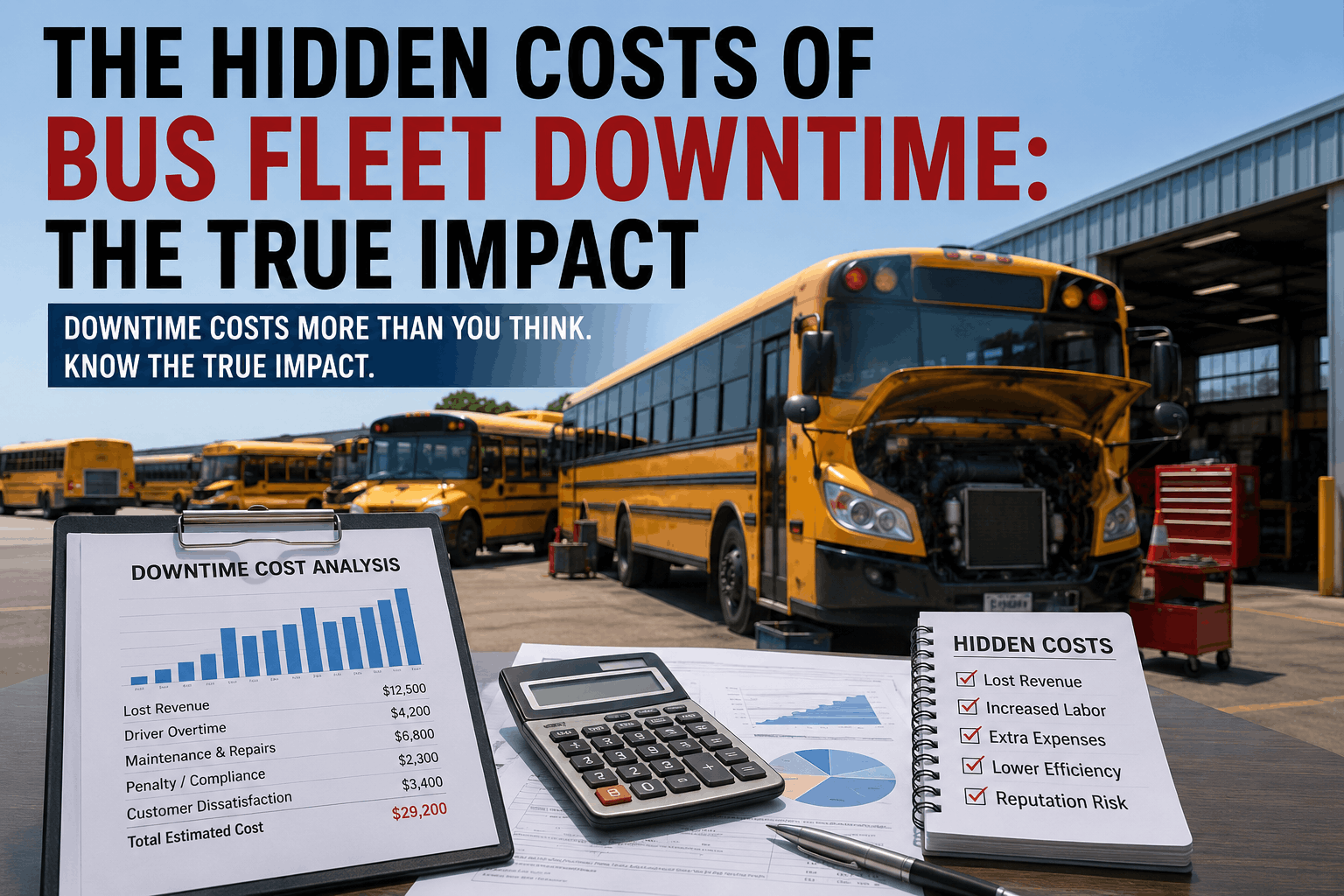
A bus breaks down and requires repair. The immediate cost is obvious: mechanic labor, parts, tow truck if needed. But the true cost of downtime extends far beyond repair expenses. Lost revenue from cancelled or delayed trips, overtime labor to cover routes, customer refunds or compensation, reputation damage, employee overtime, and business disruption all accumulate. A school bus breaking down mid-route forces school disruption, parent inconvenience, and potential liability. A transit bus failure reduces system reliability ratings. A charter bus failure strands passengers and generates contract penalties. The "hidden costs" of downtime often exceed the repair costs by 3-5x, sometimes more. Yet many fleet managers focus only on immediate repair costs, ignoring the larger financial impact. Understanding true downtime costs justifies investment in preventive maintenance, CMMS systems, and reliability-focused operations. Here's how to calculate true downtime costs and why prevention is economically superior to reactive maintenance.
Downtime costs more than repairs. Learn the hidden costs, from lost revenue to overtime and reputation, and how to quantify the true impact.
Mechanic labor: Repair labor costs $75-$150/hour depending on technician skill and region. A 4-hour repair consumes $300-$600 in labor. Emergency repairs might be $200+/hour with overtime premiums.
Parts and materials: Parts costs vary widely. Emergency parts expedited from suppliers add expedite fees, and overnight shipping increases cost.
Tow and recovery services: A disabled bus might need towing. A passenger-loaded bus breaking down might also require passenger transportation or route recovery support.
Facility costs: A bus occupying a repair lift for extended periods prevents other repairs and can create a backlog of planned maintenance.
Typical direct repair cost: Average downtime from mechanical failure can create thousands in direct repair and recovery costs, while major failures cost much more.
Lost revenue from cancelled or delayed service: A charter bus failure can cancel paid trips. Transit fleets lose fare revenue, and school bus failures disrupt routes and schedules.
Staff overtime costs: When a bus breaks down, alternative coverage is needed. Drivers and maintenance teams may require overtime to recover service.
Customer compensation and refunds: Broken-down passengers may demand refunds, credits, or compensation. Contract penalties for service failures can also add up.
Trip repositioning and customer transfers: A bus breaking down mid-route requires passenger transfer, additional dispatching, driver labor, and possible accommodation support.
Route disruption and service quality impacts: Reduced fleet capacity can force cancelled runs, longer headways, overcrowding, and lower customer satisfaction.
Typical operational impact: A single bus failure often creates operational costs beyond direct repair, including lost revenue, overtime, compensation, and disruption.
Brand reputation damage: A company known for reliable service can lose trust when buses break down repeatedly. Negative reviews and word-of-mouth can affect future bookings.
Customer churn and lost lifetime value: A school district or major customer experiencing recurring failures may explore alternative providers.
Recruitment and retention impact: Drivers dislike unreliable buses. Frequent breakdowns can increase driver frustration, turnover, and training costs.
Competitive disadvantage: A company known for unreliable buses may struggle to win new contracts or retain existing accounts.
Marketing recovery costs: Recovery from reputation damage may require marketing spend, public relations, service guarantees, or promotional pricing.
Typical reputation costs: A single major failure may create complaints, while chronic failures create lasting reputation damage and lost business opportunities.
Passenger injury claims: A bus breaking down in traffic can create safety risk. If passengers are injured, claims and legal expenses can become significant.
Inadequate maintenance liability: A bus failure caused by neglected maintenance creates liability exposure, especially if known defects were not repaired.
Regulatory fines and penalties: Failed inspections or documented maintenance failures can trigger fines, increased scrutiny, or operating restrictions.
Contract penalties and liability: School districts, charter contracts, and transit agreements may include penalties for failed trips or unreliable service.
Litigation and settlement costs: Serious incidents can lead to litigation, expert witness costs, settlement expenses, and insurance impact.
Typical liability costs: Minor failures may have limited liability risk, but failures involving injury or neglected maintenance can become costly.
Scenario: A 45-passenger charter bus breaks down during a cross-country tour. Engine failure requires replacement parts, labor, towing, and several days of downtime.
Direct costs: Engine replacement, labor, towing, and recovery expenses.
Operational costs: Lost trip revenue, passenger hotel or meal support, and additional driver time.
Compensation and recovery: Passenger refunds, customer dissatisfaction, and negative review impact.
Total cost: The complete cost is much higher than the repair bill alone.
Preventive maintenance alternative: Engine maintenance and oil analysis could identify degradation earlier and allow planned replacement before roadside failure.
Total Downtime Cost = Direct Repair Costs + Operational Costs + Reputation/Customer Costs + Liability Costs
Example:
Direct: $5,000 parts, labor, and towing
Operational: $8,000 lost revenue, overtime, and compensation
Reputation: $3,000 customer dissatisfaction impact
Liability: $2,000 insurance impact and regulatory risk
Total: $18,000 per downtime event