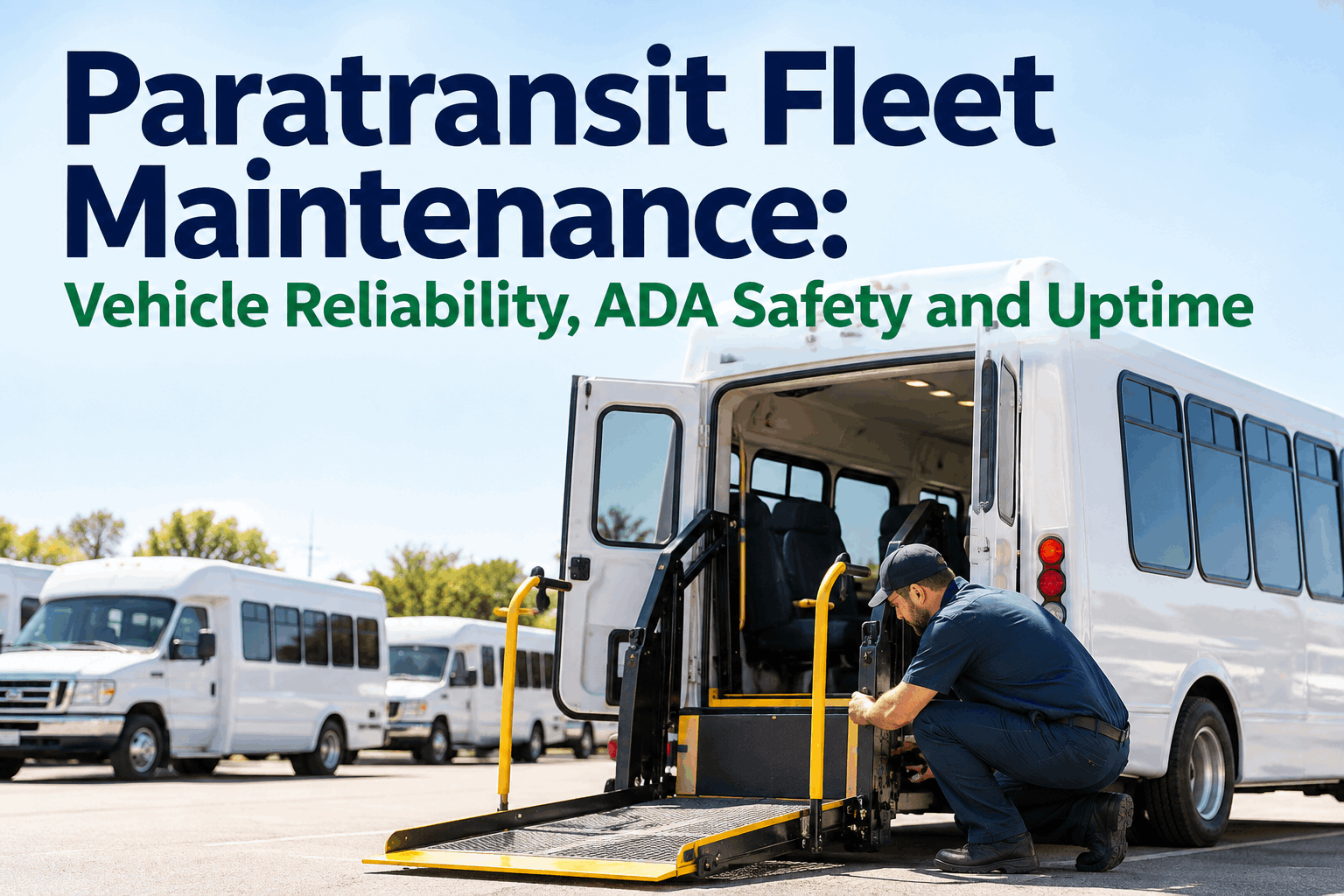
Paratransit fleet maintenance has a direct impact on whether riders can count on their scheduled trips. A vehicle may start, steer and brake normally but still be unsuitable for an accessible assignment when its wheelchair lift, ramp, securement equipment or door system needs attention. The practical goal is to catch defects early, schedule service around demand and keep a traceable record of what was checked, repaired and verified before a vehicle returns to service.
A Vehicle Is Ready Only When Its Accessibility Equipment Is Ready
Keep preventive maintenance, accessibility-equipment defects and repair history connected to each paratransit vehicle—so the operations team knows which vehicles need attention before assignments are made.
Maintenance records support decisions; qualified staff determine safe return to service.
Four Checks That Matter Before a Paratransit Assignment
Paratransit vehicle reliability depends on the base vehicle and the equipment passengers need to board, ride and exit safely. Use an inspection process aligned with the vehicle and equipment manufacturer's instructions, your operating policies and applicable rules.
Roadworthy vehicle
Brakes, tires, lights, steering, fluid leaks and other safety-critical systems.
Capture vehicle defectsLift or ramp
Condition and function of accessible boarding equipment, including applicable interlocks and controls.
Record equipment findingsPassenger securement
Condition and availability of required wheelchair and occupant restraint components.
Flag missing or damaged itemsRepair status
Outstanding defects, technician actions and verification before release.
Link work orders to vehicleA consistent inspection record helps prevent a verbal concern from disappearing between shifts. Create a digital inspection and defect history with BusCMMS.
Build a Lift, Ramp and Securement Maintenance Record
Wheelchair lift maintenance is not just a visual walkaround. Different manufacturers prescribe different checks, lubrication, adjustments, functional tests and service intervals. Document the applicable procedures and assign corrective work when a defect is identified.
This table is a recordkeeping guide, not a substitute for OEM inspections or a complete ADA compliance checklist.
What Happens When a Lift Fails a Readiness Check?
Use a clear handoff so dispatch does not rely on an informal “it should be fine.” A defect needs an owner, an action and a documented outcome. The operator's policies and applicable rules determine when a vehicle must be removed from a particular assignment.
Driver or inspector records the issue and affected vehicle.
Qualified staff determine severity and operational restrictions.
Work order captures service, parts and technician notes.
Complete required checks before release to service.
ADA transportation requirements address accessibility and service obligations, but maintenance decisions also depend on the specific equipment, operating rules and safety requirements. Do not assume that logging a defect or closing a work order by itself establishes compliance.
See how BusCMMS connects inspection findings to repair work orders.
Make Accessible-Vehicle Maintenance Easier to Follow
Organize inspections, open defects, preventive maintenance and completed repairs by vehicle. Give your team a clearer maintenance record before the next service decision.
Inspection findingLogged
Corrective workAssigned
VerificationPending
Example maintenance workflowPlan Maintenance Around Service Demand, Not After a Breakdown
A paratransit vehicle often has little scheduling flexibility because its availability affects booked passenger trips. Build PM plans using manufacturer recommendations, usage, mileage, time and applicable inspection requirements. Coordinate planned downtime with operations rather than treating maintenance as a last-minute surprise.
Capture vehicle and accessibility-equipment concerns before dispatch.
Schedule vehicle and lift/ramp tasks according to applicable intervals.
Record repair priority, parts needs and the vehicle's status.
Document appropriate checks and close the repair record.
BusCMMS can support PM schedules and maintenance history without inventing a universal lift service interval. Start organizing paratransit preventive maintenance.
Measure Maintenance-Related Availability, Not Just Total Repairs
Counting work orders alone does not tell the operations team whether enough accessible vehicles are ready for scheduled trips. Review a few practical measures together and investigate patterns rather than treating any single number as proof of safe operation.
Vehicles ready for assignment
Track the number of accessible vehicles available after required checks and maintenance decisions.
Out-of-service duration
Record when a maintenance issue removes a vehicle and when it is released.
Lift and ramp recurrence
Review repeated failures by vehicle and equipment type.
For example, three repeat lift faults on the same vehicle deserve a different investigation than three unrelated defects across the fleet. Explore BusCMMS maintenance records and reporting.
When the Same Lift Keeps Failing, Look at Its History
A single work order can explain one repair. A vehicle-level maintenance history helps teams see whether the same symptom returns after service. Review technician notes, component history, environmental conditions and manufacturer guidance before deciding on a root cause.
A Simple Daily Readiness Review for Paratransit Teams
Review inspection findings and any operating restrictions.
Confirm scheduling with maintenance and operations.
Update the maintenance status and follow-up owner.
Verify closure according to applicable procedures.
This daily conversation is where accurate maintenance records become useful operational decisions. Book a BusCMMS walkthrough for your paratransit fleet.
Reliable Paratransit Service Starts With Traceable Maintenance
Paratransit fleet maintenance should connect vehicle condition, accessibility-equipment checks, preventive service, defects and verified repairs. The strongest process gives drivers a clear way to report problems, technicians a documented repair workflow and operations staff better visibility into maintenance-related vehicle availability. BusCMMS helps organize that evidence; safe operating decisions and ADA obligations remain the responsibility of qualified teams and the transportation provider.
Bring Paratransit Inspections, PM and Repairs Together
Give every accessible vehicle a clearer maintenance history and help your team act on issues before they turn into avoidable service disruptions.
InspectionsConnected
Preventive serviceScheduled
RepairsDocumented
Illustrative BusCMMS use caseQuestions Fleet Teams Ask Before the Next Trip
Quick, practical answers about accessibility equipment, maintenance records and uptime.
01What should a paratransit vehicle inspection cover?+
Inspect the base vehicle and applicable accessibility systems, including lifts or ramps, securement equipment, doors and relevant controls. Follow manufacturer procedures, operating policies and applicable rules.
02How often should wheelchair lifts be maintained?+
Use the lift manufacturer's current maintenance schedule, adjusted where required by applicable rules, service conditions and organizational policy. There is no single interval appropriate for every lift.
03Does a lift defect automatically mean the vehicle cannot operate?+
Restrictions depend on the defect, applicable safety and accessibility obligations, service circumstances and agency procedures. Qualified staff should assess the issue; never assume a defective accessibility system is safe to use.
04Which paratransit maintenance metrics are most useful?+
Maintenance-related vehicle availability, out-of-service time, overdue PM, open accessibility-equipment defects and repeat repairs help reveal operational patterns.
05Can BusCMMS automatically certify ADA compliance?+
No. BusCMMS can help organize inspections, PM, defects, work orders and service history. It does not replace qualified inspections, safety decisions or the provider's legal compliance responsibilities.