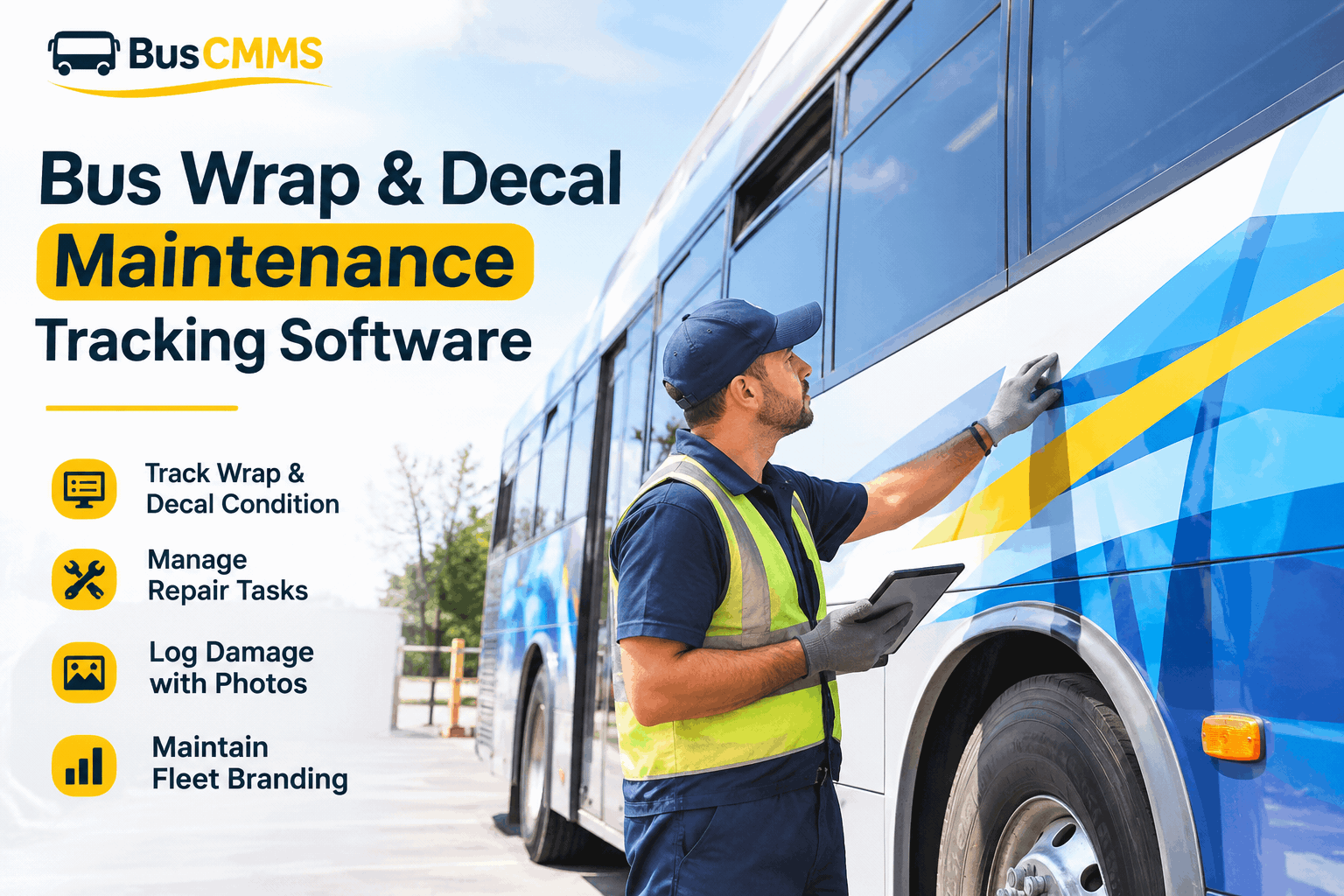
The agency's biggest advertiser calls: the wrap on Bus 212 is lifting at the rear seam, and it has been for weeks. Nobody logged it, so nobody caught it — and now a paying contract looks shabby on every route that bus runs. Bus wrap and decal maintenance tracking is how exterior branding gets treated like the asset it is, caught early and fixed cheap, and you can see exterior condition tracked bus by bus in a demo.
Bus Wrap & Decal Maintenance Logs: Catch Peeling Branding Before It Costs You
A lifting edge caught this week is a ten-minute spot-fix. The same wrap ignored for a month is a full-panel replacement — or a rewrap. Tracking exterior condition is what keeps the cheap fix from turning into the expensive one.
Every stage you wait multiplies the fix. Early catches are where the money is.
Where a Wrap Starts to Go
Vinyl does not fail all at once — it gives you warning signs for weeks before a panel is lost. Knowing where to look turns a wrap from a surprise expense into a scheduled, cheap repair. Four failure modes account for most of it.
UV fading
Sun degrades the pigment, dulling colors and washing out logos — worst on sun-facing panels and roofs.
Edge & seam lift
Contours and edges let go first. A lifting corner is the single best early-warning sign a wrap needs attention.
High-heat cracking
Hoods and roofs bake and flex, so the film cracks there first — small splits that spread if left.
Wash & road abrasion
Brush washes, grit and road debris scratch and scuff the film, especially along lower panels and wheel arches.
On school buses, the same wear hits reflective markings and lettering — and faded conspicuity striping is a safety and state-inspection issue, not just an appearance one.
The Real Clock on Your Wrap
A wrap has a lifespan, and tracking is what lets you spend it fully instead of replacing early or getting caught by a failure. Standard vinyl runs three to five years; premium film, five to seven when maintained.
Catch fading and lift at year three, and covered parking plus upkeep can buy you another year or two before a rewrap. You can sign up free and start a condition log per bus so no wrap gets replaced a year early or fails a year late.
From Spotted to Fixed: Tracking Exterior Condition
A peeling decal noticed by a driver should not die as a passing thought. Run exterior condition through the same workflow as any other defect and the branding stays sharp on a plan, not on luck.
Flag it on the exterior check
Wrap and decal condition becomes a line on the inspection — a driver or cleaner logs a lifting edge, fade or scratch by bus and panel, with a photo.
Open a repair work order
The flag becomes an assigned task with the bus, the panel and a photo, so a ten-minute re-seat happens before the edge becomes a lost panel.
Fix on the clock
Spot-repair in-house or send it to your wrap vendor — and for an ad-contract wrap, hold it to a tight turnaround so a paying brand is never shabby for long.
Schedule the next look
Set a recurring wrap inspection alongside preventive maintenance, so every bus gets an exterior review on a cadence instead of only when a complaint lands.
Four steps turn "someone noticed it peeling" into a tracked, dated, documented repair. You can walk the exterior-condition workflow in a demo or book time to map it to your wrap vendor.
Your Bus Wrap & Decal Maintenance Checklist
Run your fleet appearance program against this list. Each item is something BusCMMS logs, assigns or schedules — the rows still open are where branding quietly degrades.
- Wrap & decal condition on the exterior inspectionAppearance is a logged line item, not a thing people only mention when it is already bad.CORE
- Photo of the damage, by panelA picture of the lifting edge or fade shows the vendor exactly what and where before they quote.CORE
- Early signs flagged, not ignoredA lifting corner or first fade gets a work order now — while it is still a spot-fix, not a rewrap.CORE
- Ad-contract wraps on a tight repair windowSome transit contracts set a two-day repair standard — track those so a paying brand is never left shabby.REVENUE
- Reflective markings & lettering legibleSchool-bus conspicuity striping and lettering checked for fade — a safety and inspection item, tracked.SAFETY
- Recurring wrap inspection scheduledAn exterior review set alongside preventive maintenance, so appearance is on a cadence, not on complaints.PREVENT
- Rewrap timing tracked per busAge and condition logged, so you budget replacements on real wear instead of guessing or reacting.BUDGET
Hit every row and fleet appearance stops being the thing you notice only once it embarrasses you. You can book a demo and run this checklist against your fleet.
Why Tracking Protects the Investment
A wrap is advertising and image, not just paint — and the numbers say catching wear early is what protects both.
Fading or peeling on even a few buses undermines the whole fleet's image — brand consistency means every bus matching, which is exactly what a tracked condition log protects.
A Fleet Maintenance Manager's Take
Key Takeaways on Bus Wrap & Decal Maintenance
Early is cheap
A caught edge-lift is a spot-fix; the same damage ignored becomes a panel replacement or rewrap.
Edges warn first
Contours and seams lift before anything else — they are your best early-warning sign.
Log it to protect it
A tracked condition log catches wear, documents repairs, and times rewraps on real wear.
Appearance is revenue & safety
Ad contracts and school-bus reflective markings both ride on branding staying sharp.
Bus wrap and decal maintenance is not about washing more — it is about catching the lifting edge, opening the work order, and scheduling the next look so branding stays sharp and rewraps happen on your timeline. Track it and fleet appearance becomes an asset you manage, not a bill that ambushes you.