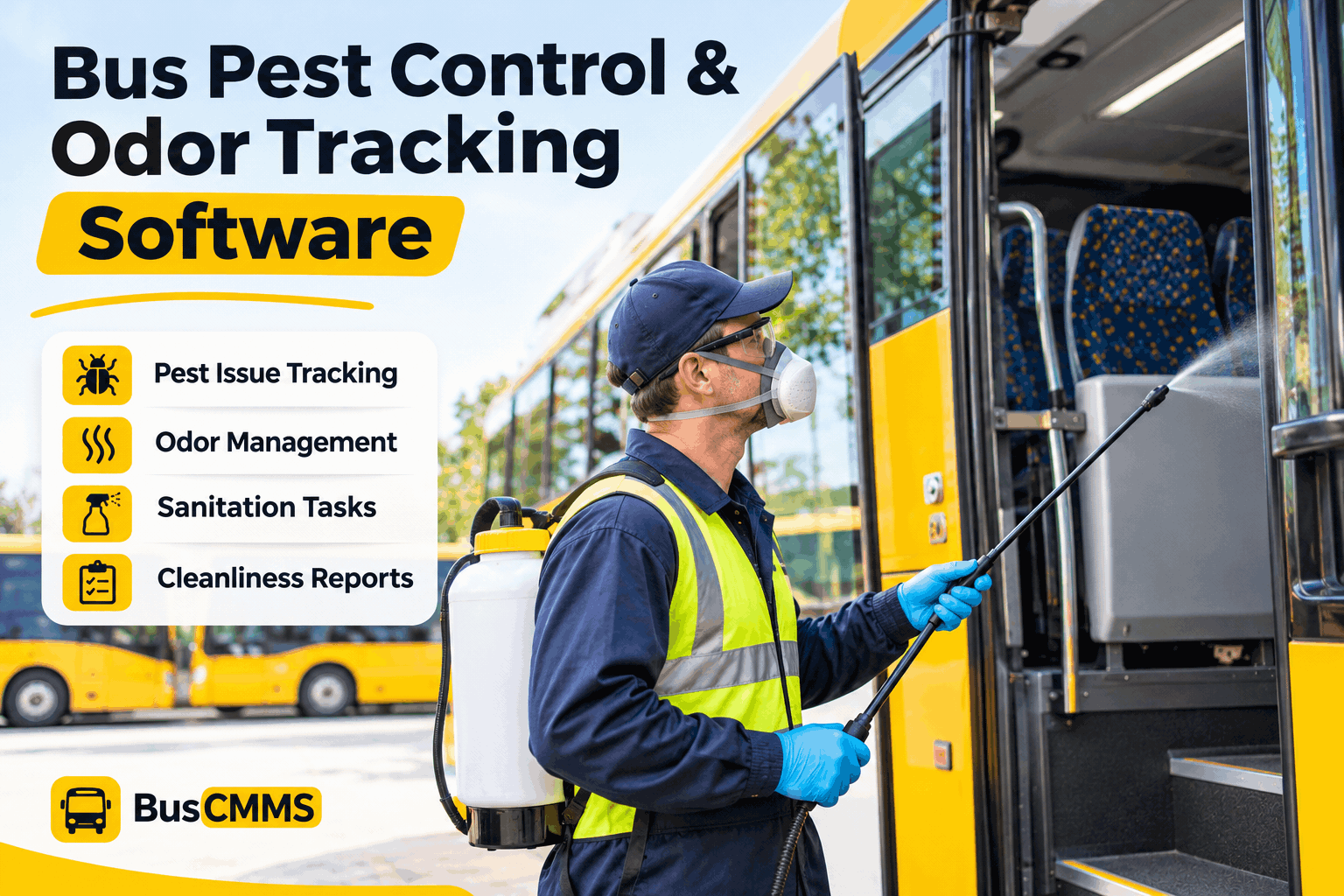
A driver reports a sour smell on Bus 23 Monday morning. Someone wipes the seats, and by Thursday it is back — now with a parent complaint attached. Nobody logged the first report, so nobody knows it is the fourth time this month. Bus odor and pest control tracking is how you stop treating the symptom and start fixing the source, and you can see interior hygiene issues tracked to resolution in a demo.
Odor & Pest Control Tracking for Bus Interiors: Fix the Source, Not the Smell
A wiped seat and an air freshener buy you three days. Tracking every report, assigning the fix, and scheduling the deep-clean is what makes the problem stay gone — and gives you a record when a parent or an inspector asks.
Four surface wipe-downs did nothing. One tracked root-cause fix ended it.
Why the Smell Keeps Coming Back
A spray masks the air for an afternoon; it does nothing to the spilled milk dried into the seat track or the crumbs worked under the rubber matting. In one cleaning-industry survey, 79 percent of professionals named removing odor from the air their single biggest challenge — with urine, vomit, mildew and smoke the hardest to shift. A bus concentrates all of them in one small, well-used space, and the sources hide in the same predictable places every time, which is exactly why a quick wipe never reaches them.
The same crumbs and spills that cause odors feed pests — pest-management pros put poor sanitation at the top of the infestation-cause list. Fix the source once and you solve both.
From Complaint to Closed: Tracking the Issue End to End
An odor or pest report should not live in a driver's head or on a sticky note. Run it through four steps and it becomes a fixed problem with a record — the same work-order flow BusCMMS already uses for every other defect.
Report it in seconds
A driver logs the smell or pest sighting from their phone, names the bus and the spot, and snaps a photo — so the issue exists in the system, not just in memory.
Auto-create a work order
The report becomes an assigned task with a bus, a location and an owner, so the fix lands on someone's list instead of waiting for the next complaint.
Fix at the source
Deep-clean the actual spot, not the air — pull the seat, clean the channel, clear the vent — and close the order with a note and a photo of the result.
Schedule the prevention
Set a recurring deep-clean and seasonal pest treatment so the fix holds — the bus is cleaned on a plan, not only after someone complains.
Four steps turn a vague "it smells again" into a tracked, closed, and prevented issue. You can walk the report-to-closed flow in a demo or sign up free and log your first issue today.
Your Bus Interior Hygiene Tracking Checklist
Run your sanitation program against this list. Every item is something BusCMMS logs, assigns or schedules automatically — the rows still open are where odors and pests keep winning.
- Every odor or pest report gets loggedDriver or cleaner reports it by bus and location — no issue lives only in someone's memory.CORE
- Photo attached to the reportA picture of the spill, stain or pest proves what was found and where — useful for the fix and any audit.CORE
- Report becomes an assigned work orderThe fix has an owner and a due date, so it closes instead of waiting for the next complaint.CORE
- Fixed at the source, not maskedSeat pulled, channel cleaned, vent cleared — the order closes on the actual cause, not an air freshener.KEY
- Recurring deep-clean on a scheduleIncluding the every-few-months pull-the-seats clean — set as preventive maintenance, not left to memory.PREVENT
- Seasonal pest treatment plannedSummer-break pest measures scheduled across the fleet before buses sit idle and attract problems.PREVENT
- Repeat-offender buses are visibleA bus with four reports a month surfaces in reporting, so you fix the root cause instead of re-cleaning forever.TRACK
Hit every row and interior hygiene stops being a running fire drill. You can book a demo and run this checklist against your fleet.
Why Tracking Beats Re-Cleaning
The numbers behind this are consistent across the cleaning world — and they all point the same way: log the source, don't spray the air.
For charter and coach operators with onboard restrooms, the standard is literally that it stays free of offensive odor — a scheduled, documented sanitation plan is how you prove you meet it.
Re-cleaning the same bus every week is not cheaper than fixing it once — it is just harder to see on a budget. Every repeat wipe-down is labor you already paid for, a complaint you already fielded, and a smell the next rider still notices. Tracking turns that invisible churn into a short list of root causes you can actually close out, and you can see your repeat-offender buses in a demo.
A Transportation Director's Take
Key Takeaways on Bus Odor & Pest Tracking
Masking fails. Air fresheners buy days; removing the source is what makes the smell stay gone.
Odors and pests share a cause. Spills and crumbs drive both, so one source fix solves two problems.
Log it or lose it. Untracked reports repeat; a work order with a photo closes and leaves a record.
Prevention is a schedule. Recurring deep-cleans and seasonal pest treatment keep the fix from unraveling.
Bus odor and pest control tracking is not about buying stronger spray — it is about catching the report, fixing the source, and scheduling the prevention so the same bus does not stink up your week again. A clean interior is also what students, parents and inspectors read as a fleet that is cared for, so the payoff is bigger than the smell. Start tracking it and interior hygiene becomes something you manage, not something that ambushes you.