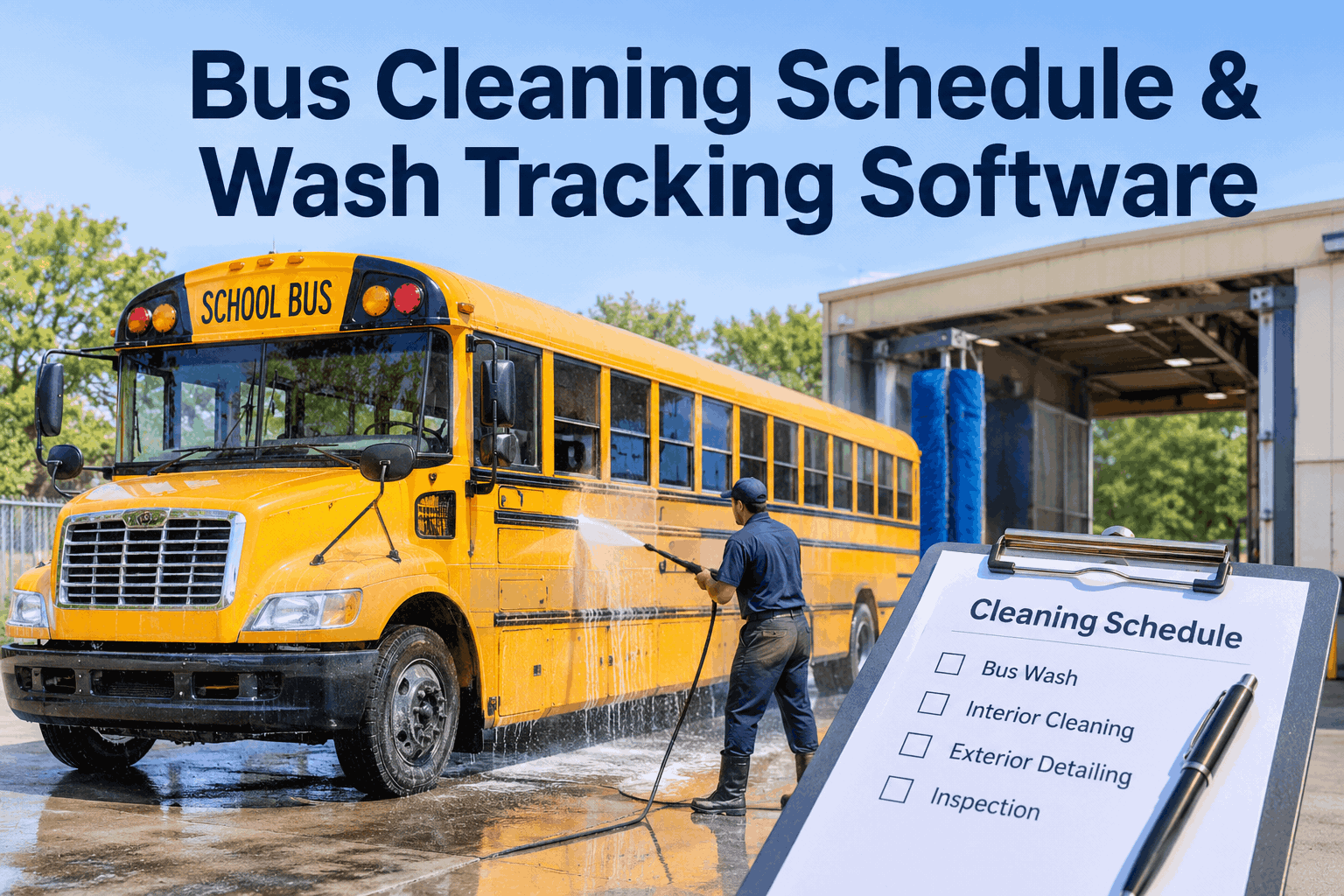
It is February, the buses are caked grey with road salt, and the wash schedule "slipped" three weeks ago because everyone was buried in breakdowns. Nobody decided to stop washing — it just quietly fell off. Meanwhile salt is eating undercarriages on buses the district needs to run for another decade. Bus wash and detailing schedule tracking is how cleaning stops being the first thing dropped when it gets busy, and you can see wash and detail schedules tracked per bus in a demo.
Bus Wash & Detailing Schedule Tracking: Keep Cleaning on a Cadence
A wash schedule only works if it holds when the shop gets slammed. Put washing and detailing on a tracked cadence — tighter in salt season, lighter in summer — and clean becomes something you can prove, not hope for.
Each dot is a scheduled wash. Red = salt-season washes, green = fair-weather, with detailing twice a year.
Washing Is Maintenance, Not Just Appearance
It is easy to treat the wash bay as cosmetic — the first thing to cut when time is short. But dirt, brake dust and road salt left on a bus are a future repair bill, which is why cleaning belongs in the maintenance plan.
Stops corrosion early
Road salt and brine attack the undercarriage and hidden sections. Washing them off on time is the cheapest rust prevention there is.
Doubles as an inspection
A wash is the one time someone looks over every panel of the bus — the perfect moment to catch damage, leaks or a lifting wrap.
Protects the fleet's image
A clean bus tells students, parents and riders the fleet is cared for — and keeps wraps and paint looking their age, not older.
The worst wash schedule is an inconsistent one. The frequency matters less than whether it actually happens — which is exactly what tracking fixes.
The Salt Clock: Why Timing Beats a Fixed Day
Salt does its damage while it sits. Washing within about 48 hours of a salt-treated route cuts undercarriage corrosion far more than a wash that waits for the regular day — so in winter, cadence and triggers matter more than the calendar.
That is why a tracked cadence beats a fixed day: tighter washes in salt months, a trigger after a salt route, lighter in summer. You can see how to set a seasonal wash cadence in a demo or sign up free and schedule your first washes.
Put Washing on a Tracked Cadence
Washing is a recurring task with a schedule, a trigger and a completion — exactly what preventive maintenance software is built to run. Four moves turn an informal routine into a cadence you can see.
Set recurring wash & detail schedules
Exterior wash, interior clean and a roughly six-month detailing, scheduled as recurring tasks by season and route — not left to whoever remembers.
Trigger extra washes after salt
Add an off-cycle wash when buses run treated roads, so salt comes off inside the window instead of sitting for a week.
Track completion per bus
See which buses were washed and detailed and which slipped — so a skipped bus surfaces as a gap, not a surprise in the spring.
Log findings during the wash
Capture any damage, leak or lifting decal spotted at the wash as a work order — turning every clean into a quick inspection.
Four steps make cleaning a visible, measured part of maintenance. You can book a demo and map your wash cadence.
Your Bus Wash & Detailing Tracking Checklist
Run your cleaning program against this list. Each item is something BusCMMS schedules or tracks — the rows still open are where washes quietly get skipped.
- Recurring exterior wash scheduleA set cadence per bus — weekly in salt season, lighter in summer — instead of washing when someone notices the grime.CORE
- Undercarriage & salt washes in winterPressure washing the under-chassis and wheel ends through winter, where road salt does its worst, hidden damage.CORE
- Salt-route trigger washesAn off-cycle wash after treated roads, so salt comes off within the window instead of sitting and corroding.CORE
- Interior clean cadenceSweep, mop and seat cleaning on a schedule, with floor-track cleaning so de-icer residue does not deteriorate the tracks.INTERIOR
- Detailing every ~6 monthsThe deeper clean — seams, trim, fixtures — scheduled twice a year so it is never forgotten for a whole season.DETAIL
- Completion tracked per busWhich buses were washed and which slipped — a visible gap, not a surprise discovered when the rust shows.TRACK
- Cadence adherence in reportingSee whether the fleet is actually hitting its wash schedule — the number that tells you clean is holding.INSIGHT
Hit every row and clean buses become the default, not a scramble before an event. You can book a demo and run this checklist against your fleet.
Why a Tracked Cadence Pays Off
A wash costs a little time; the corrosion from skipping it costs a lot more. The numbers all point the same way — keep salt moving off the fleet on a schedule.
Cutting washes in winter to save time is one of the most expensive maintenance mistakes a fleet can make — a tracked cadence is how you protect the asset, not just the shine.
A Maintenance Supervisor's Take
Key Takeaways on Bus Wash Scheduling
Washing is maintenance. Salt and grime left on a bus turn into repair bills — it belongs in the PM plan.
Timing beats the calendar. Wash within 48 hours of salt; tighten the cadence in winter, ease it in summer.
Consistency is the win. The worst schedule is the one that slips — tracking is what keeps it honest.
Every wash is an inspection. Log what you spot at the wash and cleaning does double duty.
Bus wash and detailing schedule tracking is not about washing more — it is about making sure the washes you planned actually happen, on the cadence the season calls for. Track it and clean buses stop being a scramble and start being the baseline.