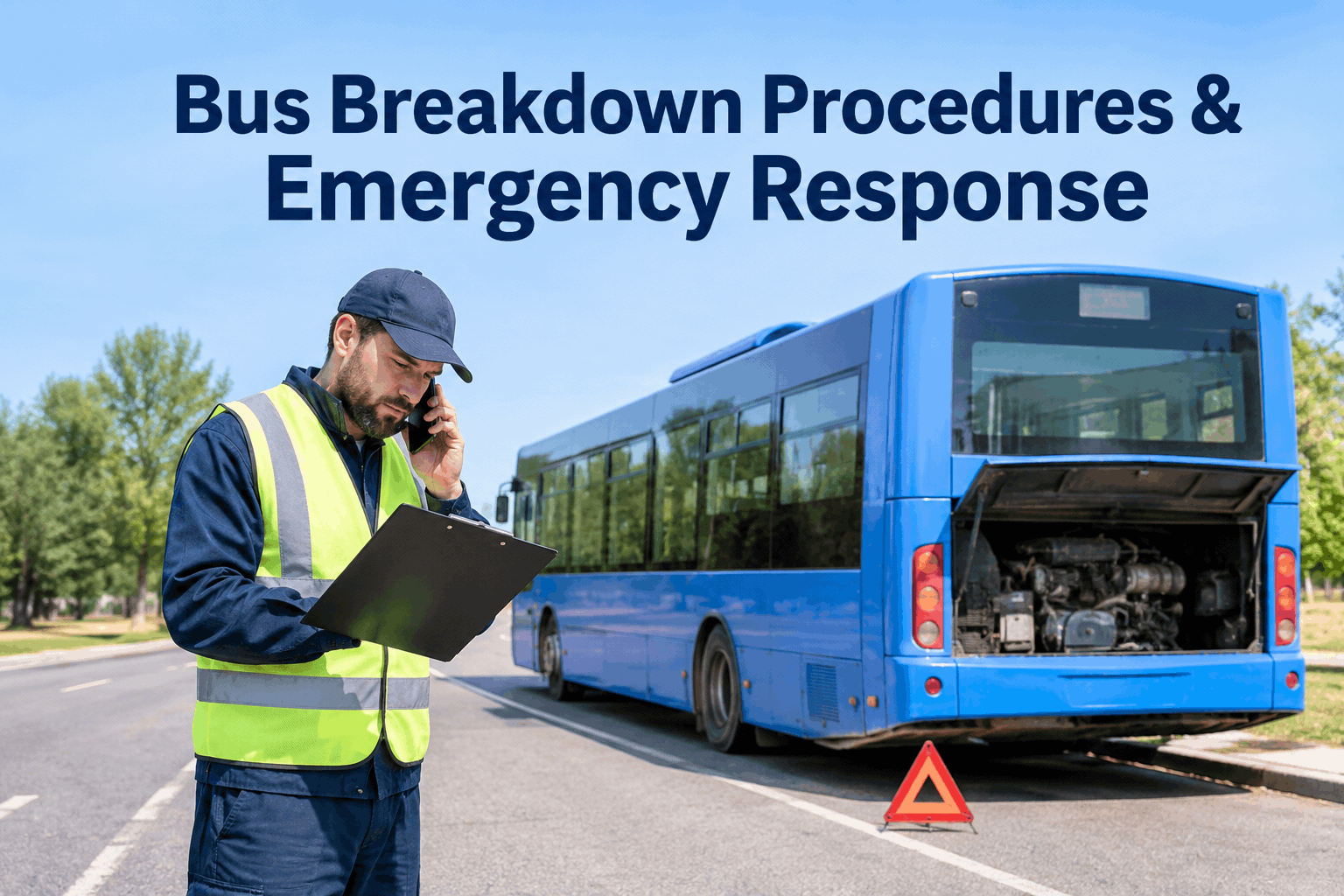
It is 6:10 a.m. on a cold morning and the phone rings: Bus 14 is dead on the shoulder of Route 12 with forty kids aboard. In the next ten minutes, what decides how this goes is not luck — it is whether there is a protocol the driver knows cold and a maintenance record you can pull up. Bus breakdown procedures and emergency response turn that call from a scramble into a routine, and you can see breakdowns logged and repairs tracked bus by bus in a demo.
The 2 A.M. Phone Call: Bus Breakdown Procedures That Hold Up
A breakdown with students aboard is a safety event first and a repair second. A clear protocol — and a record you can pull in seconds — is what keeps it calm, safe, and short.
The Breakdown Playbook: Students First
Every driver should know these steps without thinking, because the first minutes are about safety, not the engine. The order matters, and so does the one rule drivers most often get wrong under pressure.
Secure the bus
Pull as far onto the shoulder as conditions allow, set the brake, hazard lights on, and place warning triangles at the required distances.
Keep students aboard
For a normal breakdown, children are safer inside the bus. Evacuate only if there is fire, a risk of being struck, or another immediate danger.
Notify dispatch clearly
Report the bus number, exact location, that students are aboard, and the nature of the fault — the five facts that get the right help moving.
Replacement & recovery
Dispatch sends a spare to move the students and arranges the mechanic or tow — while someone handles parent notification.
The best preventive maintenance program will not stop every breakdown — which is exactly why a written plan everyone knows has to be in place before the call comes.
Why the Call Goes Better With a Record
A road call pulls a bus out of service mid-route, and it costs far more than the part that failed. A maintenance record changes that math — faster diagnosis, the right help dispatched, and fewer repeats.
Pull the bus's history and a fault code, and dispatch sends the right fix the first time instead of guessing. You can see how a bus's repair history speeds the response in a demo or sign up free and start a breakdown log.
Turn Down the Volume of 2 A.M. Calls
You cannot prevent every breakdown, but you can make them rarer and shorter. The same system that logs the incident is what stops it from happening again on the next bus.
Log every breakdown with its cause
Each road call is recorded against the bus with what failed — building the history that makes the next diagnosis fast and the pattern visible.
Prevent the repeat with PM
The failures that strand buses — batteries, belts, cooling, brakes — are the ones preventive maintenance catches first, if it is actually scheduled and tracked.
Let fault codes open work orders
Telematics fault codes can create a work order automatically, so a warning becomes a shop visit before it becomes a roadside event.
Flag the repeat offenders
Reporting shows which buses break down most, so you fix the root cause or plan replacement instead of fielding the same call again.
Fewer calls, and the ones that come go faster. You can book a demo and see breakdown reporting on your fleet.
Your Bus Breakdown Readiness Checklist
Run your operation against this list. Some items are protocol, some are what BusCMMS tracks — the rows still open are what turn a breakdown into a crisis.
- A written breakdown protocol drivers knowStop, secure, students-aboard rule, dispatch, recovery — practiced, not read off a laminated card for the first time.SAFETY
- Clear evacuate-or-stay criteriaDrivers know students stay aboard for a normal breakdown and evacuate only for fire, traffic or other immediate danger.SAFETY
- The five facts to report, every timeBus number, exact location, students aboard, nature of the fault, and any new location — so the right help is dispatched fast.DISPATCH
- Replacement-bus and parent plan readyA known way to move students and notify parents, so nobody is improvising who calls whom at six in the morning.PLAN
- Every breakdown logged with its causeSo the bus's history is there for the next diagnosis and the pattern is visible for prevention.RECORD
- PM current on breakdown-prone systemsBatteries, belts, cooling and brakes on schedule — the failures that strand buses, caught in the shop instead.PREVENT
- Repeat-offender buses flaggedReporting surfaces the buses that fail most, so you fix the root cause or plan the replacement.INSIGHT
Hit every row and the 6 a.m. call becomes a process, not a panic. You can book a demo and run this checklist against your fleet.
Why Readiness Beats Reacting
The breakdown you plan for is an inconvenience; the one you do not is a crisis with children on the shoulder of a road. The difference is preparation you can measure.
Reactive fleets lose the lesson every time — without closure data the same breakdown comes back. A tracked record is how a road call teaches you something instead of just costing you.
A Transportation Director's Take
Key Takeaways on Bus Breakdown Response
Safety before the engine
Secure the bus, protect the students, then worry about the fault — in that order, every time.
Usually, stay aboard
Students are safer inside for a normal breakdown; evacuate only for fire, traffic or real danger.
Records speed the response
A bus's history and fault code get the right help dispatched the first time, not the third.
Log it to prevent it
Tracking causes turns PM and reporting into fewer calls on fewer buses over time.
Bus breakdown procedures and emergency response are not about hoping the call never comes — it will. They are about making sure that when it does, the protocol is known, the record is there, and the response is calm and fast. Prepare for it and the 2 a.m. call stops being the thing you dread.