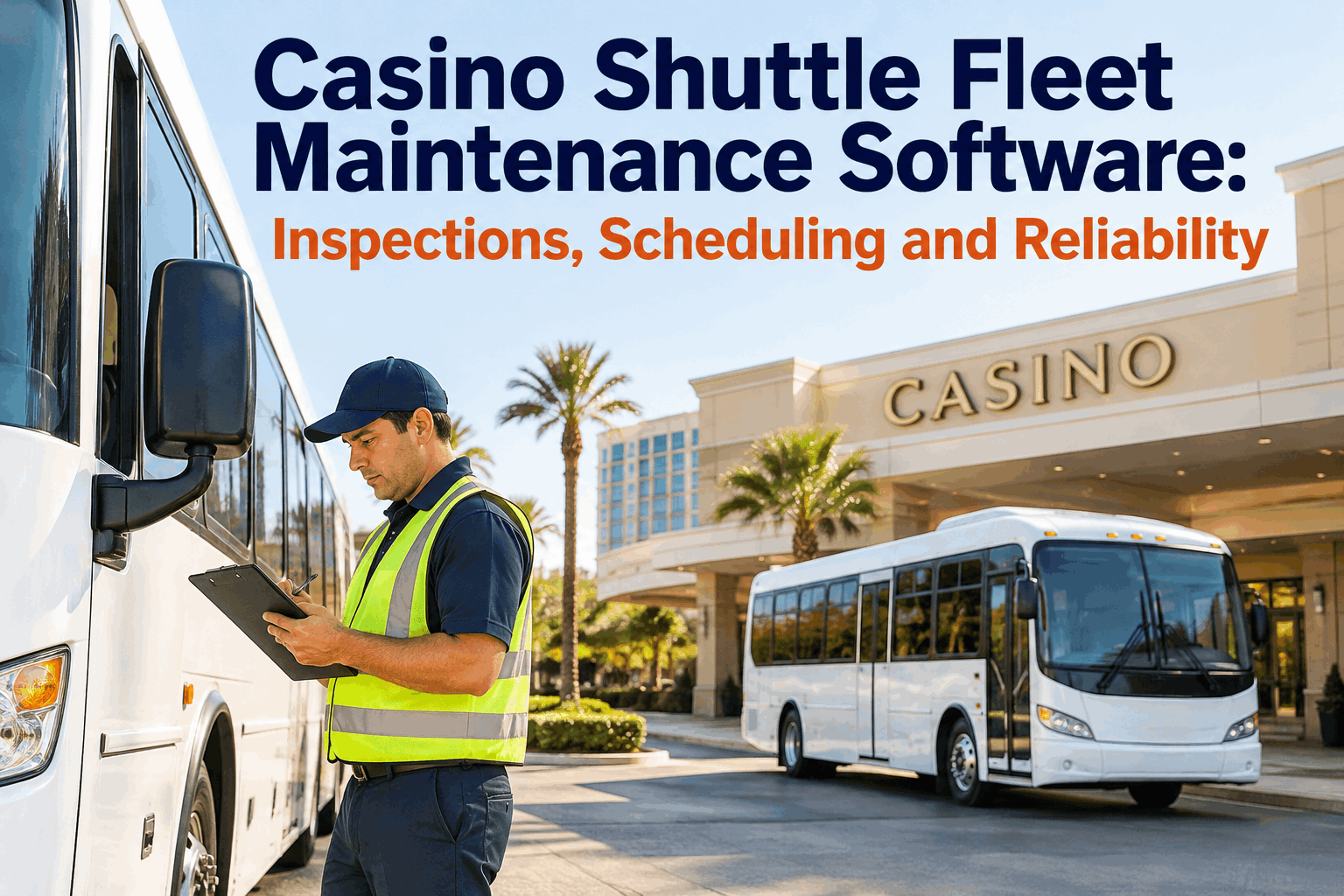
Your garage-to-floor loop has been circling since six this morning and will not stop until past midnight, and it does that every day. A casino shuttle is one of the highest-cycle vehicles on the road — it hits its next service interval while a normal shuttle is still months away. Miss it, and the gap shows up on the floor. Good casino shuttle fleet maintenance software keeps the loop running; you can see how it works on your fleet.
Casino Shuttle Fleet Maintenance Software: Inspections, Scheduling and Reliability
Casino shuttle fleet maintenance software is built for a simple, brutal fact: these vehicles never stop. On-property loops run sixteen or more hours a day, airport programs cover a twenty-hour window, and the miles pile up two to three times faster than an ordinary shuttle. That means preventive maintenance comes due far sooner than a calendar suggests — and a shuttle in the shop at the wrong hour is guests not reaching the floor.
Why a Downed Casino Shuttle Hits the Floor, Not Just the Schedule
In most fleets a late bus is a service complaint. At a casino, the shuttle is the guest's first and last impression of the property — and the thing that physically delivers people to the floor. A coverage gap during peak hours is not a transport problem; it is fewer guests playing.
Casino shuttles drive guest flow, so a service interruption during peak hours quickly affects floor traffic — which is why the industry treats shuttle reliability as a revenue decision, not a convenience.
Relentless duty cycle
Continuous garage and property loops are among the highest-cycle operations in commercial shuttling. Constant stop-start running wears brakes, tires and drivetrains far faster than steady highway miles.
No off-hours to work in
A line that runs from early morning to past midnight leaves almost no natural downtime for maintenance, so service has to be planned into the schedule or it simply never happens.
The vehicle is the brand
A worn or broken-down shuttle reflects straight back on the property. Guests judge a resort by the ride, so a clean, reliable coach is part of the guest experience, not just transport.
The casino shuttle carries more weight than any other kind — high mileage, no slack and the property's reputation riding along. That is where mileage-based maintenance earns its keep. You can start keeping the loop covered free before the next busy weekend.
Keeping Every Loop Covered Around the Clock
A casino transportation program is really several loops at once — the property shuttle, the airport run, the regional feeder — often mixing diesel coaches with electric units that charge between cycles. Keeping all of them covered means scheduling maintenance into the gaps and knowing, at any hour, which vehicles are ready to roll.
Mixed fuels, overlapping loops and no quiet hour is a lot to hold together by hand — which is exactly what purpose-built software is for. It is worth a look at how availability stays visible across every loop.
What Casino Shuttle Fleet Maintenance Software Should Do
A resort transportation team does not need a transit-agency platform — just the features that keep a high-mileage, always-on fleet ready across every loop. Four capabilities carry it.
Mileage and hours-based PM
Service is triggered by actual miles and engine hours, not a calendar, so a high-cycle shuttle gets its PM when it has earned it — weeks sooner than a date-based plan would ever flag.
Inspections and work orders
Drivers log a pre-trip from a phone and a failed item becomes a work order on the spot — so a worn brake on a stop-start loop is caught in the garage, not out on a run full of guests.
Live availability across loops
A real-time view of which vehicles are ready lets dispatch cover the property, airport and feeder loops at once — and see a coverage gap forming before guests are left waiting.
Mixed diesel and electric fleets
Diesel coaches and electric shuttles run on one dashboard, each on its own maintenance logic — so the EV loop with its charging windows and the diesel feeder are both covered without juggling tools.
Fast to roll out and sized for a resort transportation shop, it turns a round-the-clock operation into a planned one. The quickest way to judge it is a short walkthrough on your own shuttle program.
Our property loop runs from six in the morning until two at night, and those shuttles were racking up miles so fast we kept getting blindsided by brake and tire jobs mid-shift. We moved everything to mileage-based service and put the pre-trips on the drivers' phones, and now the work gets scheduled into the slow hours before anything fails. When one coach is down, I can see in a second which spare is ready to take the loop. The floor team stopped calling me about guests stuck at the garage.
Casino Shuttle Fleet Maintenance: Key Takeaways
The miles come fast
High-cycle loops run sixteen-plus hours a day and hit service intervals in weeks. Mileage and hours-based PM is the only scheduling that keeps pace.
A gap hits the floor
A shuttle down at peak hour is not just a late ride — it is guests not reaching the floor, which makes reliability a revenue decision for the property.
There is no quiet hour
An always-on operation has no natural downtime, so maintenance has to be planned into the schedule and verified with a pre-trip before every shift.
One view, every loop
Property, airport and feeder loops with mixed diesel and electric vehicles need one availability view, so dispatch always knows what is ready to run.
Casino shuttle fleet maintenance software comes down to one thing — keeping the loop covered so the guest flow never breaks. Schedule by the miles, catch defects in the garage, and the down-shuttle that costs the floor simply does not happen. You can set up your shuttle program free and keep every loop running.
Casino Shuttle Fleet Maintenance Software: Frequently Asked Questions
What is casino shuttle fleet maintenance software?
It is maintenance software built to keep a casino or resort's shuttle fleet running around the clock. Because these vehicles run continuous loops for many hours a day and pile up mileage fast, the software schedules preventive maintenance by actual miles and engine hours, runs pre-trip inspections, turns failed checks into work orders, and shows live availability across the property, airport and feeder loops. The goal is to service each shuttle before it fails and to keep every loop covered — because at a casino, a gap in the shuttle service shows up as fewer guests on the floor.
Why do casino shuttles need maintenance more often?
Because they are among the highest-cycle vehicles in commercial shuttling. On-property and garage loops run sixteen or more hours a day, and airport programs cover roughly a twenty-hour window, so a casino shuttle accumulates mileage two to three times faster than an ordinary shuttle. Constant stop-start running also wears brakes, tires and drivetrains quicker than steady highway miles. The result is that preventive-maintenance intervals arrive in weeks rather than months, which is why scheduling by mileage and hours — not by the calendar — is essential to keeping these fleets reliable.
How does a shuttle breakdown affect a casino?
More than most people expect. Casino shuttles drive guest flow, moving people from parking garages, the airport and nearby cities to the casino floor. A vehicle out of service during peak hours opens a gap in the loop, so guests wait longer, some leave, and some never arrive — which directly reduces floor traffic. The industry treats shuttle reliability as a revenue decision rather than a convenience for exactly this reason. On top of that, a worn or broken-down shuttle reflects on the property's brand, since the ride is often a guest's first and last impression of the resort.
When should casino shuttles be serviced if they never stop?
Into the slower hours, on a plan, before anything fails. An always-on operation has no natural downtime, so maintenance cannot wait for a quiet day — it has to be scheduled deliberately into the lowest-demand windows and rotated across the fleet so a spare always covers the loop. Software that triggers PM by mileage and hours flags each vehicle as it comes due, and a live availability view lets dispatch pull a shuttle for service while another takes its place. That planned rotation is what keeps a round-the-clock program running without a visible gap.
Can one system manage diesel and electric casino shuttles?
Yes. Many casino programs mix diesel coaches with electric shuttles that charge between route cycles, and a bus-specific system like BusCMMS schedules each vehicle on its own maintenance logic from one dashboard. The electric units follow their battery and charging-aware intervals, the diesel coaches follow theirs, and every vehicle shares the same inspections, work orders, parts tracking and availability view. Running the whole mixed fleet in one place is what lets a resort transportation team keep the property, airport and feeder loops covered without juggling separate tools for each vehicle type.