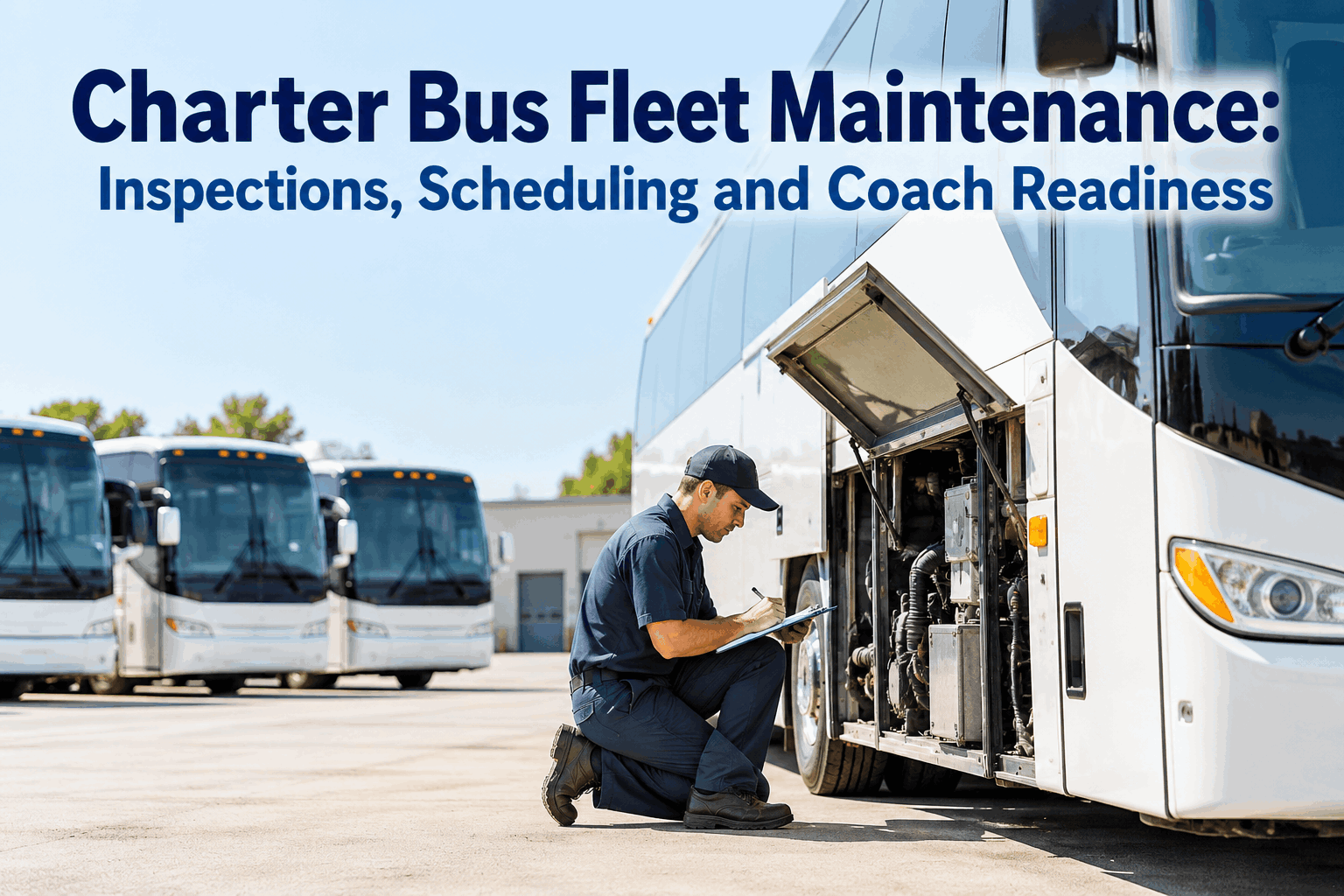
Charter bus fleet maintenance has a deadline that ordinary shop schedules do not: the next booked trip. A coach can look ready on the dispatch board while an unresolved inspection finding, overdue service, or unreliable comfort system threatens a departure. The goal is to connect coach inspections, preventive maintenance, repair decisions, and trip readiness in one traceable workflow—without treating a booking calendar as proof that a vehicle is safe to operate.
The Trip Is Booked. Is the Coach Actually Ready?
Build a practical maintenance handoff between the shop and dispatch. Track what needs attention, what was repaired, and which coaches still require review before assignment.
Coach Readiness Is More Than a Completed Checklist
Unlike a predictable daily route, charter work may involve long-distance travel, changing passenger loads, overnight stops, and short turnarounds. A small unresolved issue can become a missed departure or roadside repair when a coach is far from its home shop.
Before the booking
Check upcoming PM, inspection history, and outstanding work against the planned vehicle assignment.
Before departure
Review required driver inspections and defects; verify that safety-critical issues have been handled under applicable rules.
After the trip
Capture new driver reports, mileage, and repair needs before the next coach assignment.
BusCMMS helps organize the maintenance-side information that makes this handoff easier. See how coach service histories stay connected to each vehicle.
A Motorcoach Inspection Map Built Around Real Trip Risks
Use the applicable regulations, your inspection program, and the manufacturer's procedures—not a generic internet checklist—as the final authority. These groups help maintenance and dispatch teams see where inspection findings belong.
Tires, wheels, brakes, steering, and suspension concerns.
Lighting, mirrors, windshield, and wiper-related findings.
Doors, seating, emergency equipment, and accessibility equipment where fitted.
Cooling, fluid leaks, charging, HVAC, and other manufacturer-specific items.
Digital inspection records are useful only when findings lead to review and action. Start organizing coach inspection findings.
Schedule Maintenance Around Trips—Without Skipping Service
A charter maintenance calendar should show upcoming service needs early enough to plan downtime. Manufacturer requirements, operating conditions, and applicable regulations govern service intervals; booking pressure should not override them.
Compare projected mileage, due service, open work orders, and required inspections.
Schedule needed work, check parts availability, and consider a backup coach.
Review completed repairs, outstanding defects, and inspection responsibilities.
Record reported issues, actual usage, and follow-up work for the next assignment.
This is a planning example, not a mandated inspection timetable. Explore preventive maintenance scheduling in BusCMMS.
Which Problems Need Action Before a Coach Leaves?
Not every finding has the same consequence. Qualified personnel must apply applicable out-of-service criteria, legal requirements, OEM instructions, and company policies. This triage board is a communication aid—not an automatic safety determination.
Safety-critical or legally disqualifying defect
Do not dispatch until the issue is handled according to the applicable requirements and the vehicle is cleared through the proper process.
Uncertain condition or repeat symptom
Investigate the concern, document findings, and determine whether the coach can be used.
Noncritical maintenance item
Document the finding and schedule appropriate work without ignoring OEM or legal limits.
BusCMMS can help connect inspection defects to corrective work orders and vehicle history. Keep the defect-to-repair trail together.
Know Which Coaches Need Maintenance Attention Before the Next Trip
Organize inspections, preventive service, open defects, work orders, and coach histories in BusCMMS so your team can make better-informed readiness decisions.
Inspection findingRecorded
Repair assignmentOpen
VerificationPending
Illustrative workflow; not a dispatch authorization.Track the Issues Passengers Notice Before They Become Repeat Complaints
Charter passengers remember whether the coach was comfortable, clean, and dependable. HVAC problems, persistent vibration, door issues, and repeated electrical faults may also point to maintenance patterns worth investigating.
One record is a complaint; several linked records may reveal a pattern. See how BusCMMS helps preserve repair history.
Build a Coach Service Plan That Fits the Vehicle, Not Just the Calendar
Mileage & operating hours
Use the appropriate OEM service triggers and track actual utilization after trips.
Calendar-based service
Capture time-sensitive maintenance even when a coach has been parked.
Defect-driven follow-up
Turn recurring inspection findings into documented investigations and corrective work.
Repeat repair review
Compare past work orders to identify unresolved problems and maintenance trends.
Keep the service schedule aligned with manufacturer guidance and regulatory requirements. BusCMMS can help maintain PM schedules and service records without substituting for technician judgment.
FMCSA Maintenance Records: What Charter Operators Should Know
For U.S. motor carriers subject to federal motor carrier safety regulations, 49 CFR Part 396 covers inspection, repair, and maintenance responsibilities. Among other provisions, 49 CFR 396.3 addresses systematic maintenance and certain vehicle maintenance records; 396.11 and 396.13 address driver inspection/reporting duties as applicable; and 396.17 addresses periodic inspection requirements. Applicability and exceptions matter, so review the current rules and your operation's obligations.
Maintenance software can support organized evidence, but it does not certify regulatory compliance. Your safety and compliance team remains responsible for meeting the rules.
Measure Readiness Problems That Affect Real Trips
Use consistent definitions and track changes over time rather than relying on an invented industry benchmark. These metrics can show whether maintenance processes are helping your charter operation.
Shows service planning discipline.
Highlights potential unresolved causes.
Shows capacity lost to maintenance.
Surfaces risk before assignments.
Start with a small set of trustworthy measures and review the underlying records, not just the totals.
The Readiness Conversation Before Dispatch Assigns a Coach
Which coach is assigned? Confirm the correct vehicle and upcoming trip.
What maintenance is due? Review projected mileage and scheduled work.
What defects remain? Confirm qualified review and required corrective action.
What changed after the last trip? Check driver reports and new work orders.
Who owns the final decision? Follow your documented safety and dispatch process.
When inspections, repairs, and service history are accessible by coach, these discussions become easier to document and repeat.
Keep Charter Coaches Ready With Better Maintenance Visibility
Use BusCMMS to track coach inspections, PM, work orders, defects, and repair history—so your maintenance team can address issues before they disrupt passenger trips.
InspectionsDocumented
PM schedulesOrganized
Work ordersTraceable
Actual workflows depend on your configuration and procedures.Reliable Charter Trips Begin With Reliable Maintenance Records
Charter bus fleet maintenance works best when the shop can see upcoming service needs, inspectors can report defects, technicians can document corrective work, and dispatch can understand what still needs review. A coach should not be considered ready merely because it is available on a schedule. BusCMMS helps keep the maintenance evidence organized so teams can make timely, informed decisions about coach readiness.
Questions Motorcoach Operators Ask Before the Next Trip
Practical answers about inspections, scheduling, maintenance records, and fleet readiness.
01How often should a charter bus receive preventive maintenance?+
Follow the manufacturer's service schedule, applicable regulatory requirements, and a documented program adjusted for actual operating conditions. Mileage, time, and condition may all affect when service is needed.
02What should a motorcoach inspection cover before a trip?+
Use the required inspection process and your coach-specific checklist. Common areas include tires, brakes, steering, lights, visibility, emergency equipment, doors, and any reported defects. Applicable rules and OEM guidance control the actual requirements.
03Can a charter coach depart with an open maintenance defect?+
It depends on the defect and applicable requirements. Safety-critical or legally disqualifying conditions must be addressed before operation. Qualified personnel and the carrier's safety procedures determine the appropriate response; software should not make that determination automatically.
04What records help with FMCSA maintenance compliance?+
For covered carriers, 49 CFR Part 396 includes inspection, repair, maintenance, and recordkeeping requirements. Maintain the records applicable to your vehicles and operation, and verify current retention and inspection requirements with your compliance team.
05How can BusCMMS help reduce charter coach downtime?+
BusCMMS helps organize preventive maintenance schedules, inspection findings, defects, work orders, and repair histories. That visibility can help teams plan repairs earlier and investigate repeat problems, although downtime reduction depends on execution and operating conditions.