Picture this: Your maintenance team discovers a critical brake component failure on Bus #47 during a routine inspection. The part should be in inventory, but it's not. The last one was used two weeks ago, and nobody placed a reorder. Now you're facing a three-day wait for emergency procurement while losing $1,200 daily in revenue from that idle vehicle.
This scenario plays out in bus fleets across America every single day, costing operators millions in lost revenue, emergency shipping fees, and customer dissatisfaction. The culprit? Outdated inventory management that relies on human memory, spreadsheets, and reactive ordering processes.
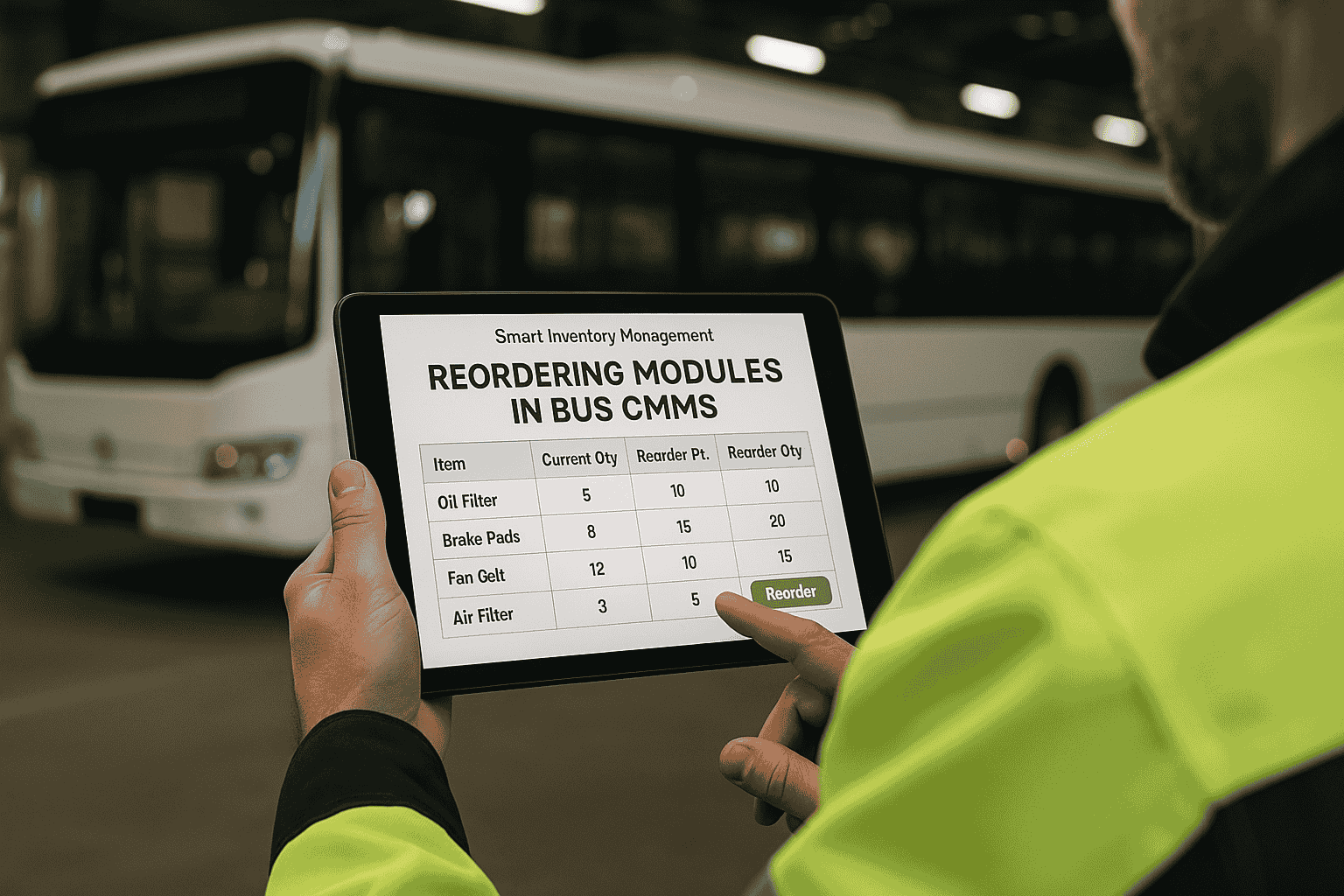
Smart reordering modules in modern Bus CMMS platforms eliminate these costly scenarios entirely. By leveraging predictive analytics, usage patterns, and automated procurement workflows, these systems ensure the right parts are always available when needed—without tying up excessive capital in inventory carrying costs.
Predictive Analytics: The Brain Behind Smart Reordering
Traditional inventory management operates on guesswork and historical averages. Smart reordering modules in Bus CMMS platforms operate on data-driven intelligence that considers dozens of variables to predict future parts needs with remarkable accuracy.
Usage Pattern Recognition
The system analyzes your fleet's maintenance history to identify consumption patterns that human managers might miss. It recognizes that air conditioning compressors fail more frequently during summer months, brake pads wear faster on routes with frequent stops, and transmission components require more attention on buses operating in hilly terrain.
This intelligence extends beyond simple seasonal adjustments. The system identifies subtle correlations—like how buses with higher mileage in urban environments consume door actuator components 40% faster than highway-dominant vehicles. These insights drive precise reorder calculations that align inventory levels with actual operational demands.
Failure Prediction Integration
Advanced CMMS platforms integrate predictive maintenance algorithms with inventory management, creating a powerful synergy. When the system predicts that Bus #23's transmission will likely require service in the next 30 days based on fluid analysis and performance data, it automatically queues transmission components for reorder.
This integration transforms inventory from reactive to proactive, ensuring parts arrive just as they're needed rather than after they're already required. The result is dramatically reduced vehicle downtime and eliminated emergency procurement costs.
Automated Reorder Points and Dynamic Thresholds
Static reorder points—the traditional "reorder when inventory hits 5 units"—fail miserably in dynamic fleet environments. Smart reordering modules calculate dynamic thresholds that adjust based on current operational conditions, seasonal demands, supplier lead times and upcoming maintenance schedules.
Multi-Variable Threshold Calculations
The system considers supplier lead times (parts from Vendor A arrive in 3 days while Vendor B requires 10 days), seasonal usage patterns (cooling system components spike in summer), and operational intensity (peak tourist season increases wear rates). These variables combine to create intelligent reorder points that adapt to your operational reality.
Critical vs. Routine Component Classification
Not all parts deserve equal inventory treatment. Smart reordering modules automatically classify components based on criticality, cost, and availability. Safety-critical components like brake pads and steering components maintain higher safety stock levels, while easily obtainable items like filters operate with minimal inventory buffers.
This classification extends to cost considerations. High-value components like engines or transmissions might operate on just-in-time ordering to minimize carrying costs, while low-cost, high-usage items like belts and hoses maintain generous stock levels for operational efficiency.
Automated Procurement Workflows
Smart reordering extends beyond calculating when to order—it automates the entire procurement process from vendor selection to purchase order generation. This automation eliminates human bottlenecks that cause ordering delays and ensures consistent procurement practices across your operation.
Intelligent Vendor Selection
The system maintains detailed vendor performance metrics including delivery reliability, quality ratings, pricing history, and warranty terms. When triggering a reorder, it automatically selects the optimal vendor based on current needs—perhaps prioritizing speed for urgent orders or cost for routine replenishment.
Purchase Order Automation
Once reorder triggers activate, the system generates detailed purchase orders complete with part specifications, delivery requirements, and approved pricing. Integration with vendor systems enables automatic order transmission, acknowledgment tracking, and delivery scheduling without human intervention.
This automation extends to approval workflows for different order values. Routine orders under predetermined thresholds process automatically, while high-value purchases route through appropriate approval chains. The system maintains complete audit trails for all procurement decisions and approvals.
Real-Time Inventory Tracking and Visibility
Smart reordering modules provide unprecedented visibility into inventory movements, consumption patterns, and cost trends. This visibility transforms inventory from a necessary evil into a strategic asset that supports operational excellence.
Multi-Location Management
Many bus operators maintain inventory across multiple locations—main depot, satellite facilities, and mobile service vehicles. Smart systems track inventory across all locations in real-time, enabling automatic transfers between sites to prevent stockouts and optimize carrying costs.
The system identifies opportunities for inventory consolidation, flagging slow-moving items at one location that could fulfill demand at another. This optimization reduces total inventory investment while maintaining service levels across your entire operation.
Mobile Integration for Field Teams
Mobile apps integrate with smart reordering systems to provide real-time inventory updates from the field. When a technician installs a part, the system automatically updates inventory levels and triggers reorder calculations if necessary. This real-time synchronization eliminates lag between consumption and reorder triggers.
Book a Demo
Cost Optimization and Financial Control
Smart inventory management delivers measurable financial benefits through multiple mechanisms. Beyond eliminating stockout costs and reducing carrying expenses, these systems optimize procurement timing, vendor relationships, and working capital utilization.
Carrying Cost Reduction
Traditional inventory management typically results in 20-30% excess inventory to ensure availability. Smart reordering modules reduce this excess through precise demand forecasting and dynamic safety stock calculations. The result is typically 25-40% reduction in inventory carrying costs without compromising availability.
These savings compound over time as the system learns your operation's patterns and refines its calculations. What starts as modest improvements evolve into substantial cost advantages that directly impact your bottom line.
Bulk Purchasing Optimization
Smart systems identify opportunities for bulk purchasing by analyzing consumption patterns across multiple parts and time periods. When the system predicts high consumption of related components—like brake pads and rotors during winter months—it coordinates orders to achieve volume discounts while maintaining optimal inventory levels.
Implementation Strategy and Best Practices
Successfully implementing smart reordering modules requires careful planning, data preparation, and change management. The most successful deployments follow proven methodologies that minimize disruption while maximizing adoption rates.
Data Foundation and Historical Analysis
Smart reordering systems require clean, comprehensive historical data to generate accurate predictions. Begin implementation by auditing existing inventory records, consumption patterns, and vendor relationships. Clean data during migration to eliminate duplicates, correct part numbers, and standardize descriptions.
The system's intelligence improves dramatically with historical depth. Import at least 24 months of consumption data if available, including seasonal variations and operational changes. This foundation enables immediate intelligent calculations rather than starting with generic algorithms.
Vendor Integration and Setup
Successful smart reordering depends on vendor cooperation and integration. Work with primary suppliers to establish electronic data interchange (EDI) connections, automated acknowledgment systems, and performance tracking protocols. These integrations eliminate manual processing delays and improve order accuracy.
Negotiate agreements that support automated ordering, including approved part catalogs, pricing structures, and delivery requirements. The goal is seamless automation that maintains human oversight for exceptions and high-value purchases.
Measuring Success and Continuous Improvement
Smart reordering implementation success extends far beyond system deployment. The most successful operations establish comprehensive metrics, regular review processes, and continuous optimization protocols that maximize system value over time.
Key Performance Indicators
Track metrics that demonstrate both operational and financial improvements. Stockout frequency and duration show availability improvements. Inventory turnover rates indicate efficiency gains. Carrying cost per vehicle demonstrates financial optimization. Emergency procurement incidents reveal reliability improvements.
Monitor leading indicators like forecast accuracy and vendor performance to identify optimization opportunities before they impact operations. The system's learning algorithms improve continuously, and tracking these improvements validates the technology investment.
Regular System Tuning
Smart reordering modules require periodic review and adjustment as operational patterns evolve. New routes, seasonal changes, fleet additions, and vendor relationships all impact optimal calculations. Schedule quarterly reviews to validate system settings and identify improvement opportunities.
Conclusion: The Future of Fleet Inventory Management
Smart reordering modules represent a fundamental shift from reactive to predictive inventory management. By leveraging artificial intelligence, predictive analytics, and automation, these systems eliminate the costly inefficiencies that plague traditional inventory operations.
The financial benefits extend far beyond simple cost reductions. Smart inventory management improves fleet availability, reduces emergency situations, enhances maintenance efficiency, and frees up working capital for growth investments. These advantages compound over time as systems learn and optimize continuously.
Bus fleet operators who embrace smart reordering technology gain sustainable competitive advantages through improved operational reliability, reduced costs, and enhanced service delivery. The question isn't whether to implement these systems—it's whether you can afford to operate without them.
As the transportation industry evolves toward greater efficiency and automation, inventory management becomes a strategic differentiator. Fleet operators with intelligent, automated procurement systems will be better positioned to scale operations, control costs, and deliver reliable service that meets growing market demands.
Don't let inventory challenges limit your operational potential. Implement smart reordering modules and transform your parts management from a reactive burden into a proactive competitive advantage that drives operational excellence and financial performance.