Bus 14 fails its pre-trip at 6:40 and route 9 pulls out at 7:05. You have four spares in the yard, so you figure you are covered — until you look closer: one is in for PM, one has an open lift defect, one is the wrong size. Substitute bus assignment is not about how many spares you own; it is about how many are actually ready the minute a primary goes down. You can see which spares are route-ready at a glance in a demo.
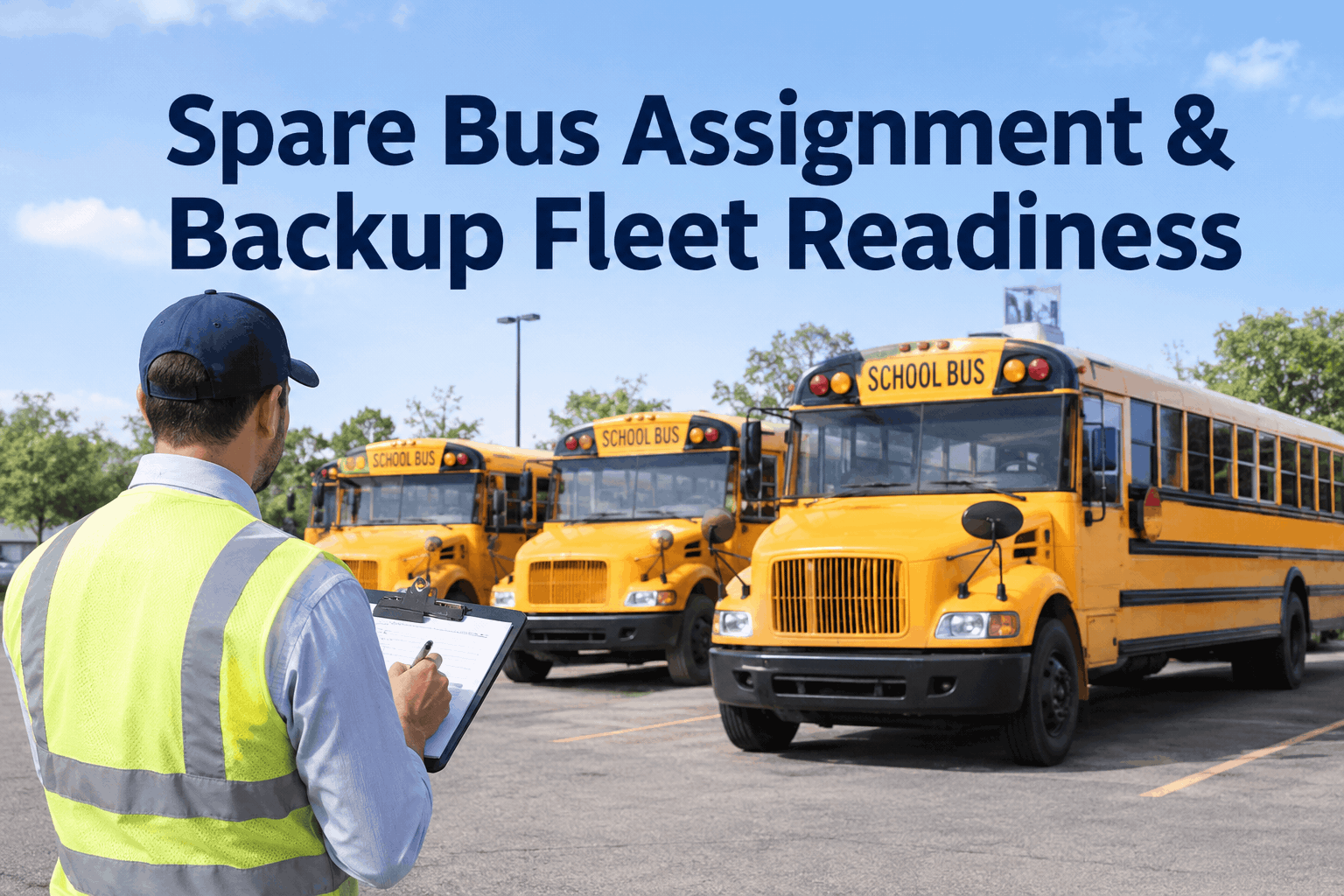
Spare Bus Assignment & Backup Fleet Readiness
A spare only covers a route if it is cleared, defect-free, and the right bus for the run. Owning six spares does not mean six are ready — here is how to know which backup to grab before the route pulls out.
The lot count and the ready count are two different numbers. Only the ready count can actually cover a route — and it is the one you cannot see on a whiteboard.
A Parked Spare Is Not a Ready Spare
The gap that strands a route is the one between how many spares you have and how many are genuinely assignable. Three things quietly take a spare out of play, and none of them is visible from across the yard.
It is in for maintenance
A spare with a PM due or a repair in progress is on the lot but not available. Assign it and you have simply moved the breakdown to a different route.
It has an open defect
A spare with an unresolved write-up — a lift fault, a brake note — is not safe to send. On paper it looks free right up until the driver flags it.
It is the wrong bus for the run
Too few seats, no wheelchair lift the route needs, wrong fuel range — a ready bus that does not fit the route is still a route you cannot cover.
Real backup readiness is the ready-and-right count, not the parked count — and it changes every time a spare goes in for service or picks up a defect.
Keeping that count live is the whole job, and it does not take extra staff. You can sign up free and keep every spare's readiness current.
Your Real Backup Is Thinner Than the Spare Count
Transit fleets run on a spare ratio — the FTA guideline commonly lands near 20% of peak vehicles for larger fixed-route fleets. That buffer is already tight, and a spare in the shop or carrying a defect shrinks it further on the exact morning you need it.
Illustrative figures. A roughly 20% spare ratio looks like four buses here — but with two down, the real backup for a surprise is two, not four.
Knowing that true number before pull-out is the difference between a calm swap and a scramble. You can walk through a live spare-readiness board in a demo and see your real backup count for any morning.
Assigning a Substitute Bus: The Readiness Check
When a primary drops, speed matters — but a fast assignment of the wrong spare just moves the problem. Run this on the backup before you hand over the keys. The CRITICAL items make the bus safe and legal to send; the MATCH items make sure it actually fits the route it is covering.
- The spare's last inspection clearedMost recent DVIR shows a pass with no uncorrected safety defect on this bus.CRITICAL
- No open defect and no PM overdueNo unresolved write-up, and no preventive maintenance past due while the spare sat parked.CRITICAL
- A qualified driver is cleared for itThe driver holds the right CDL and endorsements for this bus and route, in date.CRITICAL
- Capacity and lift match the routeEnough seats, and the wheelchair lift or features this specific route requires.MATCH
- Fuel or charge covers the full runDiesel, CNG, or battery charge handles the route plus margin — no mid-route top-up.MATCH
- The swap is logged against both busesRecord which spare covered which route, so utilization and coverage stay accurate.LOG
When the system already knows each spare's status, this check is a glance, not a lap around the yard. You can sign up free and keep your spare pool ranked and ready.
How BusCMMS Keeps Your Backup Fleet Ready
Spare readiness is a live number, not a weekly guess — it moves every time a bus goes in for service or clears a repair. BusCMMS keeps that number current, so the next ready spare is always one you can trust.
Ranked spare-readiness board
Every spare shows ready, hold, or down in real time, ordered so dispatch grabs the next truly road-ready bus first.
Defects and PM pull a spare automatically
An open work order or an overdue PM marks a spare unavailable on its own, so a problem bus never gets assigned by mistake.
Match by type, lift, and fuel
Filter spares by capacity, wheelchair lift, and fuel type, so the backup you send actually fits the route it covers.
Every swap logged for coverage
Each substitution is recorded against both buses, keeping utilization, availability, and route coverage accurate and audit-ready.
That is a backup plan you can trust under pressure instead of a yard full of maybes — the same visibility that keeps your passenger transit operations covered and compliant. To set it up, book a demo and bring your spare roster.
A Transportation Director's Take
Key Takeaways on Spare Bus Readiness
A spare is only backup if it is ready when you reach for it. Four things to hold on to.
Count ready, not parked
The lot count and the route-ready count are different numbers — plan on the second.
Three things hide a spare
In for maintenance, open defect, or wrong type — any one takes it out of play.
The buffer is thin already
A roughly 20% spare ratio shrinks fast when a spare or two is down.
Know the number before pull-out
A live readiness board turns the 6:45 scramble into a one-glance swap.
Treat backup fleet readiness as a live count of ready-and-right spares, not a yard full of parked maybes — and the morning a primary goes down becomes a quick, confident swap instead of a scramble. Your coverage holds because you knew your real backup before you ever needed it.