You run inspections, the shop, the drivers, the budget, and the 6am call when a bus won't start — across four systems that don't talk. School district transportation software pulls all of it into one place, so the job stops being a juggling act. You can see your whole operation on one screen in a demo first.
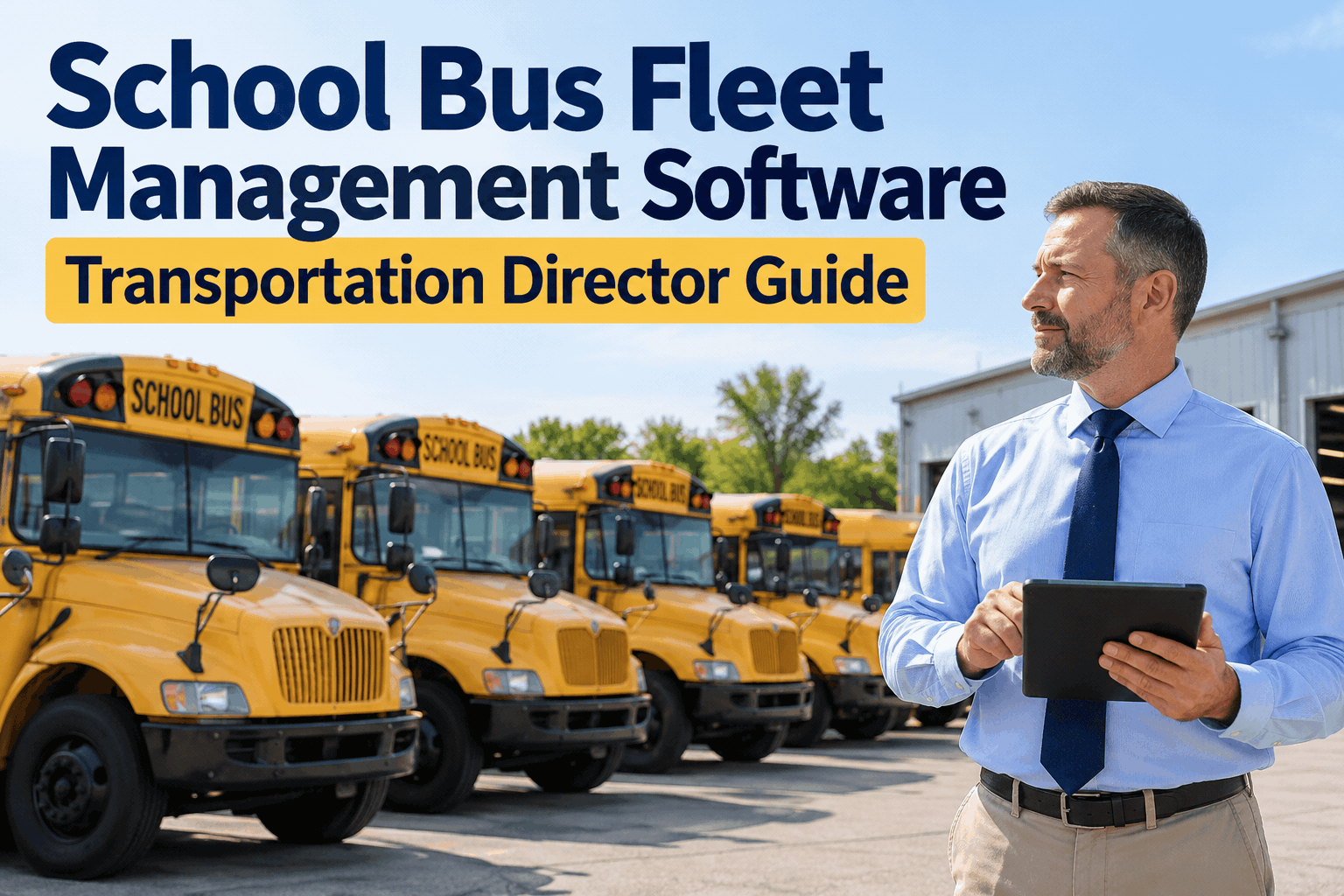
School Bus Fleet Management Software: A Transportation Director's Guide
Inspections, maintenance, drivers, and budget — the four things you own, run from one place instead of four. Here's what the software does for the person who actually runs the department.
The Director's Real Problem: Four Tools, One Job
Ask most transportation directors where their fleet stands and they'll open three tabs and a spreadsheet. The GPS vendor has routes, a maintenance log has repairs, driver files live in a binder, and the budget is in a workbook you update by hand. Nothing lines up, and the gaps are where buses and deadlines slip.
The data never lines up
When routes, repairs, drivers, and dollars live in separate tools, you can't answer a simple question — how many buses are road-ready right now — without stitching sources together by hand.
Deadlines live in your head
A state inspection due date, a driver's CDL renewal, a PM interval — if these are in your memory or a sticky note, one of them eventually gets missed, and the one that gets missed is the one that bites.
You report up with guesswork
When the superintendent or board asks for availability or cost per mile, you're assembling it the night before instead of pulling it in a click — and a number you built by hand is a number you'll defend by hand.
The job isn't hard because any one piece is hard — it's hard because no single tool holds all four. School district transportation software exists to be that single tool.
Seeing all four in one view is the whole shift — you can create a free account and pull your fleet together on one screen to feel what you've been missing.
The Four Domains School Transportation Management Software Unifies
A director's day splits into four jobs, and good school transportation management software runs all four on the same data. Here's what each looks like when it's not living in a separate silo.
Inspections & compliance
Pre-loaded school-bus DVIRs for stop arms, crossing gates, 8-light systems, student mirrors, and emergency exits — a failed item flags the bus and opens a work order, with state DOT and FMCSA records audit-ready.
Maintenance & PM
Separate preventive maintenance schedules for diesel, propane, and electric buses, triggered by mileage or date, so nothing on an aging fleet slips through on the wrong interval.
Drivers & certifications
CDL and certification expiry dates tracked with alerts, so a driver never rolls out on a lapsed credential and you're never scrambling to prove it during a review.
Budget & cost
Cost per mile and maintenance spend tracked per bus and fleet-wide, so the budget you report up is pulled from real work orders, not rebuilt by hand each cycle.
Run on one data set, the four stop fighting each other. You can start a free account and see all four in one place for your own fleet in minutes.
Keeping the Budget Defensible, Not Just Balanced
A transportation director doesn't just spend a budget — they defend it. When maintenance cost tracking runs off real work orders, you can show the trend instead of describing it, and the trend you want is spend bending back under your cap as planned work replaces breakdowns.
Illustrative of the pattern planned maintenance drives — not a guaranteed result. Your curve depends on fleet age, how reactive you start, and how consistently PM gets scheduled.
That's the number a board remembers: not "we tried," but "we're under budget and trending down." You can book a demo to see cost-per-mile and spend tracked from your own work orders.
Drivers and Compliance: The Deadlines That Don't Forgive
The quiet risk in any district fleet isn't a worn brake — it's a lapsed credential or a missed inspection date nobody tracked. School bus maintenance tracking and driver management on one system turn those invisible deadlines into alerts you act on, not surprises you explain.
CDL and cert expiry, tracked
Every driver's license and certification date with alerts before they lapse — no driver on a route with an expired credential, no scramble during a review.
Inspection dates that alert you
State DOT and annual inspection deadlines surface before they're due, so a bus is never pulled from service over a date you simply forgot.
Records ready when asked
Maintenance and inspection history pulls in minutes for a state review or a board question — the paperwork is already done because the system kept it.
BusCMMS reports districts holding 95%+ fleet availability and going live in 2–4 weeks — company-reported figures from its own customer data, not independently verified.
Those deadlines are the ones that cost you a bus or a headline when they slip — you can book a demo to see CDL, cert, and inspection alerts on your own fleet.
What Changes in a Director's Week
The clearest sign the software is working isn't a report — it's how your own week shifts. Time that went to chasing status and assembling numbers moves to planning and actually running the department.
Illustrative of the shift directors describe once the data is unified — not a measured average.
How BusCMMS Runs a District's Transportation
BusCMMS is school district transportation software built for buses from day one, not a trucking tool with a school label. Here's what a transportation director gets the week it goes live.
Inspections to work orders
Pre-loaded school-bus DVIRs where a failed item flags the bus and opens a repair — no safety check falls through the cracks.
PM for every fuel type
Diesel, propane, and electric buses each on their own schedule, triggered by mileage or date, all on one dashboard.
Driver and cert tracking
CDL and certification dates with alerts, so credentials never lapse unnoticed and reviews stop being a scramble.
Reporting you can defend
Availability, cost per mile, and PM compliance pulled from real data — the numbers you report up, ready in a click.
Availability, savings, and cost-reduction figures are reported by BusCMMS from its own customer data, not independently verified. Treat them as a starting point and measure against your own district's baseline.
A Transportation Director's Take
Key Takeaways for Transportation Directors
School district transportation software earns its place by running the four jobs a director owns on one data set — so the week shifts from chasing status to running the department. Four things to carry into the decision.
One tool holds all four
Inspections, maintenance, drivers, budget — on one data set, they stop fighting each other.
Deadlines become alerts
CDLs, certs, and inspection dates surface before they lapse instead of after they bite.
The budget gets defensible
Cost per mile from real work orders means you show the trend, not describe it.
Reporting up gets easy
Pull availability and cost live for the board instead of building it the night before.
Choose school district transportation software built for buses, and the four-tool juggling act becomes one screen you actually run on. The department was always yours to run — the right software just lets you see all of it at once.