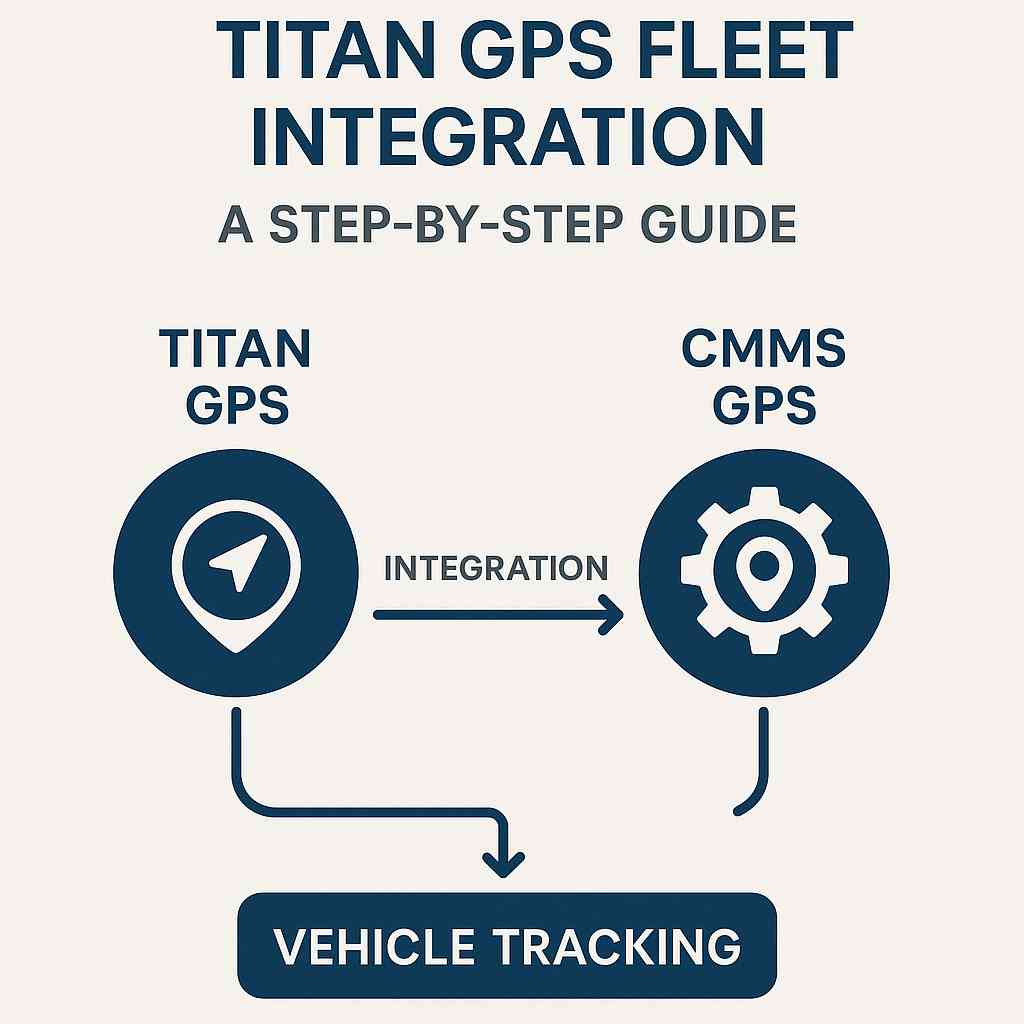
In today's competitive manufacturing landscape, integrating advanced GPS fleet tracking systems with your Computerized Maintenance Management System (CMMS) isn't just a luxury—it's a necessity. Titan GPS fleet integration represents a game-changing approach to streamline operations, enhance productivity, and reduce costs across your manufacturing facilities.
This comprehensive guide will walk you through the essential steps to successfully implement Titan GPS fleet integration with your CMMS automation system, ensuring seamless GPS tracking capabilities that transform your fleet management operations.
Ready to Transform Your Fleet Management?
Discover how Titan GPS integration can revolutionize your manufacturing operations.
Getting StartedBook a Demo
Understanding Titan GPS Fleet Integration Benefits
Before diving into the implementation process, it's crucial to understand why Titan GPS fleet integration is essential for US manufacturing professionals. The integration offers unprecedented visibility into your fleet operations, enabling real-time tracking, predictive maintenance scheduling, and comprehensive asset management.
Key Benefits: Real-time vehicle tracking, automated maintenance scheduling, fuel consumption monitoring, driver behavior analysis, and comprehensive reporting capabilities that directly impact your bottom line.
Manufacturing companies utilizing Titan GPS fleet integration typically experience a 25-30% reduction in operational costs and a 40% improvement in fleet efficiency. The CMMS automation capabilities ensure that maintenance schedules are automatically updated based on actual vehicle usage data, GPS tracking patterns, and predictive analytics.
Pre-Integration Planning and Assessment
Successful Titan GPS fleet integration begins with thorough planning and assessment of your current systems. This phase determines the scope of integration, identifies potential challenges, and establishes clear objectives for your GPS tracking implementation.
System Compatibility Assessment
Evaluate your existing CMMS infrastructure to ensure compatibility with Titan GPS systems. This includes reviewing API capabilities, data formats, and integration protocols. Most modern CMMS platforms support standard GPS tracking integration protocols, but verification is essential.
Fleet Inventory Documentation
Create a comprehensive inventory of all vehicles and equipment that will be included in the Titan GPS fleet integration. Document vehicle specifications, current maintenance schedules, and operational patterns to optimize the integration process.
- Vehicle identification numbers and specifications
- Current maintenance schedules and history
- Operational routes and usage patterns
- Driver assignments and responsibilities
- Fuel consumption benchmarks
Step-by-Step Integration Process
The actual integration process involves several critical steps that must be executed systematically to ensure optimal results. Each step builds upon the previous one, creating a robust foundation for your GPS tracking and CMMS automation system.
Step 1: Hardware Installation and Configuration
Begin by installing Titan GPS tracking devices on all fleet vehicles. These devices must be properly configured to communicate with your CMMS automation system. Professional installation ensures optimal signal reception and device longevity.
Step 2: Software Integration Setup
Configure the software integration between Titan GPS systems and your CMMS platform. This involves setting up API connections, data mapping protocols, and establishing real-time communication channels between systems.
Step 3: Data Synchronization and Testing
Implement comprehensive data synchronization processes to ensure accurate information flow between GPS tracking devices and your CMMS. Conduct thorough testing to verify data accuracy and system responsiveness.
Need Expert Assistance with Integration?
Our team of specialists can guide you through every step of the process.
Getting StartedBook a Demo
Optimizing CMMS Automation with GPS Data
Once your Titan GPS fleet integration is operational, the focus shifts to optimizing CMMS automation capabilities. This involves leveraging GPS tracking data to enhance maintenance scheduling, route optimization, and operational efficiency.
The integration enables automatic generation of maintenance work orders based on actual vehicle usage data collected through GPS tracking. This predictive approach to maintenance scheduling reduces unexpected breakdowns and extends equipment life cycles.
Automated Maintenance Scheduling
Configure your CMMS to automatically schedule maintenance based on real-time GPS data including mileage, engine hours, and operational conditions. This ensures optimal maintenance timing and reduces unnecessary service intervals.
Performance Monitoring and Analytics
Implement comprehensive monitoring systems that analyze GPS tracking data to identify trends, optimize routes, and improve overall fleet performance. These analytics provide actionable insights for continuous improvement.
Training and Change Management
Successful Titan GPS fleet integration requires comprehensive training and change management strategies. Your team must understand how to effectively utilize the new GPS tracking capabilities and CMMS automation features.
Develop structured training programs that cover system operation, data interpretation, and troubleshooting procedures. Regular training sessions ensure that all team members can maximize the benefits of the integrated system.
Training Focus Areas: System navigation, report generation, alert management, maintenance scheduling, and data analysis techniques that drive operational improvements.
Measuring Success and Continuous Improvement
Establishing key performance indicators (KPIs) is essential for measuring the success of your Titan GPS fleet integration. These metrics help quantify the impact of GPS tracking and CMMS automation on your operations.
Monitor metrics such as fuel efficiency improvements, maintenance cost reductions, vehicle downtime decreases, and overall operational efficiency gains. Regular analysis of these metrics enables continuous refinement of your integrated system.
Key Performance Indicators
- Fuel consumption reduction percentages
- Maintenance cost savings
- Vehicle utilization rates
- Downtime reduction metrics
- Driver productivity improvements
Ready to See Results?
Join thousands of manufacturing professionals who have transformed their operations with integrated GPS fleet management.
Getting StartedBook a Demo
Conclusion
Titan GPS fleet integration represents a transformative opportunity for US manufacturing professionals to enhance operational efficiency, reduce costs, and improve overall fleet management capabilities. The step-by-step approach outlined in this guide provides a roadmap for successful implementation of GPS tracking and CMMS automation systems.
The benefits of integrated GPS fleet management extend beyond simple tracking capabilities. By leveraging real-time data, predictive analytics, and automated maintenance scheduling, manufacturing companies can achieve significant competitive advantages in today's demanding market environment.
Success depends on careful planning, systematic implementation, comprehensive training, and continuous optimization. With proper execution, Titan GPS fleet integration becomes a powerful tool for driving operational excellence and sustainable business growth.