Bus 214 climbs a grade toward its first stop when the dash lights up: DERATE IN 150 MI. By the time it limps back it is capped at 25 mph, a tow is on the phone and two routes need covering. Bus fleet emissions maintenance is the work that stops that morning — see how BusCMMS catches it early in a demo.
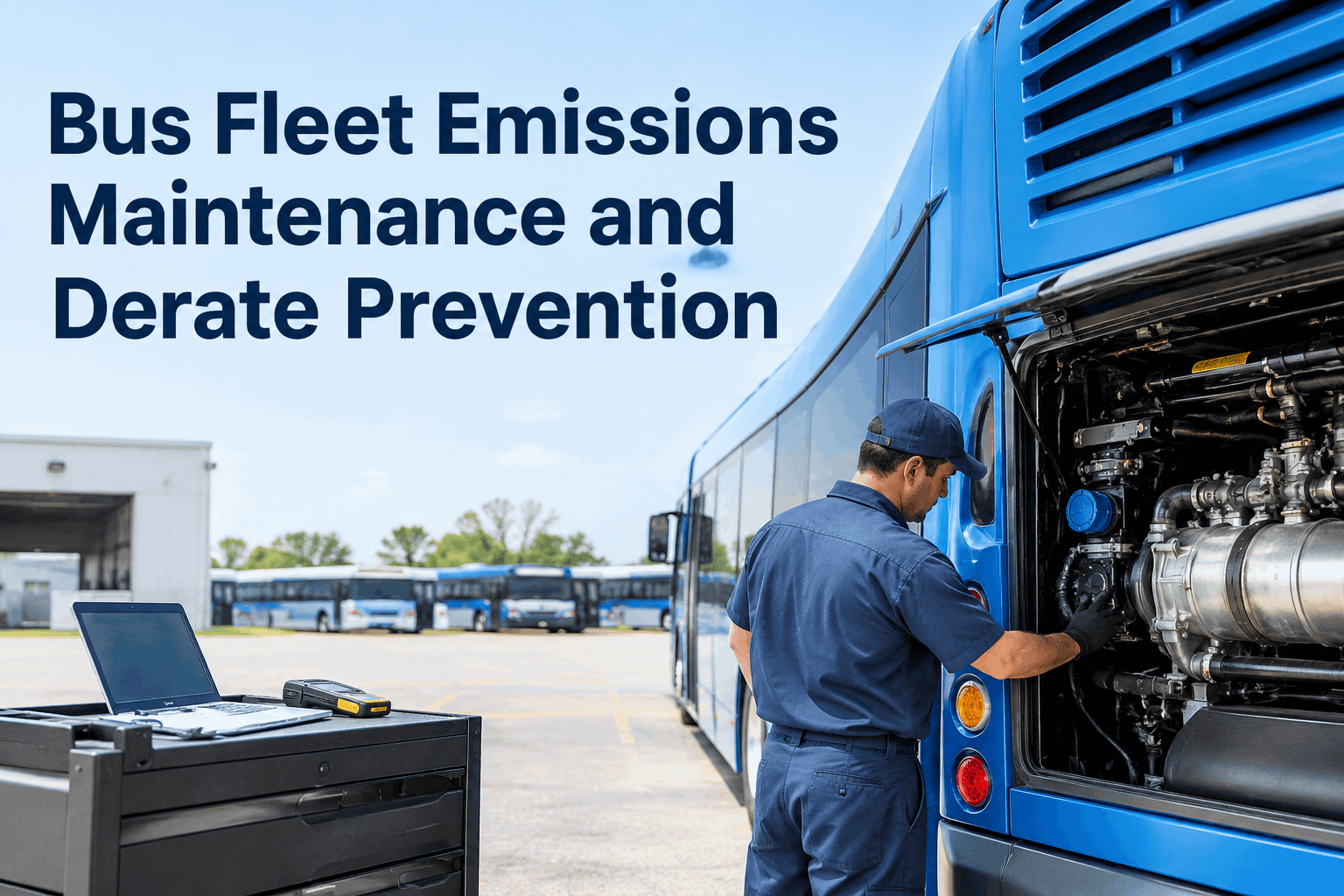
Bus Fleet Emissions Maintenance and Derate Prevention
DEF, SCR, and DPF faults are the leading cause of diesel bus derates — and a derate on an active route means a tow, covered runs, and a bus out of service. Here is how a maintenance program catches the defect while it is still cheap to fix.
What a Derate Actually Costs Your Fleet
A derate is not a check-engine light you note and move on from. It is a countdown the engine controls, and when it hits zero the bus is a 25 mph obstacle you have to recover. Three costs land at once.
The recovery and the covered runs
A heavy-duty tow plus the scramble to cover two routes with spare buses and drivers you did not plan for. The derate never happens at a convenient hour.
The bus is down, not just slow
Until the DEF, SCR, or DPF fault is diagnosed and cleared, that bus is out of the rotation. On an aging diesel fleet with few spares, one derate ripples across the week.
The cleared-not-fixed trap
Clear a derate without repairing the root cause and it returns, often inside a shift. A cleared derate is not a fixed derate — it is the same bill, postponed.
Roughly 80% of diesel derates today trace back to the emissions system — SCR, DEF, DPF, and NOx sensors — which means most of them are catchable on a maintenance schedule, not a surprise.
Know the Three Parts That Trigger an Emissions Derate
Modern diesel bus aftertreatment is a chain of three systems. When one is unhappy the others compensate until the ECM gives up and derates. You do not need to be a tech to run the maintenance — you need to know what each part needs and when.
Most of these have a maintenance answer long before the ECM reacts: DEF kept fresh and in spec, DPF regens that actually finish, NOx sensors replaced before they drift. The hard part is not the fix — it is tracking every bus's emissions-system intervals across the fleet without one falling through the cracks.
Where Emissions Derates Actually Come From
Not every trigger is equal, and knowing the mix tells you where your maintenance attention pays off. The DEF quality sensor is a notorious culprit — it is one of the highest-failure-rate parts in the whole SCR system, and it forces a derate the moment fluid reads outside roughly a 30 to 35 percent urea concentration.
Shares are directional, drawn from industry derate-cause reporting; the point is the pattern — SCR, DEF, and DPF between them account for the large majority of emissions derates.
The takeaway for your shop: a DEF quality check and a NOx-sensor habit head off the two biggest trigger families before they ever reach the ECM.
DEF Quality Is the Cheapest Derate to Prevent
DEF is just 32.5 percent urea and purified water, but it is fussy. Let it sit in heat, dilute it, or top it from a contaminated jug and the quality sensor reads it as bad — and the bus starts its derate countdown. The fix costs a few dollars of fluid; the miss costs a tow.
Put DEF handling on the same footing as oil and coolant: check fluid quality, date your stock, and keep dispensing clean. When each bus's DEF checks live inside its preventive maintenance schedule instead of a tech's memory, nothing drifts off-spec unnoticed.
Build an Emissions Maintenance Program That Prevents Derates
Preventing derates is not one heroic repair — it is four habits running quietly in the background on every diesel bus. Here is the loop that turns emissions-system defects into scheduled work instead of roadside emergencies.
Schedule emissions PM by fuel type
Diesel buses need DEF checks, DPF regen monitoring, and NOx-sensor intervals that a diesel-blind, generic PM plan skips. Fuel-type-specific preventive maintenance puts the right emissions tasks on the right buses.
Capture fault codes the moment they fire
When an SPN points to a DEF dosing unit or SCR conversion fault, that code should open a work order on its own — during the runway — not wait for a driver to mention a warning light at end of shift.
Track every defect to a real repair
A derate cleared without a root-cause fix comes back. Logging the defect, the diagnosis, and the parts closes the loop so the same bus is not back on the hook next week.
Keep the service record audit-ready
Emissions work and DVIR defects belong in one record your state DOT inspection and FTA review can see. A clean history also protects you on OEM warranty for aftertreatment parts.
Run that loop and a DEF or SCR fault becomes a Tuesday work order, not a Monday-morning tow. You can start free and put your diesel buses' emissions intervals on a schedule today.
The Derate-Prevention Checklist for Diesel Buses
Run this against your shop. Every box you cannot tick today is a bus one DEF jug or one drifting sensor away from a roadside derate. These are the items BusCMMS tracks for you automatically.
- DEF quality and level checked on a set intervalFluid in spec, stock dated, dispensing clean — the single cheapest derate to prevent.CRITICAL
- DPF regens monitored and ash service scheduledIncomplete regens and ash buildup are a top-three derate trigger — catch them on interval.CRITICAL
- NOx sensors replaced before they drift outAging NOx sensors throw SCR conversion faults; a replacement habit beats a reactive one.HABIT
- Fault codes auto-open a work orderSPN 3361, 3216, 5246 and friends become scheduled work during the runway, not surprises.AUTOMATE
- Every defect tracked to a verified repairCleared-not-fixed is closed off — the derate does not quietly return mid-route next week.AUTOMATE
- Emissions service history is audit-readyOne record for state DOT inspection, FTA review, and OEM aftertreatment warranty claims.COMPLIANCE
The two critical items — DEF quality and DPF regens — stop the two biggest trigger families, so start there. You can walk through this exact checklist on your own fleet in a demo.
How BusCMMS Keeps Emissions Faults Off the Road
Generic fleet software treats a diesel bus like any truck and misses the emissions-specific intervals entirely. BusCMMS is built for buses, so the DEF, SCR, and DPF program is there on day one — and it ties directly into the fault codes your engines already send.
Fuel-type-aware PM for diesel
Diesel buses get DEF, DPF, and SCR intervals that CNG and electric buses do not — all on one dashboard, triggered by mileage or calendar.
Fault codes become work orders
OEM and telematics connectors turn an emissions SPN into a work order during the derate runway, so the fix is scheduled, not scrambled.
Defect tracking and audit records
Every emissions defect tracked to a verified repair, with a clean service history for state DOT inspection, FTA review, and OEM warranty.
It is purpose-built for school districts, transit agencies, and government bus operations, and most fleets are live in two to four weeks — not the months a generic rollout takes.
A Shop Foreman's Take
The derate that finally changed how we run was a DEF quality sensor on a 2016 that nobody flagged. Bus made it to the second stop, then capped out, and we towed it in front of a loaded house. Now the DEF check is a scheduled line item on every diesel, and fault codes hit my board before the driver even calls. I watch two numbers: days since last DEF check per bus, and open emissions work orders. Both near zero means I sleep.
Key Takeaways on Bus Fleet Emissions Maintenance
Bus fleet emissions maintenance is derate prevention, and almost all of it is catchable before the ECM reacts. Four things to carry back to the shop.
Emissions drives most derates
About 80% trace to SCR, DEF, DPF, and NOx sensors — all maintainable on a schedule.
DEF quality is the cheap win
Fresh, in-spec fluid is a few dollars; an off-spec derate is a tow and covered routes.
The runway is not forever
EPA's staged schedule buys miles, but an ignored fault still ends at a 25 mph cap.
Track the code to a repair
Fault code to work order to verified fix — cleared-not-fixed just reschedules the tow.
Treat emissions maintenance as a tracked program and the derate runway becomes maintenance lead time instead of a countdown to a tow. Put your diesel buses' DEF, SCR, and DPF work on a bus-built system and keep them earning their routes.