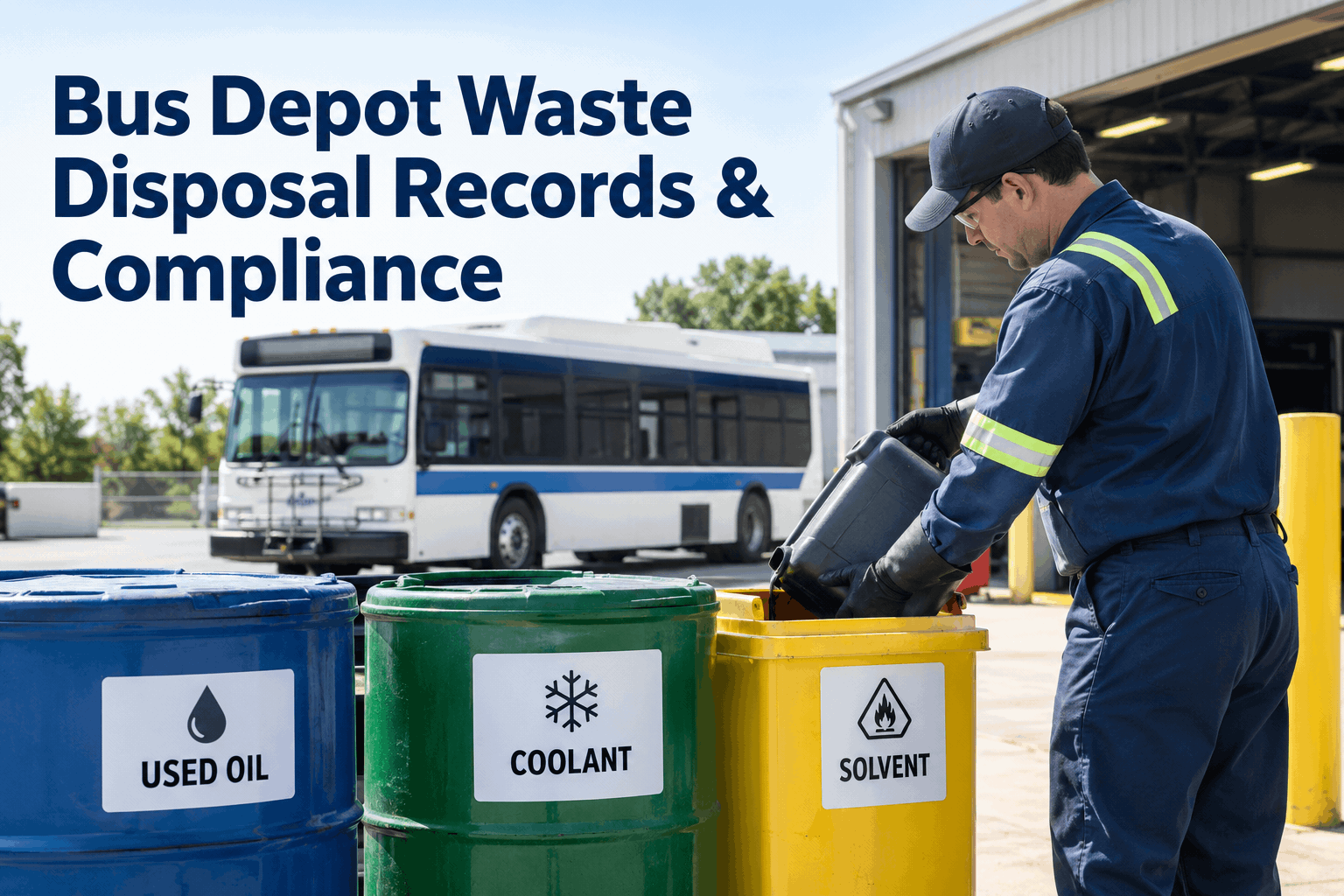
Every bus depot generates used oil, spent coolant, and solvent as a routine part of maintenance — and every one of those waste streams is supposed to leave a paper trail. In most shops, that trail exists in theory: a hauler's receipt here, a drum log there, nothing connected to the actual repair that produced it. Here's how to keep depot waste disposal records that hold up when someone actually asks for them.
DEPOT WASTE DISPOSAL RECORDS
Every Drum of Oil, Coolant, and Solvent — Tied to the Work That Produced It
Disposal dates, volumes, haulers, and manifest numbers logged per waste stream — connected to the maintenance record, not filed separately.
A full drum sitting in the corner isn't a disposal problem until someone asks for the manifest. Most depots generate the waste correctly and store it correctly — the gap is almost always the record connecting what left the shop to proof it was hauled away properly. Close that gap — start free with BusCMMS.
Three Waste Streams, Three Different Rules
Used oil, coolant, and solvent don't just look different — they're handled under different assumptions, and treating them the same way is one of the most common ways a record falls apart. This is general background, not legal advice; disposal requirements vary by state and by waste characterization, so confirm specifics with your hauler or environmental compliance contact.
USED OIL
Generally managed under its own federal standard, with the regulatory presumption that it will be recycled rather than disposed of as hazardous waste — but that status depends on keeping it uncontaminated.
Flag: mixing solvent or coolant into the oil tank can reclassify the whole volume.
COOLANT
Not automatically hazardous, but used coolant can pick up heavy metals from the engine over its service life, which may push it into hazardous waste territory depending on what it tests for.
Flag: segregate from oil — mixing contaminates both streams and complicates recycling.
SOLVENT
Shop solvents are frequently handled as hazardous waste by default, which typically means manifest requirements and generator recordkeeping obligations that oil and coolant may not always carry.
Flag: the stream most likely to need a manifest number on every pickup.
Could You Produce Last Quarter's Disposal Records Right Now?
See how BusCMMS logs oil, coolant, and solvent disposal against the maintenance work that generated it — searchable by stream, by date, or by depot.
The oil change happens. The drum fills. The hauler eventually comes. Somewhere in that chain, the connection back to which repairs actually produced the waste usually disappears — and that connection is exactly what an audit or inspection wants to see. Keep that connection intact — start free.
Disconnected Records
Work Order
Disposal Record
The repair is logged. The waste is hauled eventually. Nothing ties one to the other — so proving which work orders generated which volumes means reconstructing it after the fact.
Connected Records
Work Order
Disposal Record
The same repair logs its fluid output against the depot's waste stream automatically. When the hauler comes, the manifest attaches back to real, dated maintenance activity.
Waste stream and volume — oil, coolant, or solvent, with the quantity generated, not just a generic "waste" entry.
Hauler and pickup date — who took it and when, matched against the actual service agreement on file.
Manifest or ticket number — the specific document a regulator or auditor would ask to see, filed where it can actually be found.
Source work orders — which repairs or PM services generated the volume, so the record isn't a disconnected drum log.
A flag for overdue pickups — a drum sitting past its usual cycle should surface on its own, not get noticed during a walk-through.
Expert Perspective: The Waste Was Never the Problem — The Record Was
Almost every depot I've reviewed is actually disposing of its waste correctly — the hauler comes, the drums get emptied, nobody's dumping anything they shouldn't. What falls apart is the paperwork connecting it all together. The manifest lives in a filing cabinet in the shop office. The work orders that produced the waste live in a separate system entirely. Ask someone to show which repairs generated last month's coolant volume, and you'll watch them go quiet. The fix isn't a new disposal process — your hauler relationship is probably fine. It's making sure every drum traces back to the maintenance activity that filled it, so the record answers the question before anyone has to ask it twice.
Conclusion: A Record That Answers the Question Before It's Asked
Depot waste disposal isn't complicated to do right — most shops already handle the physical side correctly. What separates a defensible program from a vulnerable one is whether the paperwork keeps pace: whether a drum of used oil, coolant, or solvent can be traced back to the exact repairs that produced it, with a manifest number attached and a hauler date on file. That's not a bigger process. It's a connected one. Walk through depot waste tracking with a BusCMMS specialist — book a demo. If you can't currently pull last quarter's disposal records for all three streams in under five minutes, that's the clearest sign the records need a system behind them. Start your free BusCMMS account and log today's pickup.
Keep Every Waste Stream Traceable Back to the Work Order
BusCMMS logs used oil, coolant, and solvent disposal against the maintenance record that generated it — volume, hauler, manifest number, and pickup date, all searchable.
They're the documentation trail for used oil, coolant, and solvent generated during maintenance — volume, hauler, pickup date, and manifest or ticket number, ideally connected back to the specific work orders that produced the waste.
Is used oil always considered hazardous waste?
Generally no — used oil is typically managed under its own recycling-oriented standard rather than full hazardous waste rules, but it can be reclassified if contaminated with solvent or other substances. Requirements vary by state, so confirm specifics with your hauler.
Why should coolant and used oil be kept in separate containers?
Mixing waste streams can contaminate both, complicate recycling, and in some cases reclassify an entire container as hazardous waste — turning a routine disposal into a more complex and costly one.
What should a waste manifest be connected to in a maintenance system?
Ideally, the work orders that generated the waste. A manifest number sitting alone in a filing cabinet doesn't show which repairs produced that volume — linking the two is what makes the record defensible.
How long does it take to start tracking waste disposal in BusCMMS?
Most depots log their first waste pickup record the same day they sign up. Linking historical manifests and work orders typically takes a couple of weeks for larger operations.