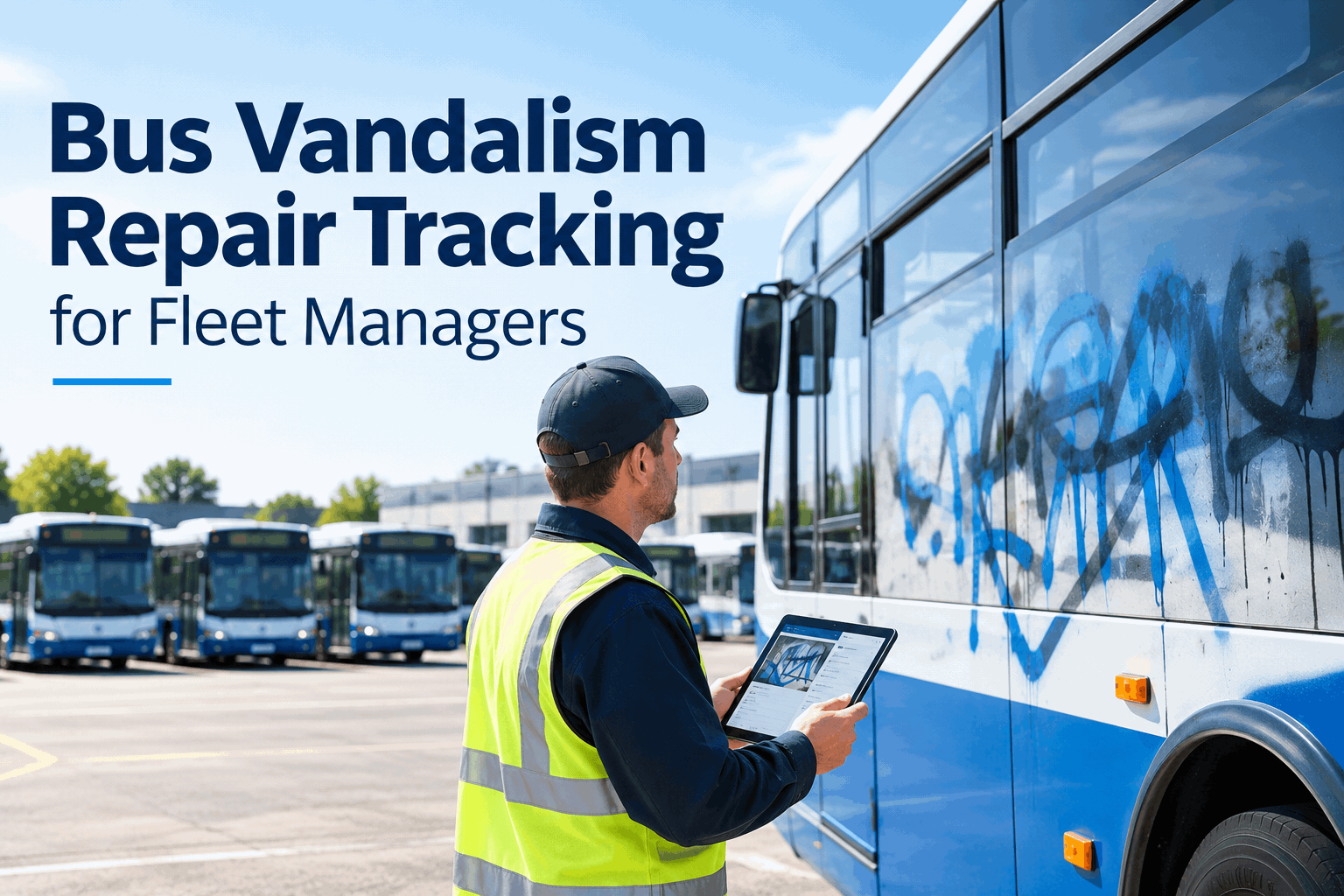
Vandalism repair has a pattern problem most fleets never actually see. A slashed seat here, graffiti on a window there, a cracked panel on the same bus twice in two months — each repair gets logged and closed, but nobody ever lines them up side by side. Here's how to track vandalism repair as a connected record instead of a string of one-off work orders.
VANDALISM & GRAFFITI REPAIR TRACKING
Every Repair Logged — So Repeat Damage Stops Hiding in Plain Sight
Work orders, repair cost, and incident history tracked per bus — so the pattern shows up before the tenth repair, not after it.
Every individual vandalism repair looks small. $95 for a seat, $140 for graffiti removal — none of it trips a budget alarm on its own. It's only when those work orders sit next to each other, on the same bus, that the real number — and the pattern behind it — becomes visible. See your fleet's repeat-damage pattern — start free.
The Repeat-Damage Problem: Small Repairs That Add Up Unnoticed
No single vandalism repair is expensive enough to escalate. That's exactly why it's the easiest cost to lose track of. A fleet running work orders without a connected view ends up repairing the same three or four buses over and over — without ever noticing they're the same three or four buses.
BusIncidents (90 days)Repair Cost
Bus 118
3
$445
Bus 47
2
$280
Bus 302
2
$255
Bus 14
1
$95
Illustrative example. Once repairs are logged per bus, a ranked view like this takes seconds to produce instead of a manual pull from scattered work orders.
Which Buses Are Quietly Costing You the Most in Repeat Repairs?
See how BusCMMS logs every vandalism and graffiti repair against the bus it happened on — so repeat damage shows up as a pattern, not a surprise at budget time.
From Reported Damage to Closed Repair: How the Record Should Move
Graffiti removal and interior vandalism repair are different jobs with different vendors and timelines, but they should land on the same kind of record — dated, costed, and tied to the exact bus. Open your first vandalism work order free.
1
Damage Found and Logged
Driver, technician, or a depot walk-through flags the damage — graffiti, a slashed seat, a cracked window — against the specific bus.
2
Work Order Opened
Repair type, vendor (if outside), and estimated cost are attached — graffiti removal routed differently than an interior seat or glass repair.
3
Repair Completed and Costed
Labor, materials, and final cost are logged against the bus — not buried in a general supplies or vendor invoice line.
4
Record Joins the Bus's History
This is the step most fleets skip. The repair closes, but it should also roll into that bus's running incident count — so the third repair in 90 days is visible, not invisible.
Bus and exact location of damage — which vehicle, which component or area, logged at the time it's found.
Damage type — graffiti, upholstery damage, glass, fixtures — categorized so patterns by type are visible, not just patterns by bus.
Repair vendor and cost — in-house or outside, with the final cost logged against the bus, not a general ledger line.
Date repaired and closed — so repair turnaround time is measurable, not just the fact that it eventually got fixed.
Running incident count per bus — the piece that turns isolated repairs into a flag worth acting on.
A connection to route or shift, where known — so a pattern pointing to a specific route or time window doesn't stay buried in separate reports.
Expert Perspective: The Cost Isn't the Repair — It's Not Noticing the Pattern
I've sat in budget meetings where a fleet manager was genuinely surprised to learn one bus had been repaired for vandalism four times in a single semester. Not because nobody fixed it — every repair had been done and closed properly. But each one was treated as a one-off, so nobody ever added them up. That's the real cost of vandalism in most fleets: not the individual repair, which is usually small, but the total nobody sees because the records never sit next to each other. The fix is almost embarrassingly simple — log every repair against the bus, let the count accumulate automatically, and the pattern shows itself. You stop reacting to the tenth incident and start noticing it was a pattern after the third.
Conclusion: Let the Pattern Find Itself
Vandalism repair isn't hard to track one incident at a time — most fleets already log the individual work order. What gets missed is the connection between them: the same bus, the same route, the same kind of damage, showing up again and again without anyone stacking the records side by side to see it. Once every repair lands on the bus's own history automatically, the pattern isn't something you go looking for — it's something the record shows you. See it on your own fleet — book a BusCMMS demo. If you can't currently name your most-repaired bus without checking several places, that's the clearest sign the tracking needs to live in one system. Start your free BusCMMS account and log today's repair.
Turn Scattered Vandalism Repairs Into One Clear Fleet Record
BusCMMS logs every graffiti and vandalism repair against the exact bus — cost, vendor, and incident count — so repeat damage is visible the moment it starts.
It's the practice of logging every vandalism or graffiti repair against the specific bus it occurred on — type of damage, vendor, cost, and date — so repeated incidents on the same vehicle become visible instead of being treated as unrelated events.
How is this different from general vandalism or video evidence tracking?
Evidence tracking focuses on capturing what happened — photos or footage tied to an incident. Repair tracking picks up from there, focused on the work order, cost, vendor, and the running repair history that reveals repeat damage over time.
Should graffiti removal and interior vandalism repair be tracked the same way?
They're different jobs with different vendors, but both should land on the same kind of record — dated, costed, and tied to the bus — so a fleet can see total vandalism cost per vehicle, not just cost by repair type.
How do I find out which buses are repeatedly vandalized?
Once repairs are logged consistently per bus, a ranked view by incident count or repair cost takes seconds to produce. Without that, it usually means manually pulling and comparing old work orders.
How long does it take to start tracking vandalism repairs in BusCMMS?
Most fleets log their first vandalism repair the same day they sign up. Existing repair history and vehicle rosters typically import within a couple of weeks for larger fleets.