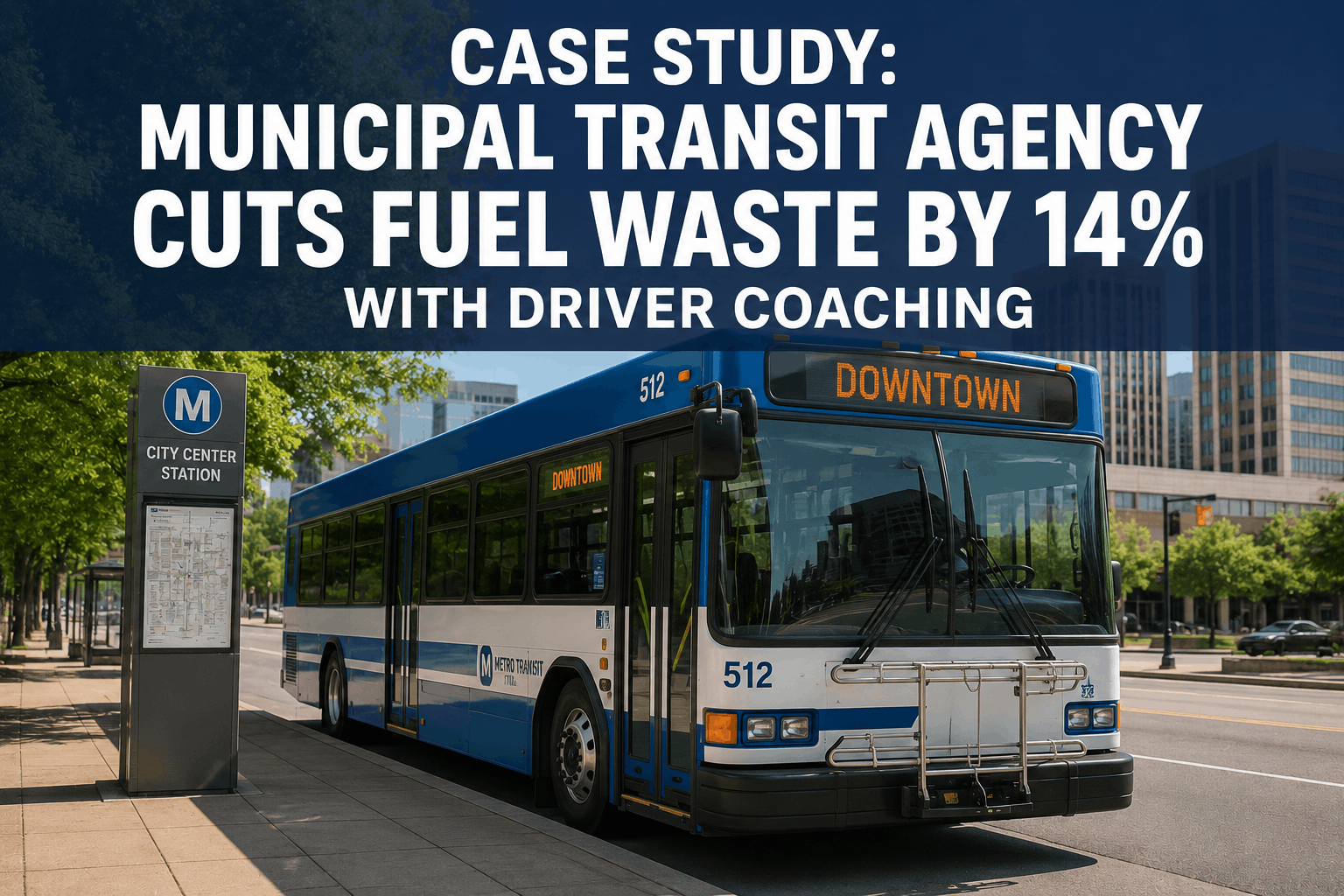
A mid-size municipal transit agency was losing $180,000 annually to fuel waste from excessive idling, aggressive driving, and inefficient routing. After integrating telematics data with BusCMMS driver coaching, they cut fuel waste by 14% in 9 months — saving $25,000 in the first year while reducing emissions and improving service reliability.
Transit Fuel Savings Case Study 2026
Case Study: Municipal Transit Agency Cuts Fuel Waste by 14% with Driver Coaching
Mid-size US transit agency cuts fuel waste 14% using telematics + BusCMMS driver coaching. Idle minutes, speed events, route analysis — measurable savings.
Results at a Glance: $25,000 in Fuel Savings in 9 Months
The agency's 55-bus fixed-route fleet reduced fuel consumption by 14% per mile without cutting service. The savings came entirely from behavior change and telematics-driven coaching, not from replacing vehicles or reducing routes.
14%
Reduction in fuel waste per mile
$25,000
Annual fuel cost savings
9 months
Time to achieve full target
55 buses
Fleet size in the program
The Challenge: Fuel Waste Without Visibility
Excessive Idling
Drivers idled an average of 42 minutes per shift while parked or at layovers. The agency had no real-time idle alerts or driver-specific data.
Aggressive Acceleration
Hard acceleration events averaged 18 per bus per day. These bursts wasted fuel and increased brake wear without improving schedule adherence.
No Driver Feedback
Fuel consumption data was aggregated monthly at the fleet level. Drivers received no individual feedback on their habits or improvement opportunities.
Inefficient Route Practices
Some drivers took unofficial shortcuts that increased idle time or stop-and-go driving, while others maintained smoother, more efficient patterns that went unrecognized.
Rising Fuel Budget Pressure
Fuel costs had increased 12% year-over-year. The transit board demanded cost containment without service cuts or fare increases.
Disconnected Systems
Telematics data lived in one platform; maintenance and dispatch in another. No single view connected driver behavior to fuel consumption and vehicle health.
Fuel Waste Reduction Over 9 Months
After month 6, the reduction plateaued at 14% as remaining waste came from necessary idling for HVAC and passenger boarding. The agency continues to monitor and maintain these gains with monthly coaching reviews.
The Driver Coaching Program That Delivered 14% Savings
Telematics Integration
Engine data on idle time, speed, and acceleration was automatically fed into BusCMMS, giving each driver a weekly fuel scorecard without manual logging.
Idle Reduction Alerts
Real-time alerts notified drivers when idle exceeded 3 minutes. Supervisors received weekly idle reports by driver, turning a hidden waste into a visible metric.
One-on-One Coaching Sessions
Each driver met monthly with a supervisor to review their scorecard. Positive recognition for top performers drove peer motivation more than disciplinary measures.
Route Efficiency Analysis
Telematics data identified the most fuel-efficient routes and driving patterns. These were shared across the fleet as best practices.
Fuel Dashboard for Management
The transit director received a real-time fuel dashboard showing waste by depot, route, and driver. Decisions about scheduling and vehicle assignments became data-driven.
Maintenance Linkage
Fuel waste from mechanical issues (e.g., underinflated tires, clogged filters) was flagged automatically, generating work orders that further reduced consumption.
Before vs. After: Fuel Performance Metrics
Fuel Waste per Mile
Before: 0.43 gallons. After: 0.30 gallons — A 14% reduction equivalent to saving 6,500 gallons annually across the fleet.
Average Daily Idle Minutes
Before: 42 minutes per bus. After: 18 minutes — Idle reduction accounted for nearly half of the total fuel savings.
Hard Acceleration Events
Before: 18 per bus daily. After: 5 per bus daily — Smoother driving reduced fuel consumption and brake wear simultaneously.
Driver Engagement
Before: No feedback loop. After: 92% of drivers improved their score within 60 days of the first coaching session.
Annual Fuel Cost
Before: $178,000. After: $153,000 — Savings exceeded $25,000 in the first year with no reduction in service miles.
We didn't buy a single new bus or cut a single route. All $25,000 in fuel savings came from showing drivers their data and helping them improve. BusCMMS made the coaching process simple and the telematics integration seamless.
Turn Fuel Data Into Driver Improvement
BusCMMS connects telematics data with driver coaching workflows so your transit agency can reduce fuel waste, lower emissions, and save thousands without cutting service. Book a demo to see the platform in action.
Fuel Waste Reduction Case Study FAQs
Is this case study based on a real transit agency?
Yes. The data comes from a 55-bus municipal transit agency in Ohio that implemented BusCMMS with telematics integration. Identifying details have been anonymized at the agency's request.
What was the single biggest source of fuel savings?
Idle reduction accounted for nearly half of the total savings. Cutting idle time from 42 to 18 minutes per bus per day saved thousands of gallons annually.
How quickly did drivers respond to coaching?
92% of drivers improved their fuel score within 60 days of the first one-on-one coaching session. Positive recognition proved more effective than disciplinary approaches.
Can a smaller transit agency achieve similar percentage savings?
Yes. The percentage savings are often consistent regardless of fleet size because the root causes — idle, hard acceleration, and lack of feedback — are universal.
Does fuel coaching require new telematics hardware?
Most modern buses already have engine telematics. BusCMMS integrates with existing systems to pull the data, so no additional hardware was required for this agency.
How long until fuel savings become visible?
The agency saw measurable reductions in waste within the first month. The full 14% reduction was achieved by month 6 and sustained thereafter.
14% Fuel Waste Reduction Is a Data-Driven, Repeatable Outcome
This municipal transit agency proved that fuel waste is not a fixed operating cost — it is a variable that responds immediately to driver behavior change. By integrating telematics with BusCMMS, they turned raw engine data into individual driver scorecards, real-time idle alerts, and management dashboards that made fuel performance visible and actionable. The result was a 14% reduction in fuel waste, $25,000 in annual savings, and a culture of continuous improvement among drivers. For any transit agency facing fuel budget pressure, this case study demonstrates that the fastest path to savings is through the drivers you already have, supported by the right data and coaching tools.