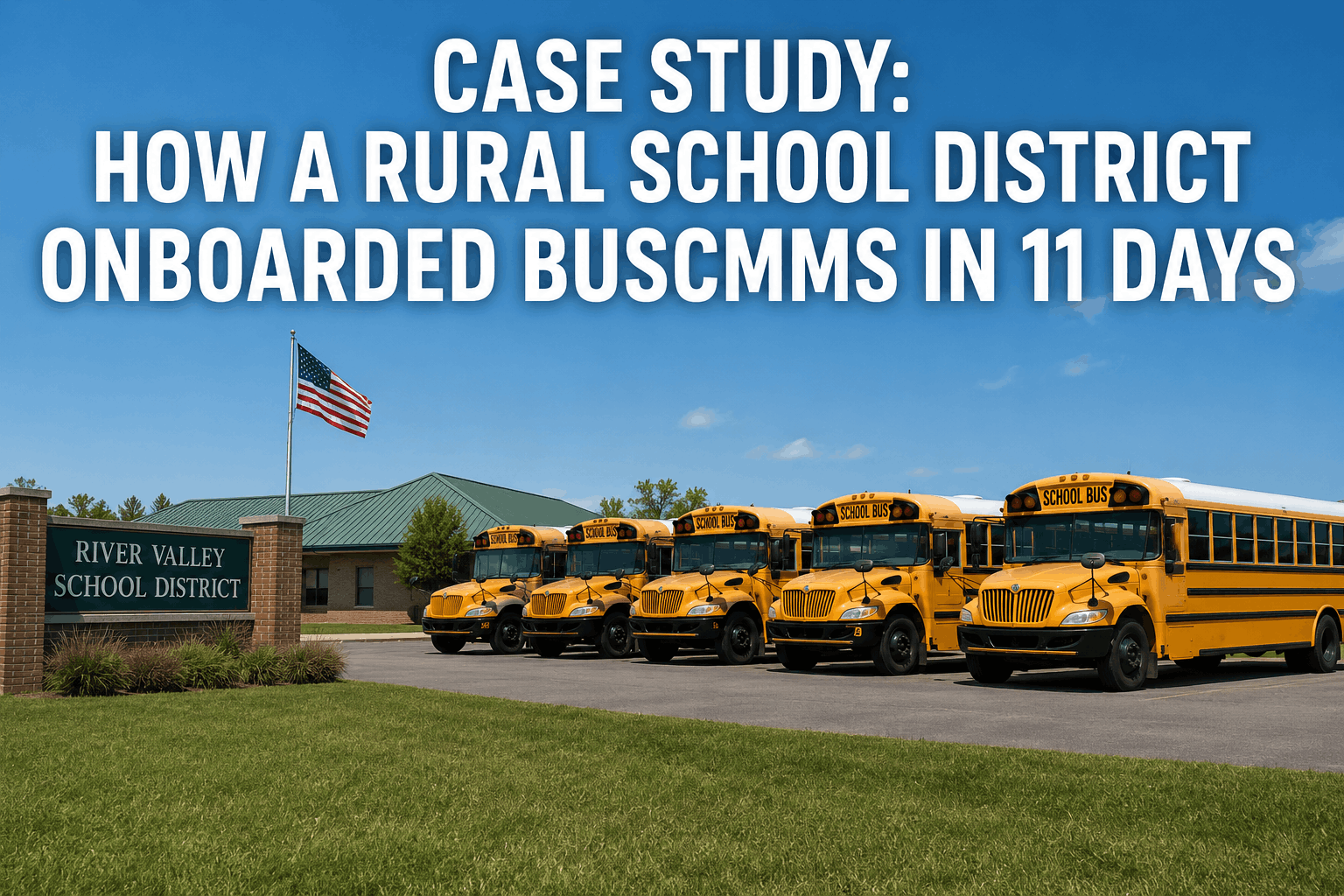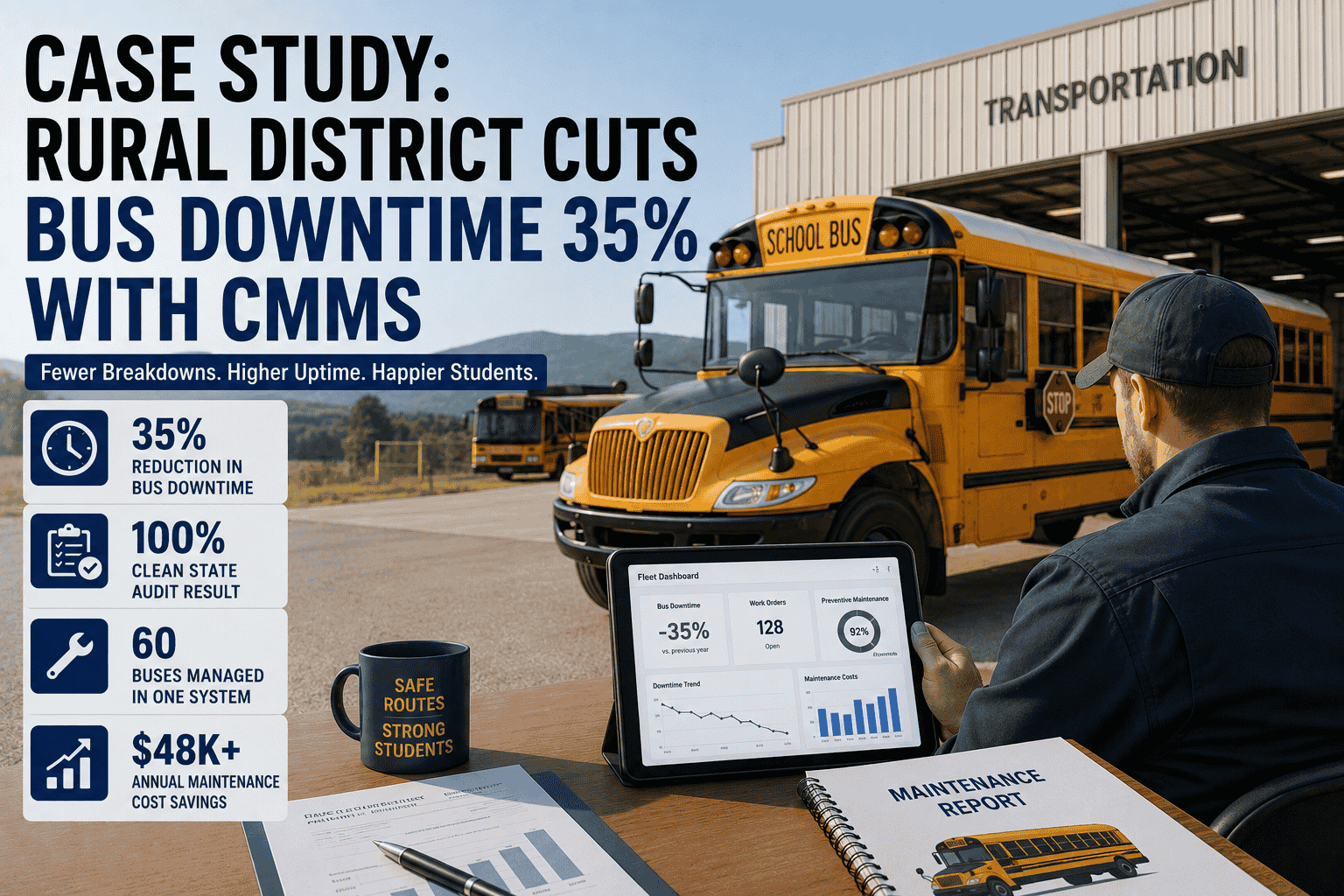
A rural school district in the Midwest operated 60 school buses serving 12 schools across a 400-square-mile area. The buses were aging (average age 8 years), maintenance was reactive, and downtime was high. During the school year, 6–8 buses were down on any given day for repairs. This meant overcrowded remaining buses, late arrivals at schools, and frustrated drivers and parents. The district didn't have the budget for new buses, so they needed to maximize the life of existing assets. Additionally, a state audit was coming up, and they knew their maintenance records were incomplete and unorganized. Within 6 months of implementing a purpose-built school bus CMMS, they cut downtime to 3–4 buses per day (35% reduction), passed the state audit cleanly, and gained visibility into when buses would need replacement. Here's how they did it.
Case Study: Rural District Cuts Bus Downtime 35% with CMMS
A rural school district with 60 buses cut downtime 35% and passed its state audit clean after switching to purpose-built CMMS. Full results inside.
This rural district served a large geographic area with aging buses. The average bus was 8 years old (near end of useful life for school buses, typically 12–15 years). Maintenance was handled by two mechanics who kept informal records on paper and in spreadsheets. There was no systematic PM program. Buses were serviced when they broke down. On any given school day, 6–8 buses (10–13% of the fleet) were down for repairs. This created cascading problems: remaining buses were overcrowded, routes were late, driver stress was high, and student/parent complaints increased. The transportation supervisor wanted to improve reliability but didn't know where to start. Additionally, a state audit of the transportation program was scheduled. The state would review maintenance records, safety compliance, and vehicle condition. The district knew their records were incomplete. Some buses had little documentation. Mechanics' knowledge was not documented. The district was anxious about the audit. Beyond the audit risk, the superintendent's concern was practical: "Our buses are aging. We don't have budget for new ones. We need to maximize the life of what we have. But we're breaking down constantly. How do we improve without capital investment?" The answer: a CMMS configured for school buses that brings discipline to maintenance and visibility to asset condition.
The district implemented a CMMS designed specifically for school buses. The system included: (1) Asset inventory of all 60 buses with VIN, acquisition date, mileage, and condition. (2) PM schedule configured for school buses: Class A (quarterly), Class B (semi-annual), Class C (annual), aligned with manufacturer recommendations. (3) Mobile app for mechanics to log work orders on tablets in the shop. (4) Defect tracking: every repair logged with what was wrong and what was fixed. (5) Audit-ready reporting: maintenance history, PM compliance, defect trends, all documented. Implementation took 3 months: 2 weeks planning, 2 weeks data entry (pulling together existing records), 4 weeks training and go-live. The two mechanics received 4 hours of hands-on training on the mobile app and system basics. The superintendent got 1 hour on dashboard reports. The district went live in September (start of school year), which was tight but worked because the system was designed for school bus operations (routes, schedules, seasonal patterns). First month was adjustment; mechanics got used to logging work in the app instead of on paper. By month 2, the workflow was normal. By month 6, the benefits were obvious.
Six months after go-live: Daily downtime dropped from 6–8 buses to 3–4 buses. This was driven by higher PM compliance (65% to 96%). With more preventive maintenance completed, fewer surprise breakdowns. The state audit passed cleanly. The auditors reviewed maintenance records, PM compliance, defect tracking, and found everything documented and organized. Zero findings. The superintendent gained visibility into fleet condition. The CMMS showed which buses were aging fastest (highest repair costs). Three buses were flagged as candidates for replacement in the next 2–3 years. This informed capital planning. Mechanics' job satisfaction improved. Instead of constantly firefighting emergencies, they worked through a predictable PM schedule. Driver and parent satisfaction improved. Routes were more reliable, fewer late arrivals, fewer overcrowded buses. The transportation director could finally answer the question: "How much longer can we keep these buses?" The answer came from data: "Bus 14 (9 years old) has $3,200 in repairs this year. At this rate, replacement in 2 years is prudent. Bus 7 (7 years old) has $800 in repairs. It's good for 4–5 more years."
Rural school districts face unique challenges: limited budgets, aging fleets, compliance requirements, and geographic spread. This case shows that without capital investment, a well-implemented CMMS can dramatically improve reliability and compliance. The key factors: (1) purpose-built school bus system (not a generic fleet system), (2) simple, focused implementation aligned with school calendar, (3) mobile tools for mechanics (no paper), (4) superintendent dashboard for strategic decisions. The 35% downtime reduction and clean audit pass demonstrate that process and systems matter more than new equipment.
This rural district improved fleet reliability 35% without buying new buses. They did it by implementing a school-focused CMMS, establishing systematic PM, and building visibility. The result: fewer late routes, happier families, cleaner audits, and data-driven capital planning. If your school district struggles with bus downtime and aging assets, a CMMS is the most cost-effective way to improve. The investment is software, not vehicles. The payoff is years of extended asset life and improved student experience.