Rising fuel costs and environmental pressures forced Denver Public Transit to rethink their fleet management strategy. With diesel prices fluctuating between $3.85 and $4.20 per gallon, their annual fuel budget of $2.8 million was becoming unsustainable. The transit authority needed precise fuel tracking, route optimization insights, and driver behavior analytics to control costs while maintaining service quality.
Traditional fuel management relied on manual odometer readings, paper logbooks, and monthly reconciliation reports that often showed discrepancies of 8-15%. This lack of real-time visibility meant fuel theft, inefficient routing, and poor driving habits went undetected for weeks. With federal mandates pushing for reduced emissions and budget constraints tightening, Denver Transit needed a comprehensive digital solution.
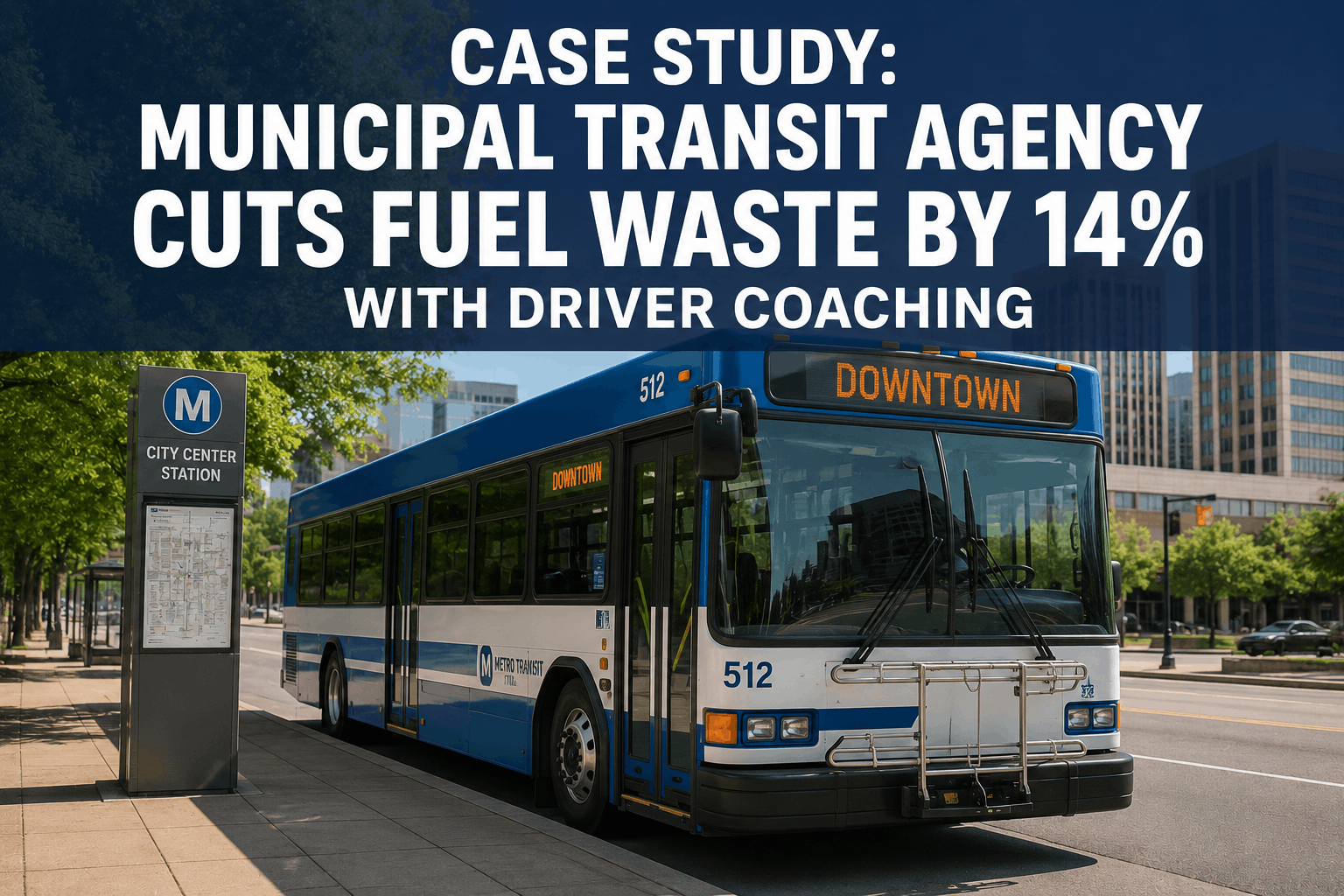
This case study examines how Bus CMMS transformed Denver's fuel management operations, delivering measurable savings of 12% annually while providing the data foundation for strategic fleet optimization decisions that continue to drive efficiency improvements across their 445-vehicle operation.
The Challenge: Fuel Cost Crisis in Urban Transit
Denver Public Transit operated 445 buses across 28 routes, consuming approximately 850,000 gallons of diesel annually. Fleet Manager Robert Chen faced mounting pressure to reduce operating costs while maintaining the reliability that 125,000 daily passengers depended on. The existing fuel management system created multiple operational blind spots that were draining resources.
Critical Fuel Management Challenges:
- Inaccurate Consumption Data: Manual tracking showed 12-15% variance between reported and actual fuel usage
- Route Inefficiencies: No correlation between fuel consumption and specific routes or driver performance
- Delayed Problem Detection: Fuel theft or mechanical issues went unnoticed for weeks
- Poor Driver Accountability: No system to track individual driver fuel efficiency or identify training needs
- Limited Optimization Insights: Lack of data prevented strategic decisions about route planning and vehicle deployment
The tipping point came when a quarterly audit revealed $47,000 in unaccounted fuel consumption. Investigation showed a combination of theft, unreported mechanical issues, and inefficient driving practices. With fuel costs representing 23% of total operating expenses, Denver Transit needed immediate action to regain control.
The Solution: Comprehensive Digital Fuel Management
After evaluating several fleet management platforms, Denver Transit selected Bus CMMS for its robust fuel tracking capabilities and specialized transit industry features. The implementation focused on real-time monitoring, automated reporting, and actionable analytics that would transform their approach to fuel management.
Real-Time Fuel Monitoring System
Bus CMMS integrated directly with Denver's fuel dispensing systems, capturing exact quantities, timestamps, and vehicle identifications for every fill-up. The system eliminated manual data entry while providing instant visibility into consumption patterns and anomalies that required investigation.
Route-Based Fuel Analytics
Advanced reporting capabilities correlated fuel consumption with specific routes, weather conditions, traffic patterns, and vehicle assignments. This granular analysis revealed optimization opportunities that were invisible in traditional reporting systems.
Driver Performance Tracking
Individual driver fuel efficiency metrics enabled targeted training programs and recognition for top performers. The system tracked idle time, acceleration patterns, and route adherence to identify coaching opportunities and best practices worth replicating fleet-wide.
Implementation Timeline
Week 1-2: Fuel system integration and data connectivity setup
Week 3-4: Driver training and mobile app deployment
Week 5-6: Analytics dashboard configuration and manager training
Week 7-8: Performance baseline establishment and optimization strategy development
Results: Dramatic Fuel Savings and Operational Insights
Operational Excellence Through Data
Within eight months of implementation, Denver Transit achieved remarkable improvements across all fuel management metrics. The 12% reduction in fuel consumption exceeded initial projections by 4%, delivering annual savings of $336,000. More importantly, the system provided unprecedented visibility into fleet operations that enabled continuous optimization.
Real-time monitoring eliminated the 12-15% variance in consumption data, bringing accuracy to 97%. This precision enabled proactive maintenance scheduling based on actual fuel efficiency trends rather than calendar intervals. The system identified 14 vehicles with declining efficiency, leading to timely repairs that restored optimal performance.
Driver behavior improvements contributed significantly to overall savings. The top 25% of drivers achieved 18% better fuel efficiency than the bottom quartile, leading to comprehensive training programs that elevated fleet-wide performance. Average idle time decreased by 23%, translating to both fuel savings and reduced emissions.
Route Optimization Discoveries
Bus CMMS analytics revealed that certain routes consumed 31% more fuel than others with similar distances due to traffic patterns, elevation changes, and stop frequency. This data enabled route planners to optimize schedules and vehicle assignments, achieving better fuel efficiency without compromising service quality.
Key Performance Improvements:
- Eliminated $47,000 in unaccounted fuel consumption
- Reduced fuel variance from 15% to 3%
- Identified and corrected 14 vehicles with efficiency issues
- Decreased average idle time by 23%
- Achieved 340% ROI in first year
Strategic Fleet Management Revolution
Beyond immediate fuel savings, Bus CMMS enabled Denver Transit to evolve from reactive to strategic fleet management. The comprehensive data foundation supports long-term planning initiatives including vehicle replacement scheduling, route optimization, and environmental impact reduction programs.
The system's predictive capabilities now forecast maintenance needs based on actual operating conditions rather than generic schedules. This approach has extended average vehicle life by 14 months while maintaining reliability standards that exceed industry benchmarks.
Implementation Lessons and Best Practices
The success at Denver Transit highlighted several critical factors for effective fuel management system implementation. Driver engagement proved essential, requiring comprehensive training that emphasized how the system would improve working conditions rather than increase oversight. Creating fuel efficiency recognition programs helped build positive culture around conservation efforts.
Integration with existing systems required careful planning but delivered exponential value. Connecting Bus CMMS with dispatch, maintenance, and financial systems created a unified operational view that supports strategic decision-making across all departments.
Critical Success Factors
Executive leadership commitment ensured adequate resources and clear communication about strategic objectives. The phased implementation approach allowed for system refinement based on real-world feedback while maintaining operational continuity. Regular communication about benefits and achievements maintained momentum throughout the transformation process.
Data accuracy became the foundation for all optimization efforts. Establishing baseline measurements and tracking progress against specific metrics created accountability and demonstrated tangible value to stakeholders at all levels.
Future-Ready Transit Operations
Denver Transit's fuel management success positions them for future challenges including electric vehicle integration and autonomous fleet operations. The data infrastructure created by Bus CMMS supports advanced analytics initiatives and machine learning applications that will drive continuous efficiency improvements.
The system's scalability means Denver can easily expand capabilities as their fleet grows or technology evolves. Real-time integration capabilities support emerging technologies like predictive maintenance and dynamic route optimization that will define next-generation transit operations.
Transform Your Fuel Management Today
Join hundreds of transit authorities and school districts who have revolutionized their fuel management with Bus CMMS. Experience real-time tracking, automated analytics, and strategic insights that reduce costs while improving operational efficiency.
Getting StartedBook a Demo