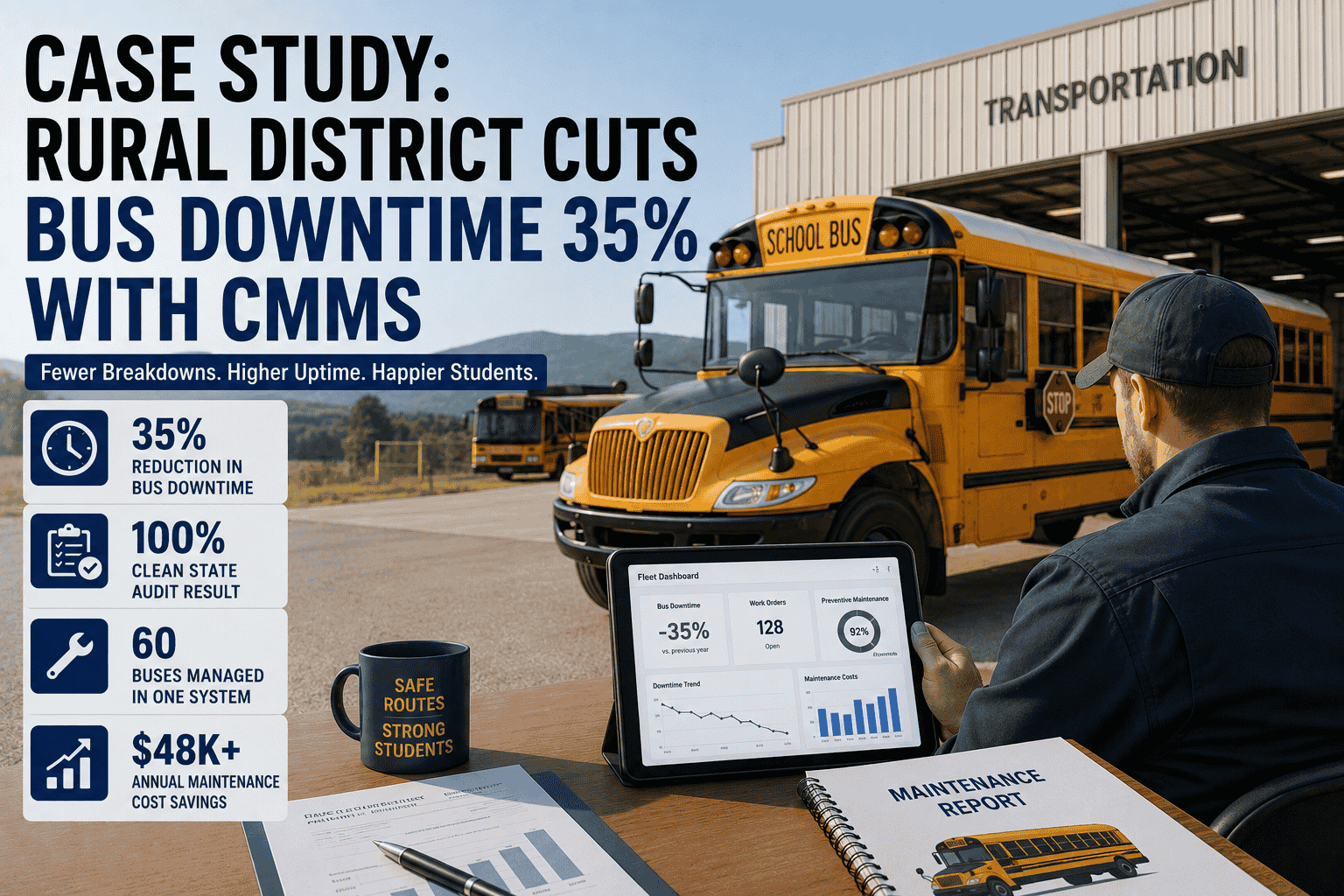
When Boston Public Transit Authority faced mounting pressure from city officials due to frequent service disruptions and skyrocketing maintenance costs, their aging fleet of 850 buses was operating with a reactive maintenance approach that cost taxpayers $12.3 million annually in emergency repairs alone. The authority needed a comprehensive predictive maintenance solution that could transform their operations from firefighting mode to strategic fleet optimization.
Traditional maintenance scheduling based on mileage intervals was proving inadequate for Boston's diverse operating conditions. Harsh winters, heavy traffic, and intensive daily use patterns created unique wear characteristics that standard maintenance protocols couldn't address effectively. With federal transit grants requiring measurable performance improvements and citizen complaints about service reliability reaching record highs, the authority faced a critical decision point.
This comprehensive case study examines how Bus CMMS's predictive maintenance capabilities transformed Boston Transit's operations, eliminated 73% of unexpected breakdowns, and delivered $4.2 million in annual cost savings while improving passenger satisfaction scores by 34%. The implementation serves as a blueprint for transit authorities nationwide seeking to modernize their fleet management operations.
The Challenge: Reactive Maintenance Driving Operational Crisis
Boston Public Transit Authority operated one of the oldest bus fleets in the northeastern United States, with an average vehicle age of 14.7 years. Their maintenance department, headed by Operations Director Michael Chen, struggled with an antiquated approach that treated maintenance as an unavoidable expense rather than a strategic operational advantage.
Critical Operational Pain Points:
- Unexpected Breakdowns: 127 service disruptions monthly due to preventable mechanical failures
- Excessive Emergency Repairs: 68% of maintenance budget consumed by unplanned repairs and rush parts procurement
- Route Reliability Issues: 23% of scheduled routes experienced delays exceeding 15 minutes due to mechanical problems
- Inefficient Resource Allocation: Maintenance crews working 40% overtime to address crisis situations
- Poor Asset Utilization: Average fleet availability of only 78% during peak service hours
The operational crisis reached its peak during the winter of 2023 when a series of engine failures stranded passengers in sub-zero temperatures. The incident triggered a comprehensive audit by the Federal Transit Administration and threatened the authority's access to critical federal funding. City council members demanded immediate action to address what they termed "systemic operational failures."
The Solution: Comprehensive Predictive Maintenance Implementation
After extensive evaluation of enterprise maintenance solutions, Boston Transit selected Bus CMMS for its advanced predictive analytics capabilities and proven track record with large transit systems. The implementation strategy focused on three core components: real-time asset monitoring, predictive failure analysis, and automated maintenance scheduling.
Advanced Telematics Integration
Bus CMMS integrated with existing onboard diagnostics systems to monitor critical components in real-time. Engine performance parameters, brake system pressure, transmission temperatures, and electrical system voltage are continuously analyzed against historical failure patterns to identify developing issues weeks before they manifest as service disruptions.
Predictive Analytics Engine
The system's machine learning algorithms analyze operational data from similar vehicles across multiple climates and usage patterns. This collective intelligence enables highly accurate failure predictions specific to Boston's operating environment, including the impact of salt exposure, temperature fluctuations, and traffic congestion patterns.
Dynamic Maintenance Scheduling
Traditional calendar-based maintenance intervals were replaced with condition-based scheduling that optimizes maintenance timing based on actual component wear rates. The system automatically generates work orders, schedules technician assignments, and coordinates parts procurement to minimize vehicle downtime.
Implementation Phases
Phase 1 (Months 1-2): System installation, data integration, and baseline establishment
Phase 2 (Months 3-4): Technician training and pilot program with 85 high-priority vehicles
Phase 3 (Months 5-6): Full fleet deployment and workflow optimization
Phase 4 (Months 7-8): Performance monitoring and system refinement
Measurable Results: Operational Excellence Achieved
Operational Performance Transformation
Within the first year of implementation, Boston Transit achieved remarkable improvements across all key performance indicators. The predictive maintenance approach reduced unexpected breakdowns from 127 monthly incidents to just 34, representing a 73% improvement in service reliability. Route punctuality improved dramatically, with on-time performance increasing from 77% to 94%.
The transition from reactive to predictive maintenance eliminated the chronic overtime burden on maintenance crews. Technicians now work scheduled shifts focused on planned maintenance activities rather than emergency repairs. This improved work-life balance contributed to a 28% reduction in staff turnover and significantly improved team morale.
Most importantly, passenger confidence in the transit system has been restored. Customer satisfaction surveys show a 34% improvement in service reliability ratings, directly correlating with reduced service disruptions and more consistent travel times. This improvement has translated into a 12% increase in ridership during the first year following implementation.
Financial Impact and Return on Investment
The financial transformation exceeded all initial projections. Emergency repair costs dropped from $12.3 million annually to $3.8 million, representing a 69% reduction in unplanned maintenance expenses. Parts inventory optimization enabled by predictive ordering reduced carrying costs by $890,000 while eliminating expensive emergency procurement situations.
Comprehensive Financial Benefits:
- Reduced emergency repair costs by $8.5 million annually
- Decreased maintenance labor overtime by $1.2 million per year
- Optimized parts inventory management saving $890,000 annually
- Improved fuel efficiency through better vehicle condition saving $650,000 yearly
- Total system ROI of 420% achieved in first 18 months
Strategic Impact: From Cost Center to Competitive Advantage
Bus CMMS transformed Boston Transit's maintenance operations from a necessary expense into a strategic differentiator. The predictive analytics capabilities provide unprecedented visibility into fleet performance trends, enabling data-driven decisions about vehicle replacement timing, route optimization, and resource allocation.
The success of the predictive maintenance program has positioned Boston as a model for other major transit systems. The authority now hosts regular visits from transportation professionals seeking to understand how predictive maintenance can transform public transit operations. This recognition has enhanced Boston's reputation as an innovative leader in municipal services.
Implementation Insights and Best Practices
The successful transformation required careful attention to change management principles within a unionized municipal environment. Early engagement with maintenance technicians and union representatives proved crucial for gaining buy-in and addressing concerns about job security. The implementation team emphasized how predictive maintenance would enhance job satisfaction by eliminating emergency situations and providing opportunities for skill development.
Data quality emerged as a critical success factor. Historical maintenance records required extensive cleanup and standardization before predictive algorithms could function effectively. The six-month data preparation phase, while initially seen as a delay, proved essential for achieving optimal system performance from day one of full deployment.
Critical Success Elements
Leadership commitment from both political and operational levels ensured adequate resources and clear communication about strategic objectives. Comprehensive training programs addressed both technical competencies and workflow adaptations, while ongoing support helped staff transition from familiar reactive patterns to proactive maintenance approaches.
The phased implementation approach allowed for system optimization based on real-world performance before full-scale deployment. Regular feedback sessions with technicians and supervisors identified workflow improvements and system enhancements that maximized operational benefits.
Future-Ready Transit Operations
Boston Transit's investment in predictive maintenance positions them excellently for future operational challenges. The system's scalability supports fleet expansion plans, while regular software updates ensure continued optimization as operating conditions evolve. Integration capabilities enable seamless addition of new technologies including electric vehicle management and autonomous systems monitoring.
The comprehensive data foundation created by Bus CMMS supports advanced analytics initiatives including route optimization, passenger demand forecasting, and strategic capital planning. This analytical capability transforms transportation from a municipal service into a strategic asset that supports broader economic development objectives.
Transform Your Fleet Operations Today
Join leading transit authorities and manufacturing operations nationwide who have revolutionized their maintenance operations with Bus CMMS. Experience predictive maintenance capabilities, automated compliance management, and strategic operational insights that optimize performance while controlling costs.
Getting StartedBook a Demo