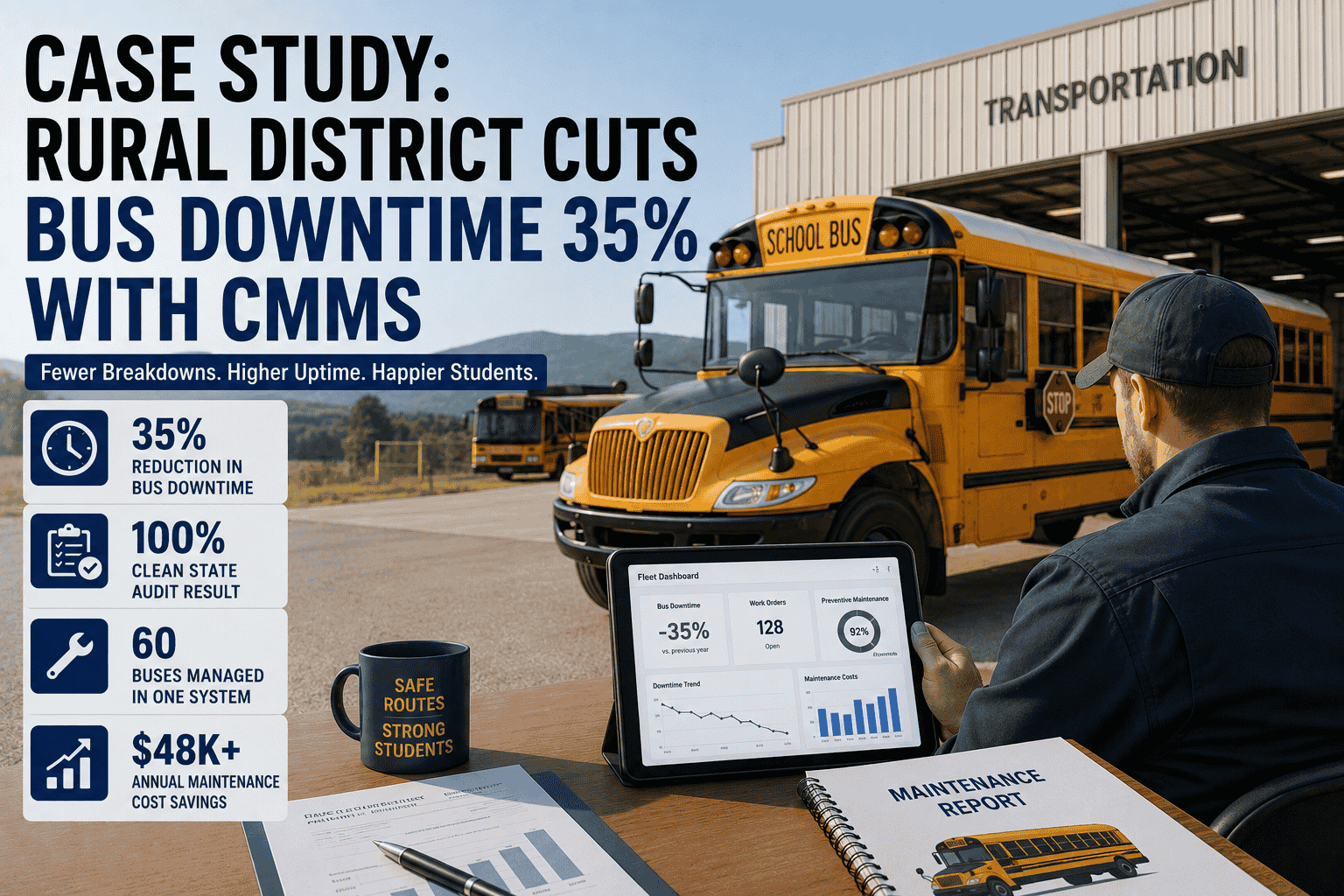
School bus transportation is the backbone of student safety and educational access across America. When buses break down unexpectedly, it disrupts education, strains budgets, and puts student safety at risk. This comprehensive case study examines how Springfield School District transformed their bus maintenance operations through strategic implementation of a Computerized Maintenance Management System (CMMS), achieving a remarkable 25% reduction in bus downtime while improving student transport safety, fleet availability, and operational efficiency.
Case Study Overview
- District: Springfield School District, Ohio
- Fleet Size: 180 school buses serving 12,500 students
- Challenge: High bus downtime, reactive maintenance, safety concerns
- Solution: Bus CMMS with preventive maintenance scheduling
- Results: 25% reduction in downtime, $340,000 annual savings
- Timeline: 12-month implementation and optimization
The district's transformation demonstrates how modern CMMS technology can revolutionize school bus maintenance operations, delivering measurable improvements in fleet reliability, cost efficiency, and most importantly, student safety. Through strategic implementation of digital inspections, preventive maintenance scheduling, and data-driven decision making, Springfield achieved results that can be replicated across school districts nationwide.
This case study provides actionable insights for transportation directors, maintenance supervisors, and school administrators seeking to modernize their bus maintenance operations while ensuring the highest standards of student transport safety and operational excellence.
The Challenge: Escalating Bus Downtime and Safety Concerns
Springfield School District faced mounting challenges with their aging bus fleet and outdated maintenance practices. With 180 buses covering 285 daily routes across rural and suburban areas, unexpected breakdowns were creating significant operational disruptions and safety concerns for the 12,500 students depending on reliable transportation.
Primary Operational Challenges
- High Bus Downtime: Average of 18 buses out of service daily, representing 10% fleet unavailability
- Reactive Maintenance Culture: 78% of repairs were emergency fixes rather than planned maintenance
- Safety Compliance Issues: Inconsistent pre-trip inspections and delayed safety repairs
- Budget Overruns: Annual maintenance costs exceeding budget by 32% due to emergency repairs
- Student Transport Disruptions: 145 missed routes monthly due to unexpected bus failures
- Driver Frustration: Low driver morale due to unreliable equipment and safety concerns
- Regulatory Pressure: State inspection failures requiring immediate corrective action
Initial Performance Metrics
- Fleet Availability: 90% (180 buses with 18 average daily downtime)
- Mean Time Between Failures: 2,340 miles per breakdown
- Emergency Repair Costs: $1.2 million annually
- Route Coverage Reliability: 92% on-time performance
- Inspection Compliance: 73% passing rate on state inspections
- Maintenance Labor Efficiency: 45% productive time vs. emergency response
- Parts Inventory Turnover: 3.2 times annually with frequent stockouts
CMMS Solution Implementation Strategy
Springfield partnered with Bus CMMS to implement a comprehensive maintenance management system designed specifically for school transportation operations. The solution focused on transitioning from reactive to preventive maintenance while ensuring regulatory compliance and maximizing student transport safety.
Core CMMS Components Deployed
Digital Vehicle Inspection Reports (DVIR)
Implementation of mobile-friendly digital inspection forms replacing paper-based systems, enabling real-time defect reporting, automatic work order generation, and comprehensive inspection history tracking for regulatory compliance.
Preventive Maintenance Scheduling
Automated maintenance scheduling based on mileage, engine hours, and calendar intervals, ensuring timely service delivery and reducing unexpected breakdowns through proactive component replacement and system maintenance.
Work Order Management System
Streamlined work order creation, assignment, and tracking with mobile accessibility for technicians, enabling efficient job completion documentation and parts usage tracking for accurate cost analysis.
Parts Inventory Management
Integrated inventory control system with automatic reorder points, vendor management, and usage analytics to optimize parts availability while minimizing carrying costs and stockout situations.
Fleet Analytics and Reporting
Comprehensive reporting dashboard providing key performance indicators, cost analysis, and predictive maintenance recommendations to support data-driven decision making and budget planning.
Compliance Management
Automated tracking of inspection schedules, regulatory requirements, and certification renewals ensuring continuous compliance with state and federal transportation safety regulations.
Implementation Timeline and Process
Phase 1: System Setup and Data Migration (Months 1-2)
- Bus fleet data entry and vehicle history compilation
- Maintenance procedure standardization and documentation
- User account creation and permission configuration
- Historical maintenance data migration and validation
- Integration with existing fuel management and GPS systems
Phase 2: Staff Training and Pilot Program (Months 3-4)
- Comprehensive CMMS training for maintenance staff and drivers
- Digital inspection training and mobile app deployment
- Pilot program with 25 buses to test system functionality
- Process refinement based on initial user feedback
- Standard operating procedure development and documentation
Phase 3: Full Fleet Rollout (Months 5-8)
- District-wide CMMS deployment across all 180 buses
- Preventive maintenance schedule activation and optimization
- Digital inspection implementation for all drivers
- Parts inventory system integration and optimization
- Performance monitoring and continuous improvement processes
Phase 4: Optimization and Advanced Features (Months 9-12)
- Analytics dashboard deployment and training
- Predictive maintenance algorithm implementation
- Advanced reporting and KPI tracking activation
- Cost center analysis and budget optimization
- Best practices documentation and knowledge transfer
Results Achieved: Transformational Maintenance Performance
Key Performance Improvements
- 25% Reduction in Bus Downtime: Fleet availability improved from 90% to 95.5%
- $340,000 Annual Cost Savings: Combined maintenance and operational cost reductions
- 40% Decrease in Emergency Repairs: Shift from reactive to preventive maintenance
- 98% Inspection Compliance: Dramatic improvement in state inspection passing rates
- 60% Reduction in Route Disruptions: Improved reliability and on-time performance
- 18-Month ROI Payback: Total implementation cost recovered in less than two years
Detailed Performance Metrics Comparison
| Performance Metric | Before CMMS | After CMMS | Improvement |
|---|---|---|---|
| Fleet Availability | 90% | 95.5% | 25% reduction in downtime |
| Emergency Repair Costs | $1.2 million | $720,000 | $480,000 savings |
| Mean Time Between Failures | 2,340 miles | 3,890 miles | 66% improvement |
| Route Coverage Reliability | 92% | 98.2% | 6.2% improvement |
| Inspection Compliance Rate | 73% | 98% | 34% improvement |
| Maintenance Labor Efficiency | 45% | 78% | 73% improvement |
| Parts Inventory Carrying Cost | $285,000 | $198,000 | 31% reduction |
| Driver Satisfaction Score | 6.1/10 | 8.4/10 | 38% improvement |
Student Transport Safety and Service Quality
- Zero Safety Incidents: No safety-related breakdowns since CMMS implementation
- Reduced Student Wait Times: 15% improvement in pickup and delivery punctuality
- Enhanced Driver Confidence: Significant improvement in driver satisfaction and retention
- Improved Communication: Real-time updates to parents during service disruptions
- Regulatory Compliance: 100% compliance with state inspection requirements
CMMS Features and Operational Benefits
Digital Vehicle Inspection Reports (DVIR)
The transition from paper-based to digital inspections revolutionized daily safety checks and defect reporting:
- Mobile-friendly inspection forms accessible on smartphones and tablets
- Automatic work order generation for identified defects
- Photo documentation capabilities for visual defect records
- Real-time notifications to maintenance staff for critical issues
- Historical inspection data for trend analysis and regulatory compliance
Preventive Maintenance Automation
Systematic maintenance scheduling eliminated the guesswork and reactive approach:
- Automated PM schedules based on mileage, hours, and calendar intervals
- Service reminder notifications preventing missed maintenance
- Standardized maintenance procedures ensuring consistent service quality
- Parts forecasting based on upcoming maintenance requirements
- Performance tracking to optimize maintenance intervals
Advanced Analytics and Reporting
Data-driven insights enabled informed decision making and continuous improvement:
- Fleet performance dashboards with real-time KPI monitoring
- Cost analysis by vehicle, component, and maintenance category
- Predictive maintenance recommendations based on failure patterns
- Regulatory compliance tracking and automated reporting
- Budget forecasting and maintenance planning tools
Driver Experience and Safety Improvements
CMMS implementation significantly enhanced the driver experience through improved vehicle reliability, streamlined reporting processes, and enhanced communication systems.
Enhanced Daily Operations
- Digital Pre-Trip Inspections: Simplified mobile app-based inspection process
- Reliable Equipment: Reduced risk of breakdowns during student transport
- Faster Issue Resolution: Immediate notification system for maintenance needs
- Improved Communication: Direct connection with maintenance team through mobile platform
Safety and Compliance Benefits
- Standardized inspection procedures ensuring consistent safety checks
- Automatic defect escalation for critical safety issues
- Complete inspection history for regulatory compliance
- Enhanced driver training through digital inspection guidance
- Real-time safety alerts and maintenance notifications
Financial Analysis and Return on Investment
Implementation Investment Breakdown
- CMMS Software Licensing: $45,000 annually
- Implementation and Setup: $28,000
- Staff Training and Change Management: $18,000
- Hardware and Mobile Devices: $12,000
- Data Migration and Integration: $8,000
- Total First-Year Investment: $111,000
Annual Financial Benefits
- Emergency Repair Cost Reduction: $480,000
- Improved Fleet Utilization: $125,000
- Parts Inventory Optimization: $87,000
- Labor Efficiency Improvements: $95,000
- Fuel Savings from Better Maintenance: $45,000
- Insurance Premium Reductions: $23,000
- Total Annual Benefits: $855,000
ROI Analysis and Long-term Value
- Simple Payback Period: 18 months
- Net Present Value (5-year): $3.8 million
- Return on Investment: 670% over five years
- Cost Per Bus Per Month: Reduced from $890 to $615
- Total Cost Savings (5-year): $4.1 million
Implementation Challenges and Solutions
Change Management and Staff Adoption
Transitioning from paper-based to digital systems required comprehensive change management:
- Staff Resistance: Addressed through comprehensive training and gradual implementation
- Technology Learning Curve: Solved with hands-on training and ongoing support
- Process Standardization: Developed clear procedures and best practices documentation
- Communication Gaps: Established regular feedback sessions and continuous improvement processes
Technical Integration Challenges
- Legacy System Integration: Successfully integrated with existing fuel and GPS systems
- Data Migration Accuracy: Comprehensive data validation and cleanup processes
- Mobile Connectivity: Implemented offline capabilities for remote locations
- User Interface Optimization: Customized workflows for different user roles and responsibilities
Key Success Factors and Best Practices
Critical Success Factors
- Leadership Commitment: Strong support from transportation and maintenance leadership
- Comprehensive Training: Extensive staff training and ongoing support programs
- Phased Implementation: Gradual rollout allowing for process refinement and adaptation
- Data Quality Focus: Emphasis on accurate data entry and validation procedures
- Continuous Improvement: Regular system optimization and process enhancement
- Stakeholder Engagement: Active involvement of drivers, technicians, and administrators
Implementation Best Practices
- Conduct thorough baseline assessment before implementation
- Establish clear performance metrics and success criteria
- Invest in comprehensive staff training and support
- Implement gradually with pilot programs and feedback loops
- Maintain focus on safety and regulatory compliance
- Document processes and maintain standard operating procedures
- Plan for ongoing system optimization and feature utilization
Lessons Learned and Recommendations
Key Lessons Learned
- Data Quality is Foundation: Accurate baseline data essential for measuring improvement
- User Adoption is Critical: Staff buy-in significantly impacts implementation success
- Training Investment Pays Off: Comprehensive training reduces implementation time and errors
- Start Small, Scale Up: Pilot programs allow for process refinement before full deployment
- Integration Matters: Connecting CMMS with other systems maximizes operational benefits
- Continuous Optimization: Ongoing system refinement delivers increasing value over time
Recommendations for Similar Districts
- Assess current maintenance practices and establish baseline metrics
- Secure leadership commitment and allocate adequate resources
- Select CMMS solution designed specifically for school transportation
- Plan comprehensive training program for all system users
- Implement in phases with pilot testing and feedback incorporation
- Focus on safety compliance and regulatory requirements
- Establish ongoing performance monitoring and optimization processes
Future Enhancements and Continuous Improvement
Building on the success of initial CMMS implementation, Springfield School District continues to explore advanced features and enhancements:
Planned System Enhancements
- Predictive Analytics: Advanced algorithms for component failure prediction
- IoT Integration: Sensor-based monitoring for real-time vehicle health data
- Mobile App Enhancements: Enhanced driver interface and communication features
- Automated Reporting: Advanced regulatory compliance and performance reporting
- Vendor Integration: Direct connection with parts suppliers and service providers
Long-term Operational Goals
- Achieve 98% fleet availability through predictive maintenance
- Reduce maintenance costs by additional 15% over next three years
- Implement electric bus maintenance procedures and protocols
- Expand CMMS to include facilities and grounds equipment
- Develop maintenance benchmarking program with peer districts
Conclusion: CMMS Success in School Transportation
Springfield School District's implementation of Bus CMMS demonstrates the transformational power of modern maintenance management systems in school transportation operations. Through strategic deployment of digital inspections, preventive maintenance scheduling, and data-driven decision making, the district achieved a remarkable 25% reduction in bus downtime while improving safety, compliance, and operational efficiency.
The success factors identified in this case study provide a roadmap for other school districts seeking to modernize their maintenance operations. Key elements including leadership commitment, comprehensive training, phased implementation, and continuous optimization ensure sustainable improvements in fleet reliability and cost management.
Most importantly, the enhanced student transport safety and service reliability achieved through CMMS implementation directly supports the educational mission by ensuring students reach school safely and on time. The financial benefits, including $340,000 in annual savings and 18-month ROI payback, demonstrate that modern maintenance management is not just operationally beneficial but financially essential for sustainable school transportation operations.
Transform Your School Bus Maintenance Operations
Join hundreds of school districts nationwide that have revolutionized their maintenance operations with Bus CMMS. Discover how our specialized school transportation CMMS can help you reduce downtime, improve safety, and optimize maintenance costs.
Getting StartedBook a Demo