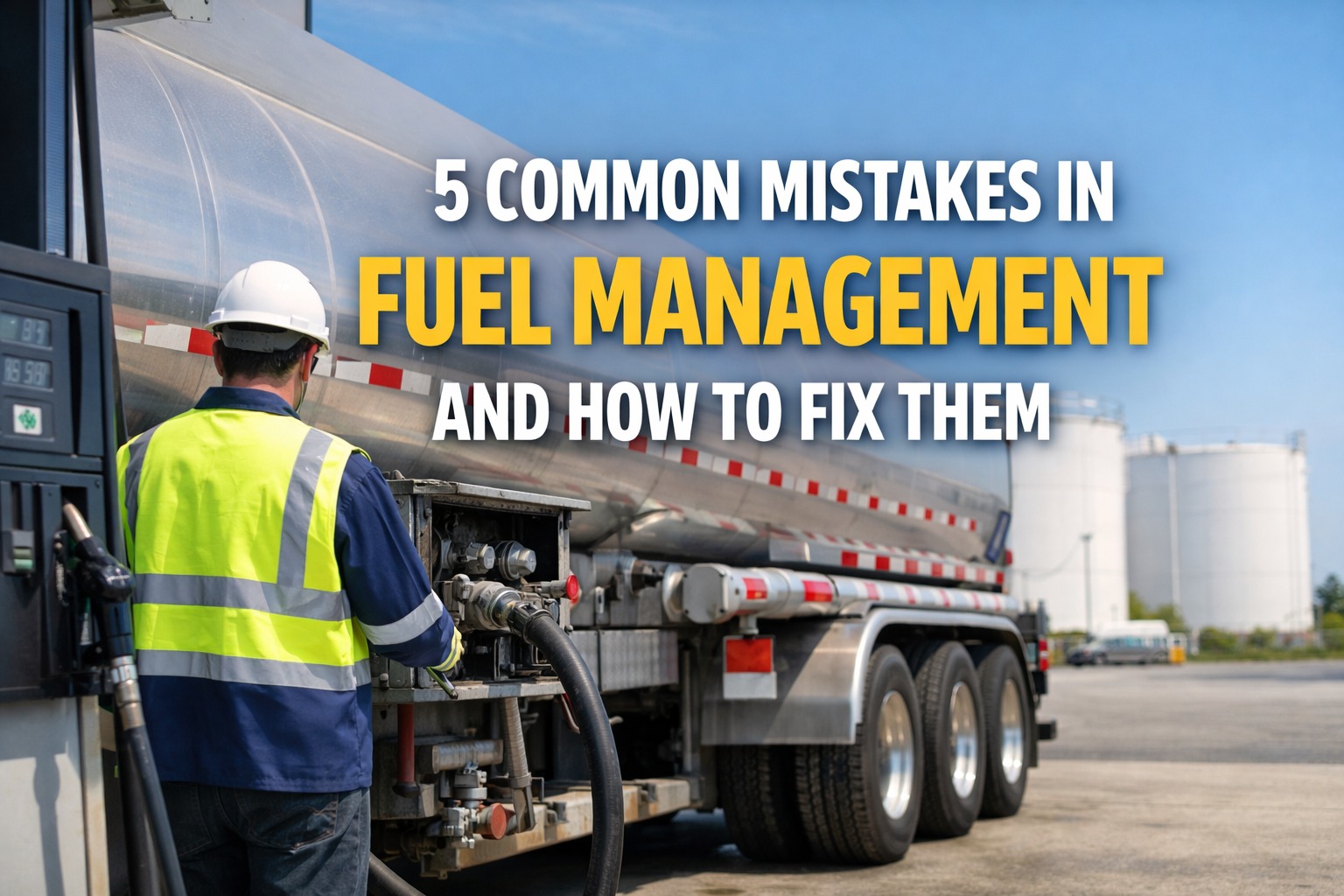
If you're managing a manufacturing fleet in the United States, you know that fuel costs can make or break your operational budget. With diesel prices fluctuating and environmental regulations tightening, effective fuel management isn't just about saving money—it's about staying competitive in today's market.
Yet, many manufacturing professionals are unknowingly sabotaging their fuel efficiency through common but costly mistakes. These errors don't just drain your fuel budget; they reduce vehicle uptime, compromise fleet efficiency, and can even put your compliance tracking at risk.
In this comprehensive guide, we will walk through the five most critical fuel management mistakes plaguing US manufacturing fleets today, and more importantly, show you exactly how to fix them using modern fleet software and proven strategies.
1. Neglecting Real-Time Fuel Monitoring and Analytics
One of the biggest mistakes manufacturing companies make is relying on outdated, manual fuel tracking methods. Many facilities still depend on handwritten logs, fuel receipts, and monthly reports that provide little insight into actual consumption patterns.
The Problem: Without real-time monitoring, you're flying blind. Fuel theft, unauthorized usage, and mechanical inefficiencies can go undetected for weeks or months, costing thousands of dollars in wasted fuel and lost productivity.
The Solution: Implement modern telematics integration and CMMS tools that provide real-time fuel monitoring. These systems track fuel consumption patterns, identify anomalies immediately, and generate actionable fleet insights. Predictive analytics can even forecast fuel needs based on operational schedules and historical data.
Key benefits include:
- Instant alerts for unusual consumption spikes
- Detailed fuel efficiency reports by vehicle and route
- Integration with maintenance scheduling systems
- Automated compliance tracking for environmental regulations
Ready to modernize your fuel tracking? See how our fleet management solution can reduce your fuel costs by up to 25%.
Getting StartedBook a Demo
2. Poor Route Optimization and Vehicle Scheduling
Many manufacturing operations treat route planning as an afterthought, leading to inefficient routes, unnecessary mileage, and excessive fuel consumption. This mistake is particularly costly for companies managing both delivery schedules and internal transportation needs.
The Problem: Manual route planning often results in vehicles traveling longer distances than necessary, sitting idle during peak traffic hours, or making redundant trips. These inefficiencies can increase fuel costs by 15-30% annually.
The Solution: Invest in comprehensive route optimization software that integrates with your existing fleet automation systems. Modern solutions consider real-time traffic data, vehicle specifications, load requirements, and driver schedules to create the most fuel-efficient routes possible.
Advanced route optimization provides:
- Dynamic route adjustments based on traffic and weather conditions
- Load balancing to maximize vehicle capacity utilization
- Integration with maintenance schedules to avoid breakdowns
- Driver performance analytics to identify training opportunities
3. Inadequate Preventive Maintenance Programs
Here's a sobering fact: a poorly maintained vehicle can consume up to 40% more fuel than one that's properly serviced. Yet many manufacturing companies still operate on reactive maintenance schedules, waiting for problems to occur rather than preventing them.
The Problem: Reactive maintenance leads to decreased vehicle uptime, unexpected breakdowns, and significantly higher fuel consumption. Dirty air filters, worn spark plugs, and improperly inflated tires all contribute to poor fuel efficiency.
The Solution: Implement a robust preventive maintenance program using modern maintenance software and diagnostic systems. These tools monitor vehicle health in real-time and schedule maintenance based on actual usage patterns rather than arbitrary time intervals.
Effective preventive maintenance includes:
- Automated maintenance scheduling based on mileage and engine hours
- Real-time diagnostic monitoring for early problem detection
- Integration with fuel management systems to track efficiency improvements
- Comprehensive parts inventory management to minimize downtime
4. Ignoring Driver Behavior and Training
Your drivers have more impact on fuel efficiency than you might realize. Poor driving habits like excessive idling, aggressive acceleration, and improper gear usage can increase fuel consumption by 20-40%. Unfortunately, many companies overlook this crucial factor in their fuel management strategy.
The Problem: Without proper training and monitoring, drivers develop inefficient habits that significantly impact your bottom line. Traditional approaches rely on periodic reviews rather than real-time feedback, making it difficult to address problems quickly.
The Solution: Deploy fleet software that monitors driver behavior in real-time and provides immediate feedback. Combine this technology with comprehensive driver training programs focused on fuel-efficient driving techniques.
Effective driver management strategies include:
- Real-time coaching systems that provide instant feedback on driving habits
- Gamification programs that reward fuel-efficient driving
- Regular training sessions on fuel-saving techniques
- Performance dashboards that track individual driver efficiency
Want to see how driver coaching can improve your fuel efficiency? Our clients typically see 15-25% fuel savings within the first quarter.
Getting StartedBook a Demo
5. Lack of Integrated Data Analysis and Reporting
The final critical mistake is treating fuel management as an isolated function rather than integrating it with your broader operational systems. Many companies collect fuel data but fail to analyze it in context with maintenance records, route efficiency, and operational schedules.
The Problem: Without integrated analysis, you miss crucial insights that could dramatically improve efficiency. For example, you might not notice that certain routes consistently result in higher fuel consumption due to terrain or traffic patterns, or that specific vehicles require more frequent maintenance affecting their fuel efficiency.
The Solution: Implement comprehensive fleet management software that integrates fuel data with maintenance records, route information, and operational metrics. This holistic approach provides actionable insights that drive meaningful improvements.
Integrated data analysis delivers:
- Cross-system insights that reveal hidden inefficiencies
- Predictive analytics for proactive decision-making
- Automated reporting that saves time and improves accuracy
- ROI tracking to measure the success of fuel management initiatives
Conclusion: Transform Your Fuel Management Today
Effective fuel management isn't just about tracking gallons and dollars—it's about creating a comprehensive system that optimizes every aspect of your fleet operations. By addressing these five common mistakes, US manufacturing companies can typically reduce fuel costs by 20-35% while improving vehicle uptime and operational efficiency.
The key is implementing integrated solutions that combine real-time monitoring, predictive analytics, preventive maintenance, driver coaching, and comprehensive data analysis. Modern CMMS tools and fleet automation systems make this easier than ever, providing the insights and control you need to maximize efficiency.
Don't let these common mistakes continue draining your operational budget. Take action today to implement proven fuel management strategies that will deliver measurable results for your manufacturing operation.
Ready to eliminate these costly fuel management mistakes? Join hundreds of US manufacturers who have transformed their fleet efficiency with our comprehensive solution.
Getting StartedBook a Demo