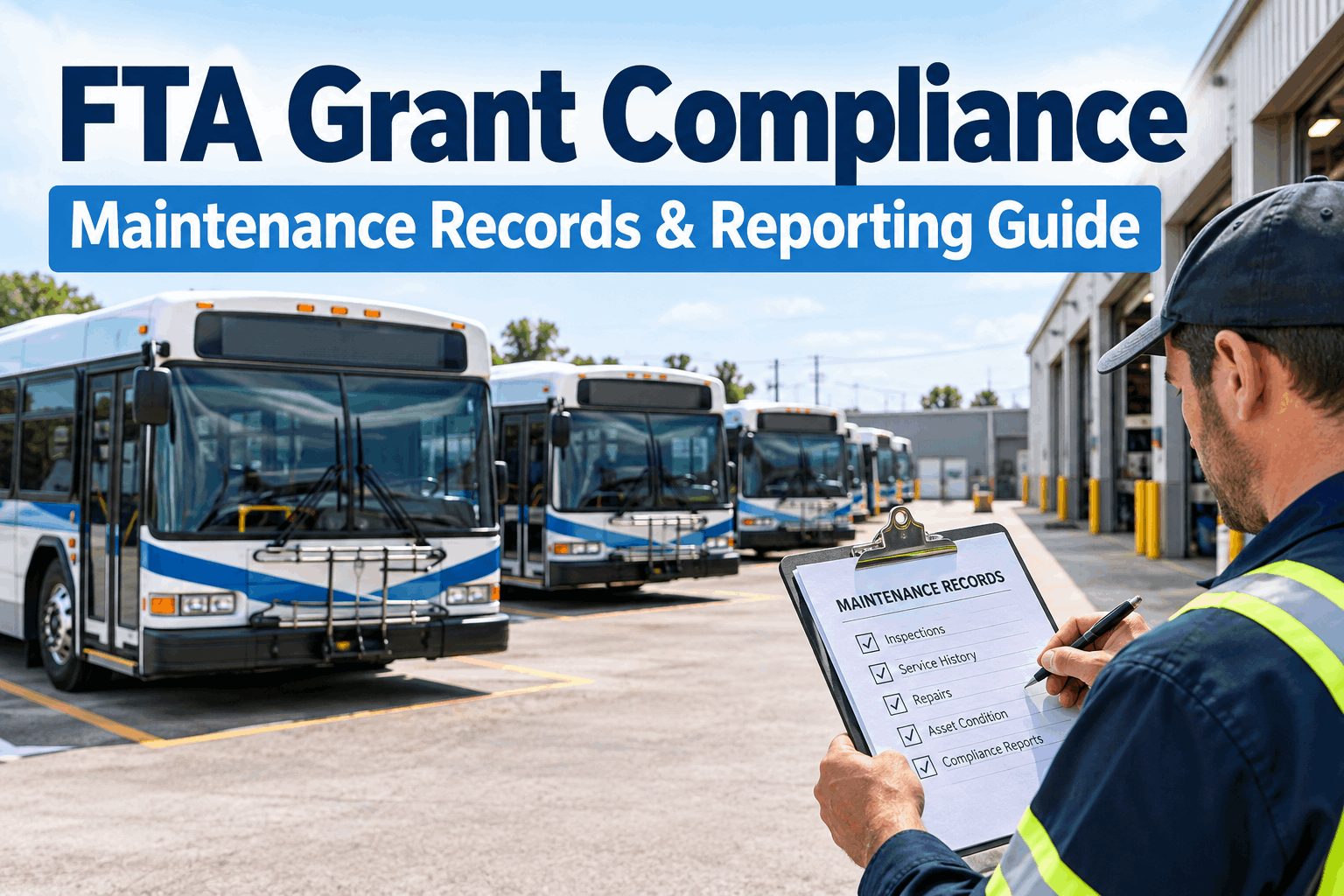
Most FTA compliance findings are not about neglected buses. They come from records that are scattered, incomplete, or impossible to produce on request. This guide shows what to keep, how long to keep it, and how to make it audit-ready.
What FTA Expects You to Be Able to Prove
FTA keeps a federal interest in assets bought with its funds, so you are expected to keep them in good operating order and show your work. Every expectation below maps to a specific record you should be able to pull in minutes.
None of this is hard to understand. It is hard to assemble when the records live in five places. Sign up to build one complete record for every federally funded bus.
How Reviewers Test Your Records
FTA reviews typically sample a handful of funded vehicles and trace each one end to end. One FTA review guide called for records from at least three vehicles, or about one percent of the fleet. The test is simple: can you show the full file for the buses they pick?
A reviewer does not need to find many gaps to start asking harder questions. Book a demo to see how your own buses would look in a sample like this.
From Work Orders to Asset Condition Data
Your maintenance records are not a separate chore from TAM and NTD reporting. They are the raw material. When each repair and inspection lands in the asset's history, the condition data and reports build on facts you already have.
When the flow is automatic, reporting season is a review of data, not a hunt for it. Sign up to keep asset history and condition data in one system.
Six Habits That Keep Records Audit-Ready
Expert Review: Scattered Records vs. One Asset History
Here is how the same reviewer questions land when records live in separate places versus one asset history.
The reviewer's questions never change. What changes is whether your answer takes minutes or weeks. Book a demo to see an asset history exported the way a reviewer would ask for it.
Conclusion: Compliance Is a Habit, Not a Scramble
Grant compliance gets easier the moment every maintenance event lands in the asset's record as it happens. Do that consistently and audits, TAM updates, and NTD reports all draw on the same trusted data. Book a demo with the BusCMMS team to see how it works for a federally funded fleet.
Frequently Asked Questions
What maintenance records does FTA expect for federally funded vehicles?
Recipients are expected to keep funded assets in good operating order, maintain written vehicle and facility maintenance plans with defined inspection and preventive maintenance intervals, and keep records showing the plans were followed. Warranty claims should also be pursued and logged. Check your award terms for specifics.
How long do we need to keep records for FTA-funded assets?
The FTA Master Agreement requires project-related records to be kept at least three years after project completion, and FTA guidance says certain asset records must be kept for the life of the asset. Your state DOT or award terms may require longer, so confirm before disposing of anything.
How do maintenance records connect to TAM and NTD reporting?
Transit Asset Management under 49 CFR Part 625 requires asset inventories, condition data, performance targets, and investment priorities, and NTD reporting under Part 630 draws on service and asset information. Accurate maintenance and asset history is what keeps those reports consistent with each other.
What do FTA reviewers look for when checking maintenance?
They typically confirm you have written maintenance plans, that you follow them, and that records exist for the vehicles they sample. Gaps such as overdue PMs, undocumented repairs, or unlogged warranty claims are common findings. Reviews vary by program and year.
How does BusCMMS help with grant compliance reporting?
BusCMMS keeps maintenance records and asset history together and turns them into analytics and reports. Each bus carries its own service file, so you can export what a reviewer asks for instead of assembling it from scattered sources.