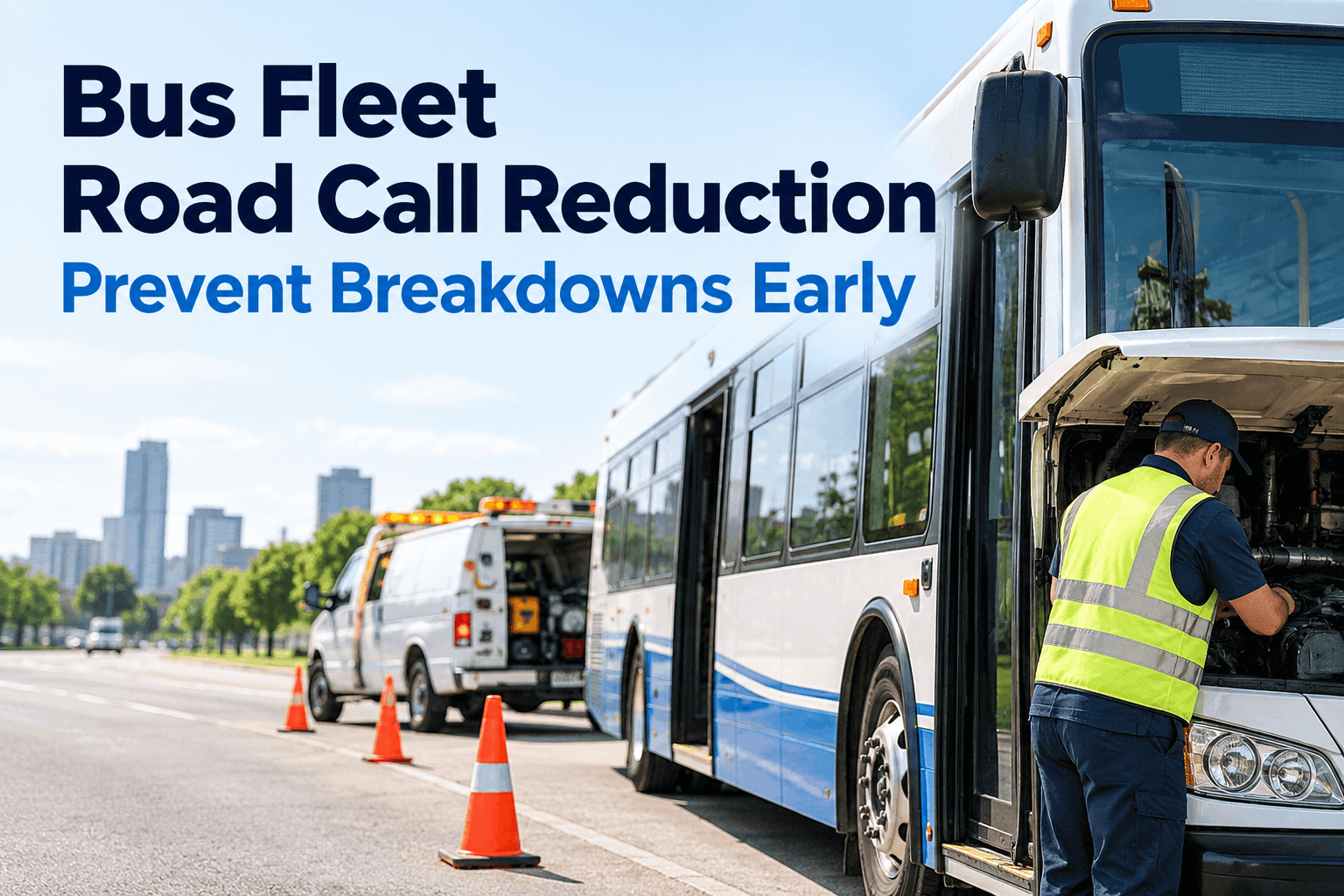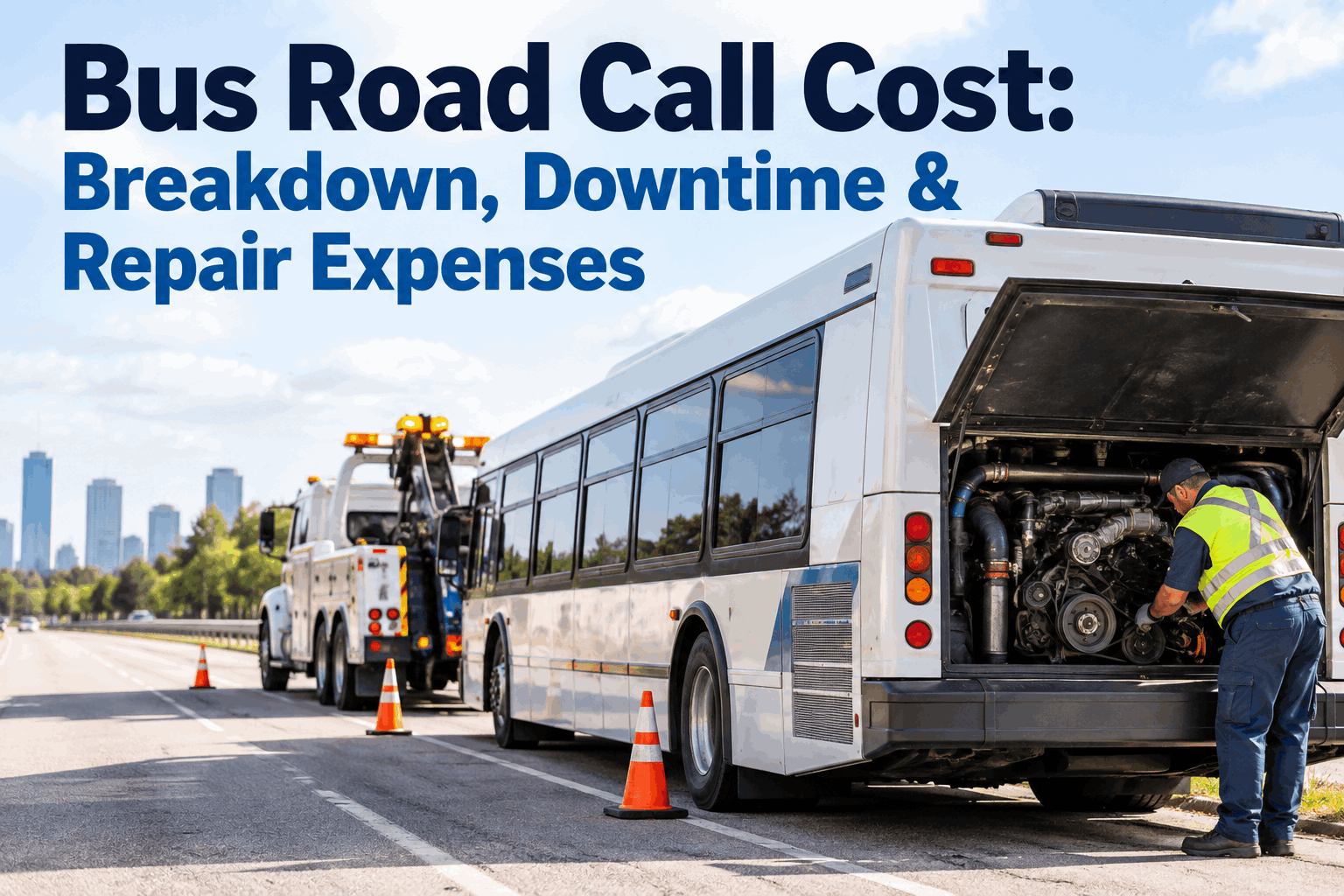
A roadside failure rarely costs only the amount printed on the repair invoice. The true bus road call cost can include dispatch time, roadside labor, towing, replacement parts, shop repair, vehicle downtime, replacement-bus activity, and service disruption. When those expenses live in separate systems, a breakdown that looks like a $600 repair may have a much larger operational footprint. A consistent road-call record helps maintenance, operations, and finance see the complete incident instead of only the wrench-and-parts portion.
A Bus Stops on the Road. The Cost Keeps Moving.
Follow one breakdown from the first driver call through dispatch, towing, repair, downtime, and return to service—then capture the costs that normally disappear between departments.
Build the Road Call Cost From the Ground Up
Road-call accounting becomes more useful when every incident has a consistent cost structure. Direct costs are usually easier to identify because an invoice, part issue, or labor entry exists. Operational costs can be harder to see because they may sit with dispatch, operations, spare-bus utilization, or another cost center. The first goal is not to invent a perfect dollar value for every consequence; it is to capture the measurable pieces consistently.
Towing, roadside response, technician labor, parts, outside service, and shop repair are often the easiest expenses to attach to the incident.
Downtime, spare-bus deployment, service recovery, extra driver activity, schedule disruption, and administrative effort may require data from outside the repair invoice.
A common incident ID gives each department a place to attach its part of the story. See how BusCMMS can connect road-call activity with maintenance history.
Separate the Invoice You See From the Disruption Underneath It
Treating every road call as a repair invoice can understate the event. The maintenance bill is important, but the bus may also be unavailable for hours or days, a spare may be activated, dispatch may coordinate recovery, and passengers or scheduled service may be affected. Not every fleet will monetize every consequence, but the categories should be visible.
Tow + labor + parts + repair
The Clock Starts Before the Bus Reaches the Shop
Road-call duration should show where time was spent. A six-hour event can contain driver reporting, dispatch response, roadside diagnosis, recovery, waiting, active repair, quality checks, and return-to-service activity. Separating those stages helps managers distinguish maintenance time from recovery and operational delay.
Capturing timestamps creates more than a duration total—it creates a process map. Start building connected road-call and work-order records in BusCMMS.
A Repaired Bus Can Still Be an Expensive Bus if It Sits Too Long
Downtime deserves its own view because the maintenance invoice does not show the value of lost availability. Some fleets use an internal hourly or daily downtime allocation for planning; others track hours without converting them to dollars. Either approach can be useful if the method is consistent and clearly separated from actual invoiced expenses.
Track What Operations Had to Do Because the Bus Failed
A road call can create work outside the maintenance department. Operations may dispatch a spare, move a driver, alter a run, communicate a delay, or coordinate passenger recovery. These effects vary greatly between school bus, transit, shuttle, and charter operations, so the incident record should capture what actually happened rather than apply a generic penalty.
One Breakdown Is an Event. Repeated Breakdowns Are a Pattern.
The most expensive road call may not be the incident with the largest tow bill. A lower-cost failure that repeats across the same bus, model, system, route, or operating condition can consume more time and money over a year. Grouping road calls by failure category helps maintenance teams find recurring issues that deserve root-cause review.
Review repair history, defect descriptions, components replaced, diagnostics, and related work before treating each event as unrelated.
A connected incident history makes recurrence easier to spot across vehicles and systems. Book a BusCMMS demo to explore road-call and maintenance analytics.
Use the Average Carefully—Then Open the Outliers
Average cost per road call can help with budgeting and trend review, but it should not replace incident-level analysis. A small number of severe events can pull the average upward, while frequent low-cost failures can create a different reliability problem. Pair the average with incident count, total cost, downtime, and a distribution of individual events.
Open high-cost incidents and repeat low-cost incidents separately; they often require different actions.
Turn Road Call Data Into a Maintenance Action Queue
Cost tracking is most valuable when it changes maintenance decisions. Once incidents are categorized consistently, managers can identify the buses, systems, models, routes, and failure types responsible for the largest road-call burden. That creates a focused list for inspection changes, PM review, parts stocking, training, warranty follow-up, or deeper root-cause analysis.
The objective is a closed loop: record the road call, connect the repair, measure the cost, identify the pattern, and act on it. Start organizing breakdown and maintenance records in BusCMMS.
What to Capture Before the Incident Disappears Into Monthly Totals
The true cost of a bus road call is not one universal formula. It is a disciplined incident record that shows what your organization actually spent, how long the vehicle was unavailable, what service response was required, and whether the same problem is coming back. Consistent records make those costs visible enough to manage.