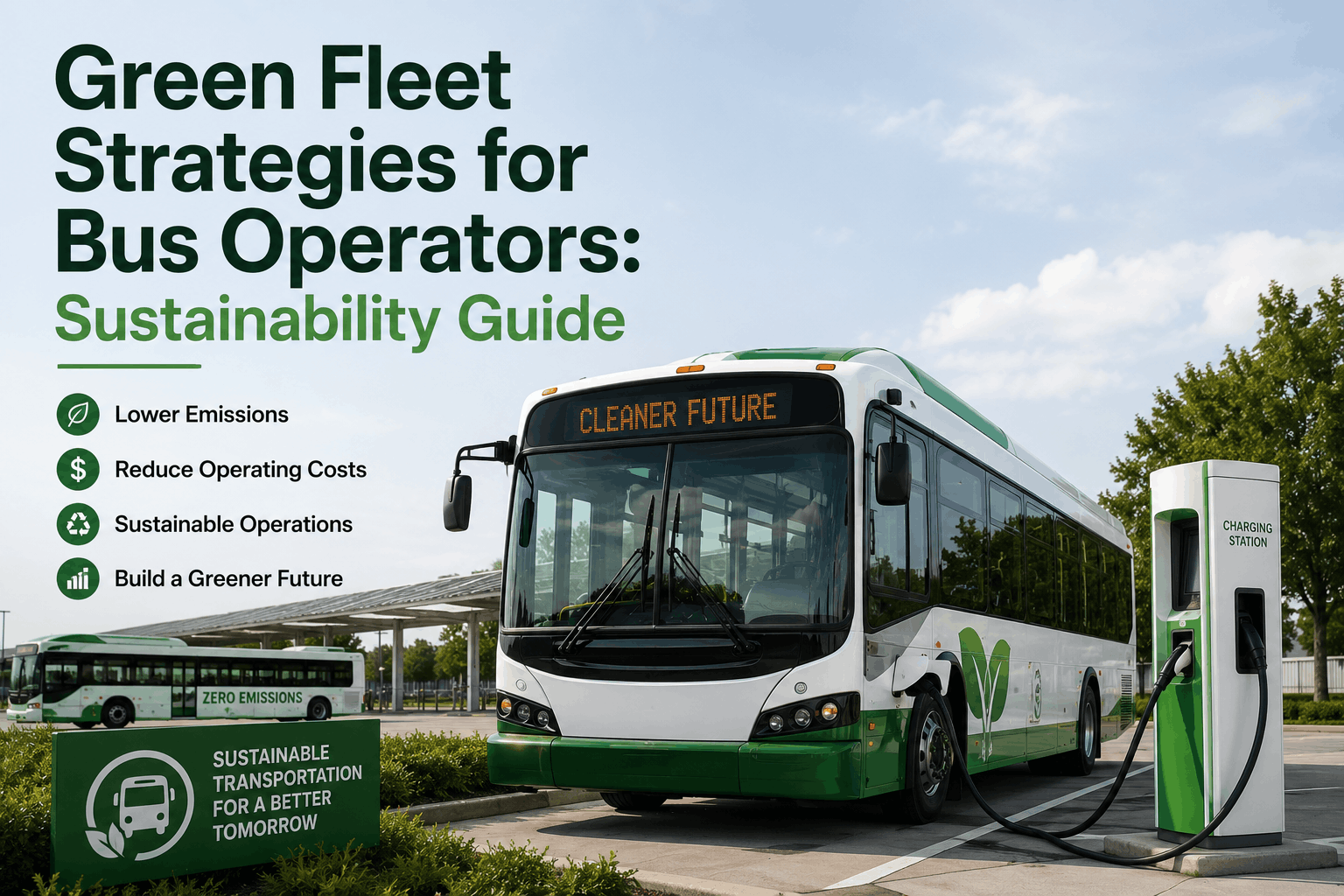
The transportation sector accounts for approximately 29% of total greenhouse gas emissions in the United States, with heavy-duty vehicles like buses responsible for 9% of that total according to EPA data. Yet buses are among the most efficient mass transit solutions available—a single bus removes 40–50 personal automobiles from roads, significantly reducing overall carbon footprint per passenger-mile. For bus fleet operators, the opportunity to build a greener fleet is not just an environmental imperative—it is an economic advantage. Operating costs for electric buses have declined 35% over the past five years, fuel costs for alternative fuels represent 15–25% savings compared to diesel, and maintenance costs for modern fuel-efficient vehicles drop 10–20% through reduced breakdowns and component wear. Moreover, passengers and municipal partners increasingly expect public transportation providers to demonstrate environmental stewardship. Government incentives (federal tax credits, state grants, local subsidies) can offset 40–60% of electrification capital costs. This comprehensive guide explains green fleet strategies available to bus operators in 2026, including electrification pathways, fuel alternatives (CNG, hydrogen, biofuels), idle reduction technologies, maintenance practices that extend vehicle life and reduce emissions, recycling and lifecycle management, and how fleet management software tracks emissions and sustainability metrics to support reporting, grant applications, and strategic decision-making.
Green Fleet Strategies for Bus Operators: Sustainability Guide
Build a greener bus fleet in 2026 with practical sustainability strategies covering electrification, idle reduction, recycling, and emissions tracking.
Why Bus Fleet Sustainability Matters Now
Climate change impacts are accelerating. The International Energy Agency projects that without significant action, transportation emissions will increase 20% by 2030. Cities worldwide are implementing emissions targets (net-zero by 2050, carbon-neutral by 2035). Many municipalities are mandating that public bus fleets achieve 50% zero-emission vehicles by 2030. Transit agencies not meeting these goals face regulatory restrictions, reduced funding eligibility, and loss of contracts. Beyond regulation, passengers prefer sustainable transit options. A 2024 Pew Research survey found that 72% of Americans support investing in public transportation to reduce emissions. Communities that champion green buses attract riders, attract funding, and build reputational advantage.
Economically, the case is equally compelling. Electric bus operating costs are now comparable to or lower than diesel buses when lifecycle costs are considered. A typical electric bus costs $150,000–$200,000 more upfront than a diesel bus, but federal tax credits (up to $120,000 per bus), state grants, and reduced fuel/maintenance costs achieve payback in 4–6 years. Over a 12-year vehicle life, total cost of ownership for electric buses is 20–30% lower. Compressed Natural Gas (CNG) buses offer similar economics with simpler infrastructure. Idle reduction, efficient driving practices, and preventive maintenance deliver immediate 10–15% emission reductions and fuel savings at zero capital cost.
Electrification: The Future of Bus Fleets
Electric buses (BEVs—Battery Electric Vehicles) produce zero tailpipe emissions and have significantly lower operational complexity than internal combustion engines. Battery costs have dropped 90% over the past decade, making large-capacity lithium-ion batteries economically viable for heavy-duty applications. Modern electric buses operate 100–250 miles per charge, sufficient for most urban and suburban routes. Charging infrastructure—depot chargers, en-route fast chargers, and opportunity chargers at transit centers—is rapidly expanding across North America.
Leading U.S. cities have committed to all-electric fleets: Los Angeles aims for 2,300 electric buses by 2030; New York City has ordered 2,800 electric buses; Chicago is transitioning 1,800 buses to electric by 2040. The momentum is clear. However, electrification requires strategic planning: charging infrastructure investment, grid capacity assessment, driver training, and phased procurement over 5–10 years. Most fleets adopt a "mixed fleet" approach, starting with 20–30% electric buses on shorter routes with predictable energy needs, then expanding as technology and charging networks mature.
Alternative Fuel Options: CNG, Hydrogen, and Biofuels
While electrification is the long-term vision, alternative fuels offer immediate sustainability improvements with proven technology and lower infrastructure costs than full electrification. Many fleets adopt a "fuel-agnostic" strategy, using the best available option for each route or vehicle class.
Immediate Emissions Reduction: Idle Elimination and Operational Efficiency
While vehicle procurement requires capital investment and years of planning, operational changes can cut emissions and fuel consumption immediately—at minimal cost. Idle reduction alone can reduce fuel consumption by 10–15% and emissions proportionally.
Automatic engine shut-off when idling exceeds 30 seconds (at bus stops, traffic lights, passenger boarding). Modern systems restart the engine instantly when the driver presses the brake pedal. Annual fuel savings per bus: 500–1,500 gallons. Emissions reduction: 5 tons CO2 equivalent per bus per year. Cost: $2,000–$5,000 per vehicle. Payback: 6–18 months.
Train drivers on fuel-efficient driving techniques: smooth acceleration, steady speeds, anticipatory braking, and avoiding aggressive maneuvers. Data from transit agencies shows 8–12% fuel savings with eco-driving training. Combine with telematics feedback to reinforce good habits. Cost: minimal (training + digital coaching). Benefit: cumulative fuel and emissions savings with no capital investment.
Optimize routes to minimize empty miles, reduce trip duration, and decrease overall fuel consumption. Real-time transit data and passenger demand forecasting enable dynamic routing. Software tools can identify inefficient routes and recommend alternatives. Savings: 5–10% fuel reduction fleetwide.
Well-maintained engines are efficient engines. Ensure fuel injectors are clean, air filters are replaced on schedule, tire pressure is optimized, and emission control systems (DPF, SCR) are functioning. Poor maintenance can increase emissions and fuel consumption by 15–25%. Preventive maintenance in a CMMS system ensures nothing is missed.
Minimize onboard weight (remove unnecessary equipment), optimize vehicle aerodynamics (low-rolling-resistance tires, fairing design), and eliminate auxiliary power needs where possible. Each 10% weight reduction saves 6–8% fuel. Aerodynamic improvements save 3–5%.
Install auxiliary power units (APU) or shore power at transit centers to provide heating, cooling, and electrical power without engine idling. Drivers can keep climate control on during layovers while engine is off. Reduces both emissions and maintenance wear.
Lifecycle Management and Circular Economy
Sustainability extends beyond emissions to the full vehicle lifecycle: material sourcing, manufacturing, operations, and end-of-life recovery. A comprehensive sustainability strategy includes responsible battery recycling, parts remanufacturing, and material recovery.
Electric bus batteries retain 70–80% capacity after their automotive lifespan (8–10 years). Second-life applications include stationary energy storage, grid support, and remote power systems. Recycling recovers lithium, cobalt, nickel, and other critical minerals. Establish partnerships with battery recyclers and explore second-life opportunities. Cost: planning and logistics. Benefit: extended resource value, reduced mining pressure, circular economy contribution.
Motors, generators, controllers, and other components can be refurbished and remanufactured. Work with OEMs and third-party remanufacturers to recover and reuse parts. Reduces new manufacturing waste and material consumption.
When buses reach end of life, over 85% by weight can be recycled (steel, aluminum, glass, plastics). Establish relationships with certified recyclers who adhere to environmental standards. Recover scrap value and ensure responsible disposal of hazardous materials (oil, coolant, refrigerant).
Evaluate suppliers and manufacturers on sustainability criteria: renewable energy use, waste reduction, ethical sourcing, and worker safety. Preferred vendor programs incentivize sustainable practices throughout the supply chain.
Emissions Tracking and Sustainability Reporting
Quantifying environmental impact is essential for grant applications, stakeholder reporting, regulatory compliance, and internal accountability. Fleet management software provides the data infrastructure to track emissions, fuel consumption, and sustainability metrics systematically.
Funding and Incentive Programs for Green Bus Fleets
Government and utility programs can offset 40–60% of green bus procurement and infrastructure costs. Knowledge of available programs is critical to making electrification and alternative fuel investments financially feasible.
FTA's Low or No Emission (LNE) Program and Grants for Buses and Bus Facilities program provide substantial funding for electric and alternative fuel buses, and charging/fueling infrastructure. Typical awards: $10M–$50M per application. Eligibility: public transit agencies. Deadline: annual application cycle.
California's Heavy-Duty Vehicle Incentive Program provides up to $135,000 per electric bus and $25,000 per CNG bus. Also funds charging and fueling infrastructure. Open to publicly and privately-operated transit agencies in California. First-come, first-served basis.
FMCSA's Buses and Bus Facilities (BEB) Program reimburses up to 90% of electric bus and charging infrastructure costs for eligible transit agencies. Directly competitive but substantial awards available.
Provides funding for emissions reduction projects including retrofit equipment, engine replacements, and technology upgrades. Open to public and private fleets. Focuses on air quality improvement in disadvantaged areas.
Many states (NY, MA, CO) and utilities offer rebates for charging infrastructure installation. Some provide operational support or electricity rate discounts for fleet charging.
Customer Success: From Diesel to Sustainable Operations
We committed to 50% electric buses by 2030 and launched a phased modernization plan. In year one, we procured 30 electric buses, secured $3.2M in FTA and state grants, and invested in depot charging infrastructure. Today, those 30 buses operate cleaner, quieter, and more cost-effectively than diesel equivalents. Fuel costs dropped 80%, maintenance costs dropped 60%, and driver satisfaction increased—they appreciate the modern, quieter vehicles. We're also tracking full sustainability metrics in our CMMS, which helps us report progress to the city council and apply for additional funding. The combination of vehicles, infrastructure, and data visibility has transformed our fleet operations and environmental impact. We're now planning to expand to 100 electric buses by 2028 based on proven performance and economic case.
Frequently Asked Questions About Green Fleet Strategies
How long does it take to charge an electric bus and what is the charging infrastructure investment?
Depot charging takes 6–12 hours overnight. Fast charging takes 15–30 minutes at transit centers. Charging infrastructure cost is $50,000–$150,000 per charger depending on type and location, plus electrical utility upgrades. Most fleets use combination charging strategies to minimize infrastructure and operational complexity.
What is the actual payback period for electric buses considering fuel, maintenance, and incentives?
With federal and state incentives covering 40–50% of vehicle cost, payback is typically 4–6 years. Including maintenance savings and fuel cost differences, total cost of ownership is 20–30% lower over a 12-year lifecycle compared to diesel buses. Early adopters benefit most as incentive programs are substantial.
Can existing diesel buses be retrofit with electric powertrains or alternative fuels?
Complete electrification retrofit is not practical for buses due to battery weight and packaging constraints. However, plug-in hybrid retrofit kits and alternative fuel conversions (diesel-to-CNG) are available but often cost-prohibitive. New vehicle procurement is typically more cost-effective. Some older buses can be salvaged for parts or responsibly recycled.
How does electric bus range vary in cold weather, and what is a realistic service area?
Cold weather reduces electric bus range by 15–25% due to battery chemistry and cabin heating load. Most modern buses are rated 100–250 miles per charge depending on model and conditions. Cold-weather fleets should select vehicles with longer-range specifications. Preconditioning (heating the cabin while plugged in) minimizes range loss during operation.
What sustainability metrics should a fleet be tracking and reporting?
Key metrics include: gallons of fuel consumed (by type), CO2 emissions (tons), % fleet electrification, renewable fuel percentage, idle time percentage, fuel economy (MPG or kWh/mile), maintenance costs, and grant funding secured. Dashboards displaying these metrics build accountability and support grant reporting and stakeholder communications.
Are there sustainability certifications or standards for bus fleets to pursue?
Yes, including ISO 14001 (Environmental Management), Science-Based Targets (emissions reduction commitments), and various municipal sustainability certifications. Electric and CNG buses may qualify for LEED credits in building transportation plans. Achieving certifications demonstrates commitment to stakeholders and can support grant applications.
How does BusCMMS help track emissions and support green fleet reporting?
BusCMMS integrates fuel consumption data, vehicle telematics, and maintenance records to calculate emissions, track sustainability KPIs, and generate comprehensive environmental reports. Dashboards visualize progress toward emissions reduction targets. Data supports FTA grant applications, municipal reporting, and internal sustainability accountability. Schedule a demo to see how your fleet can align operations with sustainability goals.
What is the realistic timeline for a fleet to transition from 100% diesel to 50% electric buses?
Most fleets plan a 5–7 year transition. Year 1: Secure funding, conduct route analysis, pilot 10–20 electric buses. Years 2–5: Procure 30–50 buses annually while building infrastructure. Year 5–7: Achieve 50% electrification with full-scale operations. Acceleration requires robust funding and infrastructure planning, but the timeline is achievable for well-resourced agencies.
Build Your Green Fleet Today
Sustainability is no longer an aspiration—it is an expectation. Passengers, communities, and regulators demand it. Electric buses, alternative fuels, idle reduction, and lifecycle management make green operations economically and operationally feasible. Government incentives can offset half your costs. Fleet management software enables tracking and reporting. Start your sustainability journey today with proven strategies and partner support.