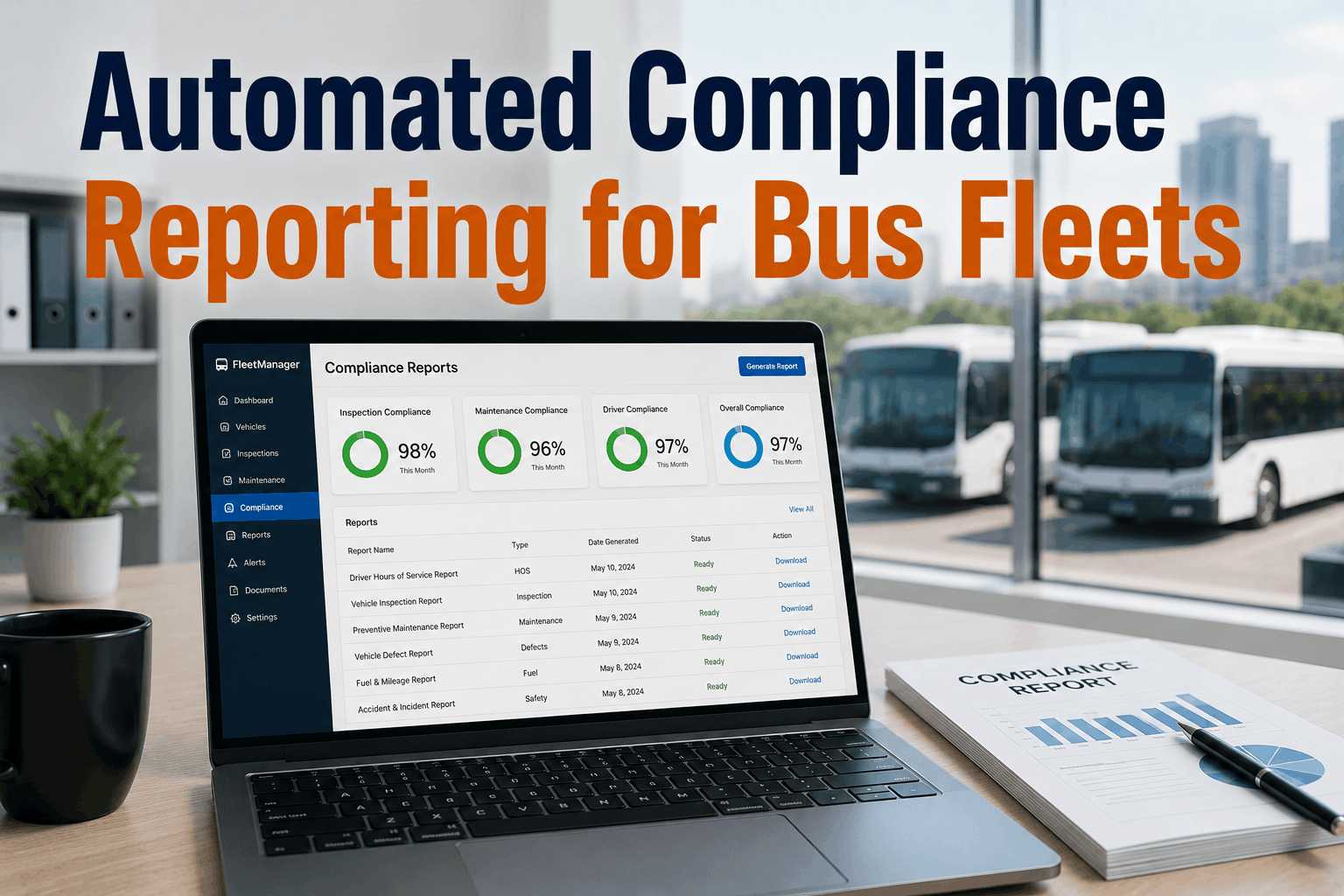
Compiling compliance reports manually is a notorious operational time-sink that keeps fleet managers locked in spreadsheets instead of optimizing shop floors. When a Department of Transportation (DOT) auditor walks through the door unexpectedly, scrambling to aggregate paper Driver Vehicle Inspection Reports (DVIRs), physical preventive maintenance logs, and brake test certifications introduces severe regulatory risk. A single missing signature, a lost inspection slip, or an unrecorded odometer reading can instantly trigger compliance penalties and damage a carrier's safety rating. Transitioning to automated compliance reporting transforms this chaotic, reactive scramble into an always-on, audit-ready operational process. By automatically capturing data at the direct point of service, modern fleet platforms build compliance histories seamlessly in the background. This guide analyzes the structural cracks in manual record-keeping, highlights the essential reporting metrics required to protect your authority, and outlines an actionable framework to achieve hands-free audit readiness.
Analytics & Reporting
Automated Compliance Reporting for Bus Fleets
Manual compliance reports eat up valuable hours and risk severe human errors. Learn how automated reporting produces audit-ready compliance documentation on demand.
Why Manual Fleet Reporting Fails Regulatory Scrutiny
Relying on paper logs, whiteboards, or unlinked spreadsheets to manage fleet compliance records creates an incredibly fragile operating system. When data is scattered across multiple locations, critical historical context gets lost long before an official review occurs.
Reason 1: High Rates of Human Data Entry Errors
Handwritten logs are often plagued by illegible text, inverted vehicle serial numbers, and missed metric fields. During an audit, these clerical gaps are treated exactly like unperformed maintenance.
Reason 2: Delayed Extraction and Backlogs
When inspection data sits on a clipboard for days or weeks before being manually keyed into a computer system, fleet managers lose real-time visibility into active defects and past-due safety cycles.
Reason 3: Fragmented Information Silos
Parts inventory trackers, mechanic timesheets, and safety inspection logs frequently live in separate, disconnected systems. This lack of integration makes linking a defect report to its actual repair parts impossible.
Reason 4: Extreme Pre-Audit Preparation Panic
Shops using manual workflows often have to pause revenue operations for days ahead of an inspection just to hunt down missing historical maintenance records and compile compliance folders.
The Core Pillars of Clean Compliance Analytics
To establish a resilient, hands-off reporting framework, fleet managers must focus on the data pipelines that bridge daily shop activities directly with federal and state regulatory requirements.
Automated Data Targets vs. Audit Protections
Target: Closed-Loop DVIR Resolution Records
The software automatically links a driver-reported safety defect directly to the subsequent mechanic work order, recording the exact parts used and the final safety sign-off to provide a clear repair trail.
Target: PM Completion Rate Trends
Instead of guessing at compliance health, analytics dashboards track your actual preventive maintenance compliance percentage over time, highlighting any past-due services before they become safety hazards.
Target: Technician Credential Lifecycles
Automated reporting syncs vehicle maintenance records with technician training dates, instantly proving to auditors that annual brake inspections or complex fuel-system repairs were completed by certified staff.
Target: Asset History Continuity Tracking
Every single service action, roadside repair, and parts replacement is permanently time-stamped and attached to the bus's unique VIN, creating a permanent, unalterable life history for the vehicle.
The Fix: Deploying an Automated Fleet Reporting Framework
Do not let administrative overhead compromise your company's safety ratings. Transition to a modern, digital data capture system by following these structural steps:
1
Enforce Mobile Point-of-Service Data Entry
Equip your mechanics and drivers with mobile inspection apps. Capturing safety checks, fluid totals, and repair data directly at the bus ensures zero information loss or entry delays.
2
Establish Live Compliance Health Dashboards
Configure a central "Audit Ready" screen within your CMMS platform. This workspace acts as a real-time health indicator, immediately flagging any incomplete inspection or missing document.
3
Schedule Automated Report Delivery Schedules
Set the system to auto-generate and email key compliance logs to your leadership team every single week. Regular summaries keep safety goals on track without requiring manual data sorting.
4
Generate Instant Audit-Ready Export Formats
Build custom report presets tailored directly to the format requirements of DOT, FMCSA, or regional transit authorities. When an officer asks for records, you can export years of data into a clean file in seconds.
"Before we automated our compliance reporting, preparing for our annual safety review meant shutting down administrative work for three straight days to track down paper inspection sheets. It was incredibly stressful, and minor human errors always slipped through. Moving our transit operation to an automated CMMS platform changed the entire dynamic. The software compiles our vehicle histories, technician records, and DVIR loops effortlessly in the background. When an auditor arrived last month, we printed out comprehensive, spotless records with just a few clicks. The entire review took less than an hour, and our compliance score remains perfect."
— Director of Analytics, Regional Transit Network, Ohio
Eliminate Audit Stress with Automated Fleet Tracking
Stop drowning in paper logs and missing inspection dates. Protect your passenger fleet's safety ratings by generating comprehensive, audit-ready compliance summaries automatically.