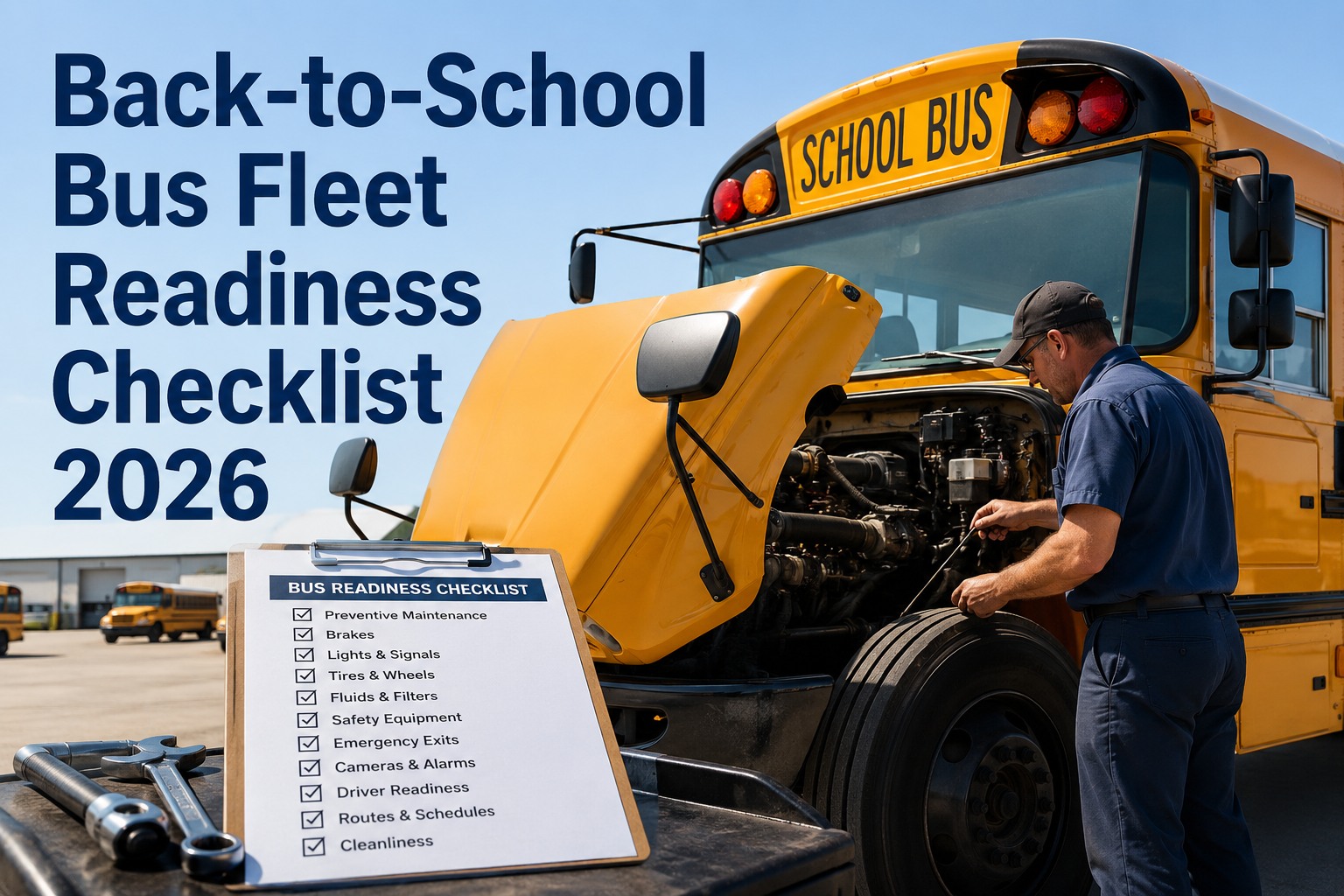
Back-to-School Bus Fleet Readiness Checklist 2026 — 35 Tasks Before First Bell (30-Day Countdown)
First-day bus failure isn't just embarrassing — it's the fastest way to destroy parent trust before the school year even starts. With 451,000+ school buses hitting the roads on Day 1, the fleets that run smoothly are the ones that started preparing 30 days out. This countdown checklist breaks down 35 critical tasks across four weeks, so nothing falls through the cracks and every bus is ready when students are.
2026 Ready
Back-to-School Bus Fleet Readiness Checklist 2026 — 35 Tasks Before First Bell (30-Day Countdown)
Week-by-week preparation so Day 1 runs without a single stranded student
These 6 systems cause 80% of first-day failures. Verify each one:
Batteries
Load test all batteries 3+ years old
Brakes
Pad thickness, rotor condition, fluid level
A/C
August heat + no A/C = parent complaints
Stop Arms
Must deploy fully, lights must flash
Lights
All exterior and interior lighting functional
Exits
Emergency exits, windows, roof hatches
08
Expert Insight
Fleet Manager Perspective
"The districts that nail first-day aren't lucky — they're prepared. We start our countdown on July 20th every year. By August 1st, we know exactly which buses need work and have parts on order."
"Create a maintenance 'dead zone' the week before school. No routine PM scheduled. Only emergency repairs. You want maximum availability, not buses in the shop."
"Plan for 94% readiness, not 100%. Have backup buses assigned to routes so when Bus 12 throws a check engine light at 6:42am on Day 1, you're not scrambling."
The Bottom Line
First-day bus failure makes headlines, destroys parent trust, and puts your transportation department under a microscope for the entire year. The 30-day countdown approach prevents chaos by spreading 35 critical tasks across four manageable weeks — so nothing gets missed and every bus is verified ready before students board.
BusCMMS automates fleet readiness reports, tracks every task in this checklist, and generates the documentation you need to prove compliance and preparation.
BusCMMS generates automated fleet readiness reports showing which buses need service, which inspections are due, and which parts to order — all before the first bell rings.
When should we start preparing for back-to-school?
Start 30 days before the first day of school. This gives enough time to identify issues, order parts, complete repairs, train drivers, and verify everything works. Fleets that start in the final week face 3x more Day 1 breakdowns than those starting a month out.
What are the most common first-day bus failures?
Battery failures, brake issues, A/C problems, and stop arm malfunctions cause most first-day breakdowns. These are all preventable with proper summer preparation. Batteries over 3 years should be load tested, and A/C systems need verification before August heat arrives.
How do we handle PM schedules that fall during first week?
Create a maintenance "dead zone" for the week before and week of school start. Complete any routine PM before this window or defer until after the first week. You want maximum bus availability during the most stressful time of year, not scheduled shop time.
What documentation do we need for back-to-school readiness?
At minimum: current annual DOT inspections for all buses, 90-day emergency exit inspections, valid driver CDLs and medical certificates, FMCSA Clearinghouse queries, and PM service records. A CMMS generates this documentation automatically and keeps it audit-ready.
How many backup buses should we have available?
Plan for 94% availability, meaning you need spare capacity for 6% of your fleet. For a 50-bus fleet, that's 3 backup buses. Pre-assign which backup covers each route so drivers know the plan when issues arise. Also pre-negotiate rental options with local vendors.