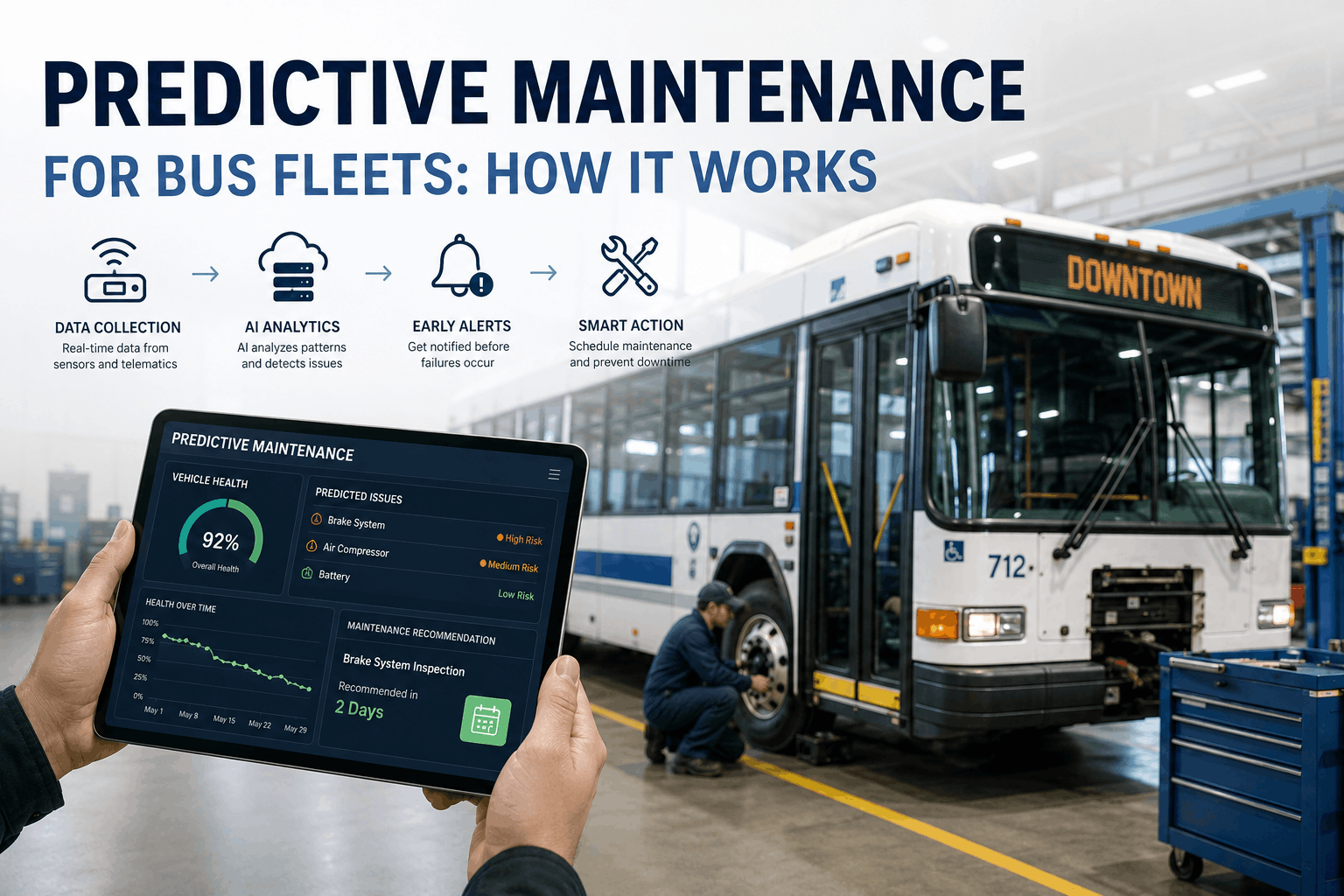
Predictive Maintenance for Bus Fleets: How It Works
American transit agencies, school districts, and private bus operators consistently ask these specific questions when evaluating predictive maintenance software for their bus fleets. Based on hundreds of successful deployments across the United States, these answers address the most common concerns about implementation accuracy, cost justification, and federal compliance readiness.
Predictive Maintenance Insights
Advanced FAQ: Predictive Maintenance for US Bus Fleets
Question
Answer for US Transit Agencies
What is the minimum fleet size for cost-effective predictive maintenance?
Predictive maintenance becomes cost-effective for American fleets with 25 or more buses, with ROI accelerating significantly at 50 vehicles.
How does weather affect sensor accuracy across different US regions?
Modern sensors maintain accuracy from -30 to 120 degrees Fahrenheit across all American climates including Minnesota winters and Arizona summers.
Can predictive maintenance detect electrical system failures in hybrid buses?
Yes, predictive platforms monitor high-voltage battery health, inverter temperatures, and electric motor vibrations common in US hybrid transit fleets.
What training do mechanics need to interpret AI predictions?
Most American shops complete 8 to 16 hours of training covering dashboard navigation, alert prioritization, and confirmation of AI recommendations.
Does predictive maintenance help with FTA State of Good Repair reporting?
Yes, predictive systems automatically track component degradation against Federal Transit Administration benchmarks for American transit agencies.
How are false positive alerts handled in real-world US operations?
False positive rates average 8 to 12 percent, and maintenance teams verify alerts with quick physical inspections before scheduling repairs.
What is the typical data retention period for predictive maintenance records?
BusCMMS retains all telemetry and prediction data for 7 years to meet FTA recordkeeping requirements for American transit agencies.
Can predictive maintenance integrate with existing fuel card and telematics systems?
Yes, BusCMMS offers native integrations with Zonar, Samsara, Geotab, and Verizon Connect used by most American bus fleets.
Our agency manages 325 buses serving suburban Chicago routes across Cook County, Illinois. Before predictive maintenance, we averaged 18 roadside breakdowns per month. After deploying BusCMMS predictive analytics across our entire fleet, we have reduced breakdowns to just 3 to 4 per month. The system warned us about a failing transmission in bus 4172 three weeks before it would have failed on I-90 during morning rush hour. That single avoided incident paid for the entire first year of the software. The maintenance dashboard gives us confidence that every bus leaving the garage has been monitored for developing issues. I recommend predictive maintenance to every transit director I meet at APTA conferences across the United States.
Michael R., Fleet Operations Manager
Cook County, Illinois Transit Authority
438%Average ROI for US Transit Fleets
89%US Fleets Planning PdM by 2027
$15,000Average Savings Per Bus Annually
Ready to deploy predictive maintenance across your US bus fleet?