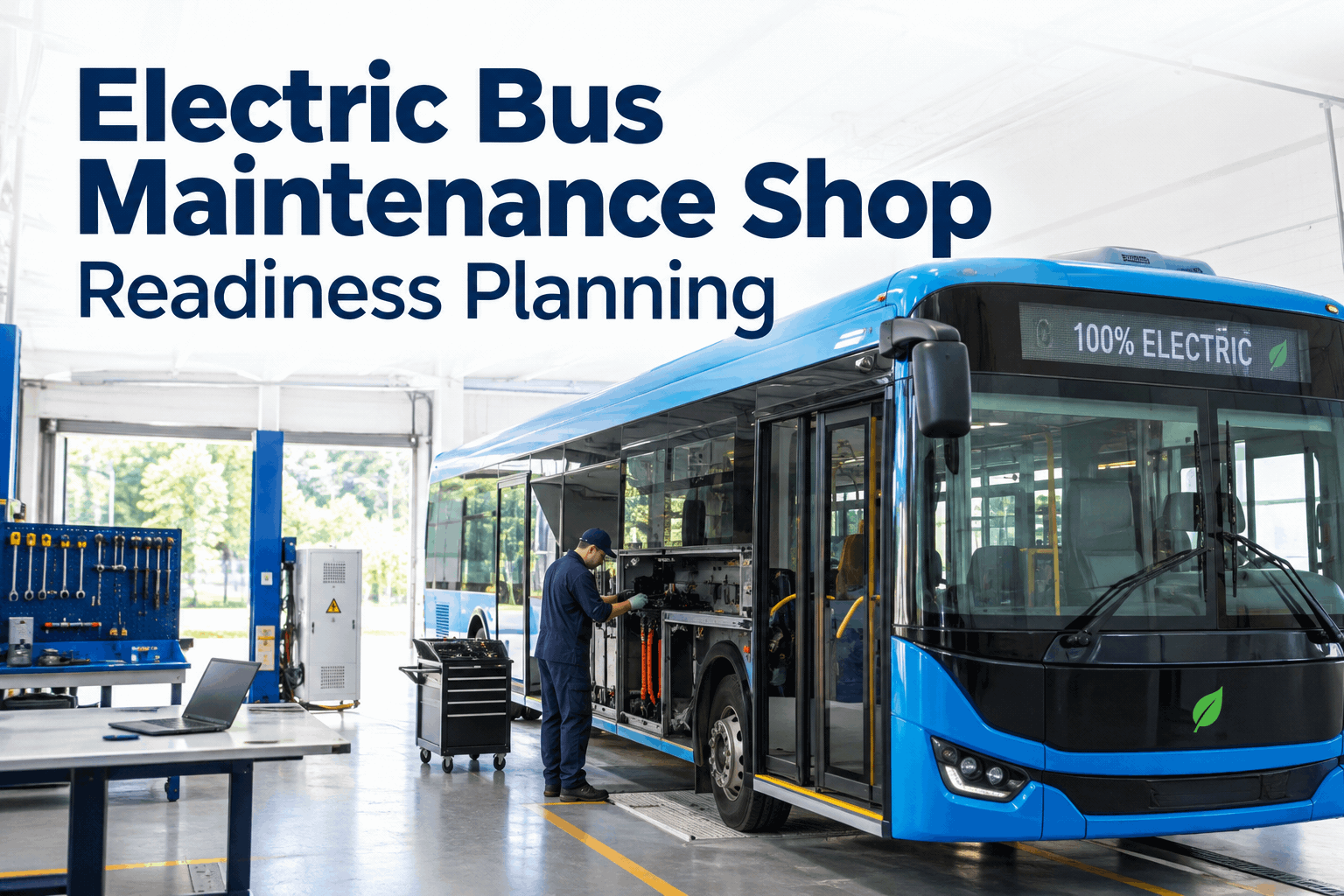
The first electric bus arrives on a Tuesday, and the shop finds out the charger install is three weeks behind, only one technician has touched a high-voltage system before, and nobody's written down what "de-energized before service" actually means for this model. None of that is a surprise that should happen on delivery day — it's a readiness gap that was knowable months earlier, if anyone had checked. See how shop readiness gets tracked ahead of delivery in a demo.
Electric Bus Maintenance Shop Readiness Planning
An electric bus doesn't fail gracefully in a shop that isn't ready for it. Readiness isn't one checklist item — it's facility, technicians, workflow, and records all catching up to the fleet before the first EV rolls through the bay door.
Why "We Have Chargers" Isn't the Same as "We're Ready"
Most electrification timelines treat the charger install as the finish line. It's one piece. Agencies further along report that staffing and training, not hardware, end up being the harder constraint — enrolling technicians in training, backfilling their other fleet work while they're out, and getting access to specialized diagnostic tools all take longer than the construction schedule suggests. A shop with chargers in the ground and no certified technician to work on a de-energized battery pack isn't ready; it's just further along on one axis out of several.
The Five Readiness Domains
Treat these as separate tracks that need to converge before the first EV arrives, not one combined project.
Facility & charging infrastructure
Depot and on-route chargers installed, tested, and — just as important — staffed for the ongoing upkeep they need, not treated as a one-time install.
Technician certification
Staff sorted by exposure level — general awareness for routine work versus high-voltage PPE and lockout-tagout training for battery, motor, and inverter service.
Safety procedures
Written SOPs for high-voltage work, zero-voltage verification, and PPE use — developed with the OEM, not improvised the first time a technician opens a pack.
Maintenance workflow
New PM items for battery health, charging equipment, and motor systems built into the schedule — not bolted onto a diesel PM template that doesn't fit.
Parts & asset records
EV-specific parts stocked and lead times known in advance, with a vehicle record built to hold electric-specific data alongside the rest of the mixed fleet.
Most shops are strong on one or two of these and behind on the rest — usually technician certification and workflow, which take the longest to build. Sign up free and start tracking readiness across your fleet.
Who Can Work on What: Technician Exposure Levels
Not every technician needs the same training, but every technician needs to know which level they're qualified for. Agencies further along typically sort staff into two tiers.
Swipe sideways to see all columns.
Most routine work can stay with conventionally trained technicians once a bus is confirmed de-energized. It's the battery, inverter, and motor work that needs the dedicated Level II training — and that's usually the longest lead time in the whole plan.
Running a Mixed Fleet During the Transition
Few agencies flip from diesel to electric overnight — most run both for years. That means the maintenance program has to hold two very different PM logics at once, without technicians losing track of which bus needs which kind of service.
Mileage or calendar-based PM, routine fluid and filter service, warranty and FMCSA or FTA records your team already knows how to keep.
Battery health checks, charging equipment inspections, high-voltage system service logged by certified technicians, with its own asset record alongside the rest of the fleet.
Expert Review: Charger-First Planning vs. Readiness Across the Board
Agencies further into electrification consistently point to the same lesson: the infrastructure timeline is the easy one to plan around. Staffing and training are where delivery dates actually slip.
Swipe sideways to see all columns.
The shops with the smoothest electrification rollouts are the ones who started the technician and workflow track on the same timeline as the construction crew. Book a demo to see how that readiness gets tracked.
The Bottom Line
An electric bus arriving at a shop that isn't ready for it doesn't fail quietly — it sits, waits on a certified technician, or gets serviced by someone working outside their training. Facility, technicians, safety procedures, workflow, and records all need to be tracked as separate readiness domains, started well ahead of delivery, not assumed to fall into place once the chargers are installed.