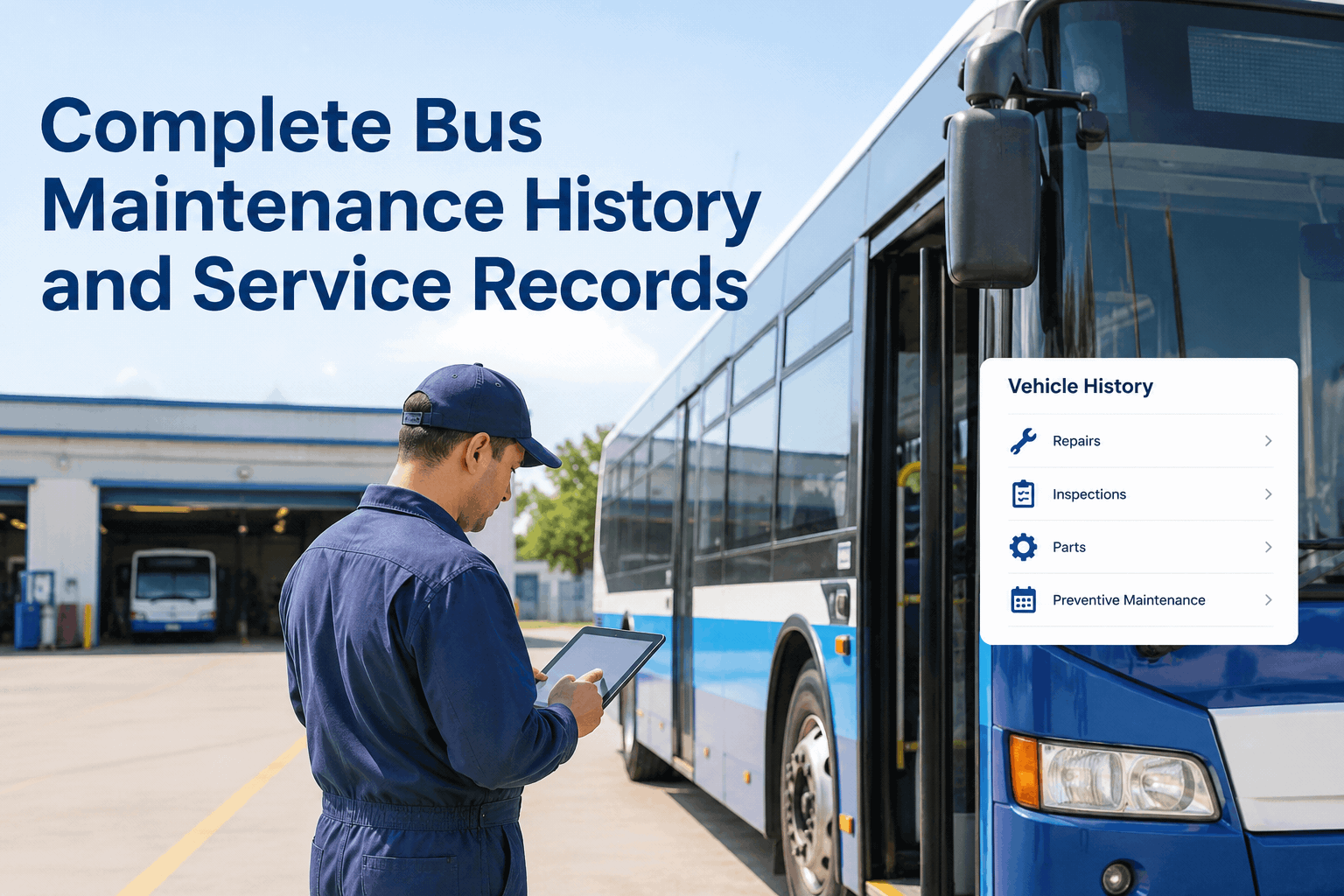
A bus comes in with a recurring electrical fault. The tech who worked on it last time isn't on shift. The paper work order from that repair is in a different binder than the parts receipt, which is in a different system than the PM log. Forty-five minutes later, the diagnosis finally starts — on a problem that was already solved once. That's not a technician problem. That's a record problem. See how one unified vehicle history works in a live demo.
Complete Bus Maintenance History and Service Records
Keep every bus's repairs, inspections, parts, and preventive maintenance in one vehicle history. Improve maintenance tracking and fleet visibility with BusCMMS.
What Belongs in One Complete Vehicle History
A "complete" record isn't just work orders. It's five things living in the same place, tied to the same vehicle.
Work Orders
Every repair, who performed it, and what it actually fixed — not just that a job was closed.
PM Schedule & Completions
What's due, what's been done, and the gap between the two — visible at a glance, not reconstructed from memory.
Parts & Cost
Every part installed, its cost, and the labor hours behind it — tied to the repair it was used for.
Inspections & DVIRs
Pre-trip, post-trip, and annual inspection records, each linked to the vehicle they belong to.
Warranty Records
Coverage dates and claim history, so a covered repair doesn't accidentally get paid for twice.
Where Fragmented Records Actually Cost You
Slower Diagnosis
A tech without visibility into past repairs re-diagnoses problems that were already solved, burning bay time on information that already existed.
Warranty Money Left Unclaimed
Without a clear record of what's still covered, repairs that should have been free get paid for out of the maintenance budget instead.
Lower Resale Value
A bus with a documented history sells for more and faster than one with a shoebox of receipts and a best guess at its service record.
A Scramble Whenever Someone Asks
An auditor, a buyer, or your own director asks for one bus's full history, and it takes hours instead of seconds to assemble.
Checklist: Does Your Fleet Have One Real Vehicle History?
Three or more "no" answers means your records are fragmented, even if every individual piece is being kept somewhere.
Expert Review: Fragmented Records vs. One Unified History
Most shops aren't missing records — they're missing a single place to find them all.
Fragmented Records
- Work orders in one system, parts receipts in another, PM on a spreadsheet
- A tech re-diagnoses problems that were already solved before
- Warranty coverage gets missed because nobody's tracking it centrally
- Pulling one bus's full history means checking three or four places
One Unified History
- Work orders, parts, PM, inspections, and warranty under one vehicle record
- A tech sees the full repair history before diagnosis even starts
- Warranty coverage is checked automatically before a repair is billed
- Pulling one bus's full history takes seconds, not a search across systems
Book a demo to see your fleet's records unified into one history.
The Bottom Line
Nothing about keeping good records requires more paperwork — it requires one place for the paperwork that's already being generated. A bus with a complete, unified history diagnoses faster, claims every dollar of warranty it's owed, sells for more, and never turns a routine question into a scramble. Fragmented records don't mean a fleet is careless. They mean the records just never had one home.