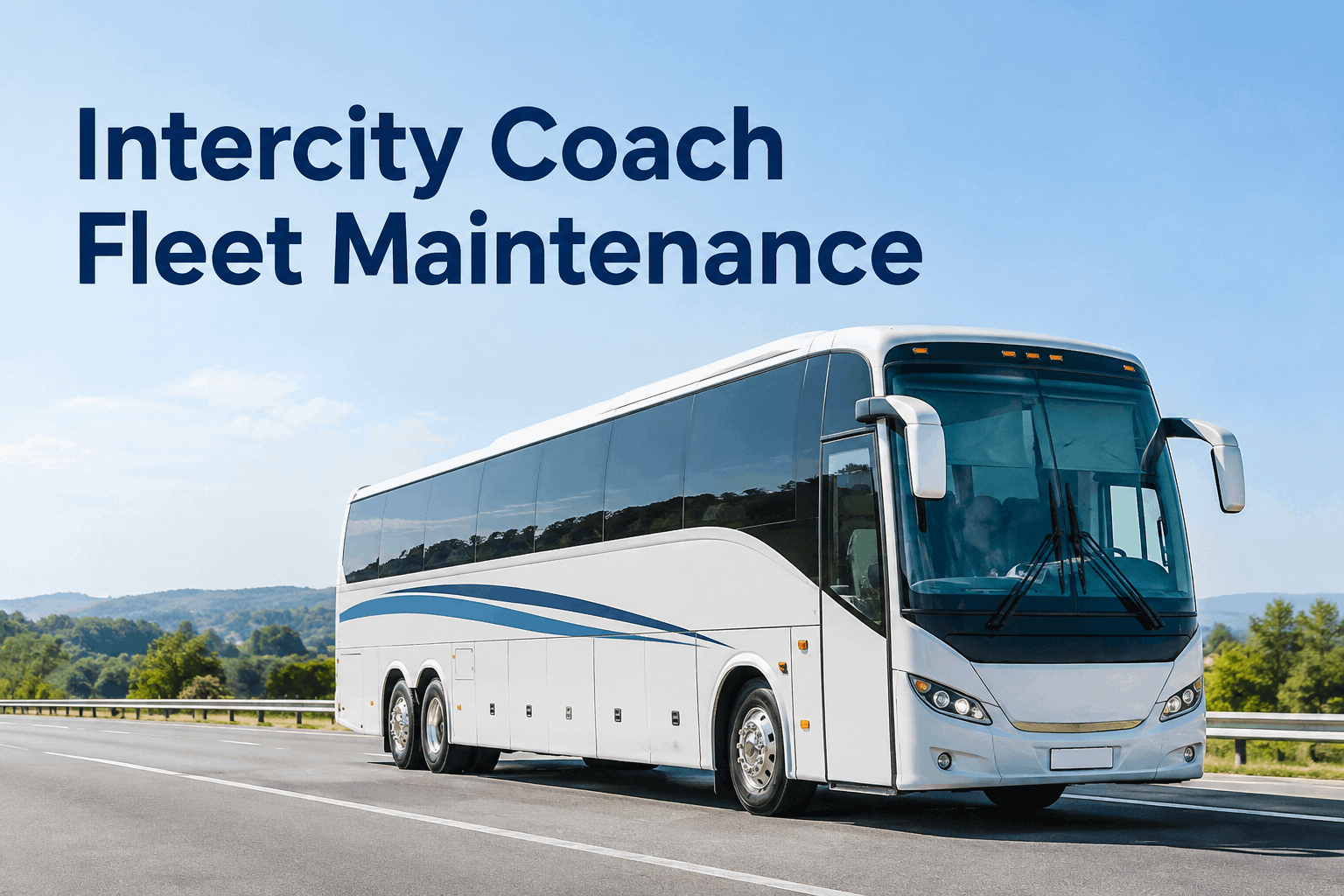
A coach breaks down three hours into a six-hour charter, on a stretch of interstate with no shop for fifty miles. Forty passengers are stuck on the shoulder, the driver is on the phone with dispatch, and the nearest tow truck is ninety minutes out. That's not a maintenance failure that happened on the road — it's one that started weeks earlier, when a mileage-based service got pushed back because nobody flagged it before the coach rolled out. See how mileage-based scheduling catches that before dispatch in a demo.
Intercity Coach Fleet Maintenance
Intercity coaches rack up miles a local transit bus never sees, which means maintenance has to run on mileage, not the calendar. Mileage-based PM, digital inspections, and FMCSA-ready records are what keep a coach road-ready instead of stranded.
Why Coach Maintenance Can't Run Like a Transit Bus Schedule
A transit bus does the same short loop every day and sleeps at the same depot every night. A coach might run 500 miles in an afternoon, then sit for two weeks, then run 500 more the next day on a different route entirely. A PM schedule built around dates instead of mileage either services coaches too often when they're idle, or too late when they're running hard — and it's the second one that leaves a bus stranded on a charter.
What Keeps a Coach Road-Ready
Four pieces of the maintenance program matter more for intercity coaches than for any other vehicle type in a mixed fleet.
Mileage-based PM scheduling
Service triggers off actual odometer readings, not a fixed date, so a coach that ran hard last week gets serviced on time — not whenever the calendar says.
Digital DVIR before every run
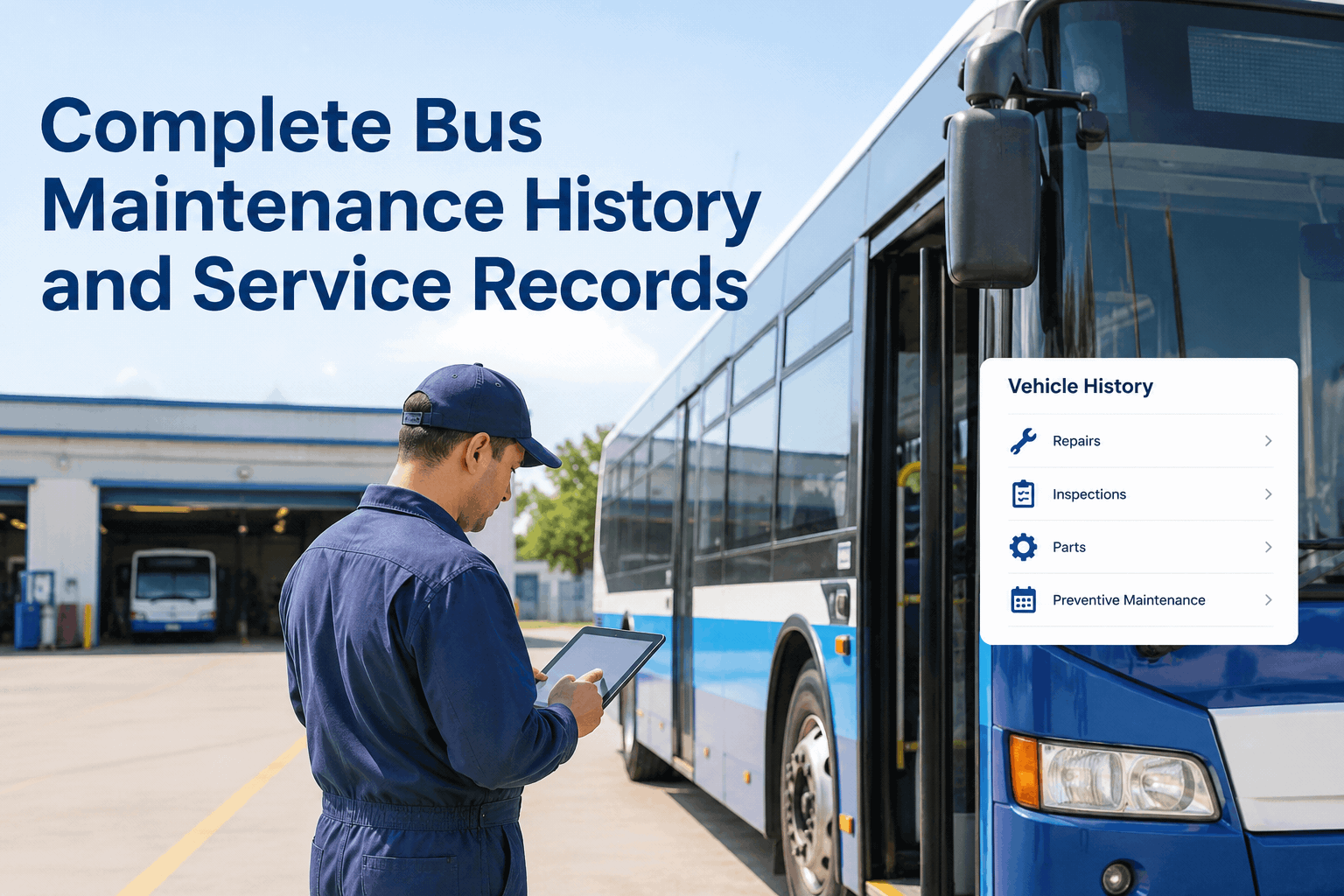
Pre-trip and post-trip inspections completed from the driver's phone, with any defect routed straight into a work order instead of a form in the glovebox.
Work orders tied to the vehicle, not the depot
A coach serviced at a partner shop two states away still logs to the same vehicle record your home depot sees.
FMCSA-ready maintenance records
DVIRs, inspection history, and repair records kept in the format and retention window FMCSA expects, producible the moment a roadside inspector asks.
FMCSA Record Retention: What You're Required to Keep
Under 49 CFR Part 396, different maintenance records carry different retention windows. Missing one when an inspector asks is a finding, regardless of whether the maintenance itself was done.
Swipe sideways to see all columns.
FMCSA accepts electronic records as long as they're accurate and producible on demand — which is the easier way to actually meet these windows. Sign up free and start keeping these records automatically.
From Pre-Trip to Paper Trail: One Run's Digital Workflow
Here's what should happen, start to finish, every time a coach leaves the yard.
Driver completes a digital pre-trip DVIR
Tires, brakes, lights, and emergency equipment checked from a phone before the coach leaves the lot.
A flagged defect opens a work order instantly
No separate report to file later — the issue is already routed to the shop before the driver's shift starts.
Mileage logged against the coach's PM schedule
Each run's distance updates the vehicle's running total, so the next service date is based on real use, not a guess.
Post-trip DVIR closes the loop
Anything that came up on the road is logged before the coach is dispatched again, not discovered on the next pre-trip.
Expert Review: Paper DVIRs vs. Digital Inspection & PM Tracking
Most roadside breakdowns trace back to something that was knowable beforehand — a defect noted and then lost, or a service interval tracked loosely enough that it slipped past.
Swipe sideways to see all columns.
The fleets with the fewest roadside incidents are the ones whose inspection and mileage data moves as fast as the coach does. Book a demo to see that workflow on a real route.
The Bottom Line
An intercity coach earns its keep on the road, which is exactly where a maintenance gap costs the most to fix. Schedule PM to real mileage, catch defects before dispatch instead of after a breakdown, and keep the FMCSA paperwork current without anyone having to chase it down. The coaches that stay out of the shoulder lane are the ones whose maintenance program was built for how far and how hard they actually run.