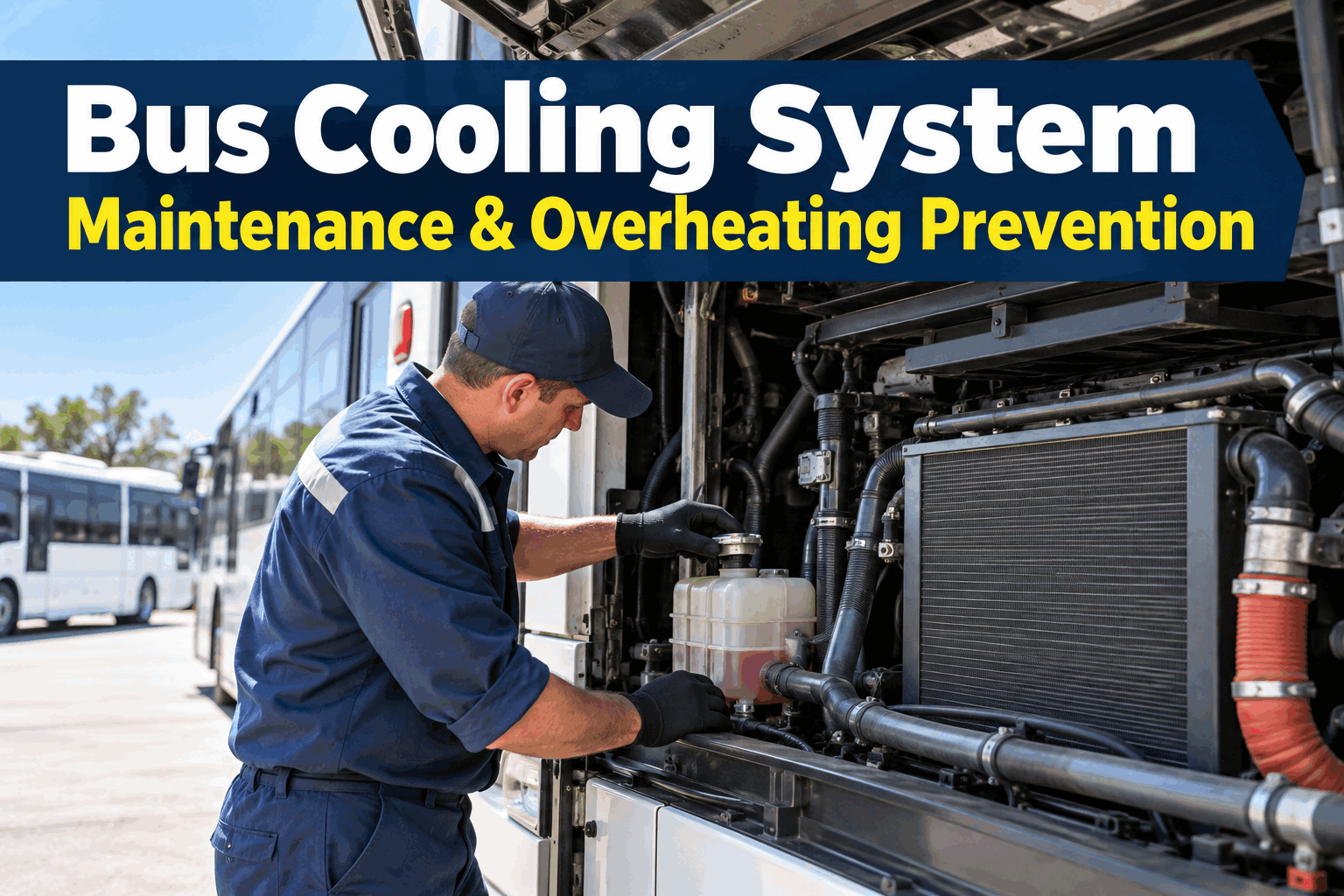
Bus cooling system maintenance works best when the shop catches a rising-temperature pattern before it becomes an overheating event on the road. Coolant loss, airflow restriction, hose deterioration, fan problems and recurring defects can leave clues across inspections and repair history. Connecting those clues to scheduled PM and follow-up work helps fleets prevent repeat cooling failures instead of treating each one as a separate repair.
Stop Treating Every Overheat Like the First One.
Connect driver observations, inspection defects, PM work, repairs and repeat symptoms so the next warning sign has context before the bus loses service.
Overheating Is the End of the Chain—Look for the Earlier Links
The temperature warning is often the final visible symptom, not the beginning of the problem. A cooling system depends on correct coolant, adequate level, circulation, airflow, pressure control and sound components working together. Capture early abnormalities and route them into maintenance before they accumulate.
Low level, residue, odor, debris or temperature complaint.
Heat transfer, flow or airflow becomes compromised.
Operating conditions expose the weakness.
Availability is lost and corrective repair follows.
BusCMMS can help move inspection findings and maintenance history into a repeatable workflow. See cooling-system maintenance tracking in BusCMMS.
Teach the System to Remember What the Shop Already Saw
A single observation may not explain a cooling problem. Repeated observations can. Standardize the signals technicians and drivers record so later complaints can be compared with earlier defects and repairs. Exact checks, limits and procedures should follow the bus and engine manufacturer.
Unexpected loss
Record low-level findings and investigate recurring top-offs rather than treating replenishment as the repair.
Residue or wetness
Document the location and condition around hoses, connections, radiator, pump and applicable components.
Restriction or debris
Inspect applicable heat-exchanger surfaces according to OEM guidance and operating environment.
Recurring complaint
Preserve bus, date, duty context and recent cooling repairs so technicians can investigate a pattern.
Do Not Let a Cooling Defect End as a Note on an Inspection
When an inspection finds a cooling defect, preserve what was observed, identify the bus, create corrective work, document the repair and verify the result. That trail gives the next technician context if the symptom returns.
Coolant residue found
Leak suspected
Diagnose and repair
Result retained
A digital record makes it easier to see whether a new complaint is connected to earlier work. Start tracking cooling defects and repairs by bus.
One Repair Closes a Work Order. A Pattern Should Open a Deeper Review.
If the same bus returns with coolant loss, temperature complaints or related repairs, review the sequence rather than viewing each work order in isolation. Repetition can point to an unresolved cause, related component problem, repair-quality issue or operating condition that deserves closer attention.
Track the System by Failure Mode, Not Just by “Overheating”
“Overheating” is too broad to be a useful maintenance category by itself. Record the component or condition discovered during diagnosis so the fleet can see whether reliability pressure comes from coolant loss, hoses and connections, radiator condition, airflow, circulation, controls or another documented cause.
Correct type, level and condition per OEM.
Leaks, damage, routing and secure connections.
Condition, cleanliness and airflow path.
Operation according to vehicle design.
Pump, thermostat and related components.
Applicable cap, tank and system integrity.
Avoid a Universal Coolant Rule Across a Mixed Bus Fleet
Heavy-duty coolant requirements vary by engine and coolant technology. The formulation, concentration, test method, additive strategy and service interval should come from the current OEM specification. Manufacturer guidance also addresses corrosion, scale and cavitation protection—not only temperature control.
Open the vehicle specification
Engine / bus model
Approved coolant specification
Current coolant type
OEM service interval
Required test method
What the technician did
Inspection / test result
Coolant serviced
Defect found
Corrective work
Next PM due
Bus-specific records help standardize mixed-fleet maintenance without pretending every engine has the same requirement. See BusCMMS PM and vehicle-history tracking.
Schedule the Cooling Work Before the Warning Light Schedules It for You
Build applicable OEM inspection and service tasks into mileage- or calendar-based PM schedules, then make overdue work visible. Add seasonal preparation when duty cycle, ambient heat, debris or local operating conditions justify an earlier review.
Use Seasonal Readiness to Find Marginal Cooling Systems Early
Before the hottest operating period, review overdue cooling PM, unresolved leaks, recent temperature complaints, airflow findings and buses with repeated cooling work. The goal is not a separate maintenance program—it is to bring higher-risk vehicles forward for review.
Resolve cooling-related scheduled work.
Close unresolved leaks or temperature complaints.
Flag buses with recurring cooling repairs.
Review radiator and heat-exchanger condition where applicable.
A Cooling Repair Is Not Finished Until the Result Is Verified and Recorded
Replacing a component documents what changed; it does not automatically prove the original symptom is resolved. Use the applicable OEM repair and verification procedure, document the result and preserve the record.
Correct documented cause
Follow OEM procedure
Close with evidence
Check for recurrence
This closed-loop record is especially useful when a bus returns with another temperature concern. Start building complete maintenance histories by vehicle.
Review Exceptions Instead of Re-reading Every Work Order
Overheats
Any new temperature events?
Leaks
Recurring coolant loss?
Repeats
Which defects returned?
PM
Anything due or overdue?
Action
Which buses need review?
If your shop needs cooling defects, PM and repair history in one vehicle record, book a BusCMMS cooling-maintenance walkthrough.
Cooling Reliability Improves When Every Warning Sign Has a History
Bus cooling system maintenance is more effective when early warning signs connect to the work that follows. Record coolant loss, leaks, airflow findings and temperature complaints consistently; schedule manufacturer-required PM; link defects to corrective work; verify repairs; and review recurring symptoms by vehicle. BusCMMS supports that discipline by keeping inspections, PM, work orders and service history connected.
Bus Cooling Maintenance & Overheating Questions
What should bus cooling system maintenance include?
Use the applicable bus and engine manufacturer’s schedule. A fleet program commonly addresses coolant level and condition, leaks, hoses and connections, radiator or heat-exchanger condition, airflow and applicable circulation or control components, while recording defects and corrective work.
How can a fleet reduce repeat bus overheating problems?
Review prior coolant-loss findings, temperature complaints, cooling-system work orders, replaced components and post-repair verification for the same bus. Repetition should trigger a deeper root-cause review.
How often should bus coolant be serviced?
Follow the current interval and coolant specification for the specific engine and coolant technology. Different formulations and engines can have different requirements, so a universal fleet-wide interval should not replace OEM guidance.
What cooling-system warning signs should be tracked?
Useful records include unexpected coolant loss, visible leak evidence, temperature warnings, damaged hoses or connections, airflow restrictions and diagnosed component failures. Use manufacturer procedures for the required response.
How does BusCMMS help prevent recurring cooling-system failures?
BusCMMS helps organize scheduled PM, inspection findings, defects, work orders and vehicle maintenance history, making repeated cooling symptoms and previous corrective work easier to review.