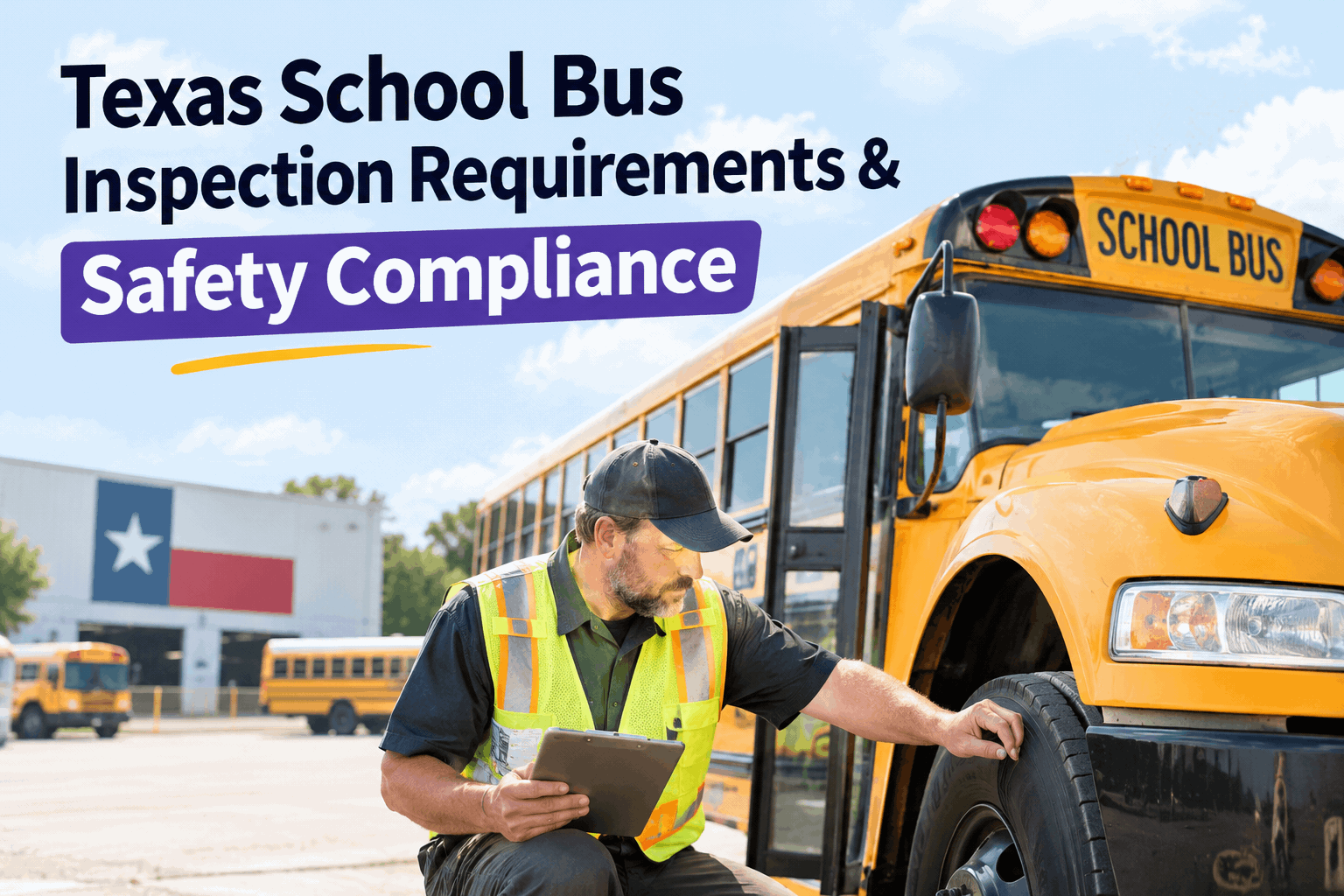
Illinois does not give you a tidy once-a-year date to circle. An Illinois school bus inspection is due every six months or every 10,000 miles, whichever comes first — so a high-mileage route bus can come due months before the calendar says so. And that is only the safety test; the brakes get a second inspection of their own. If you would rather track both clocks automatically, book a BusCMMS demo and see how it works.
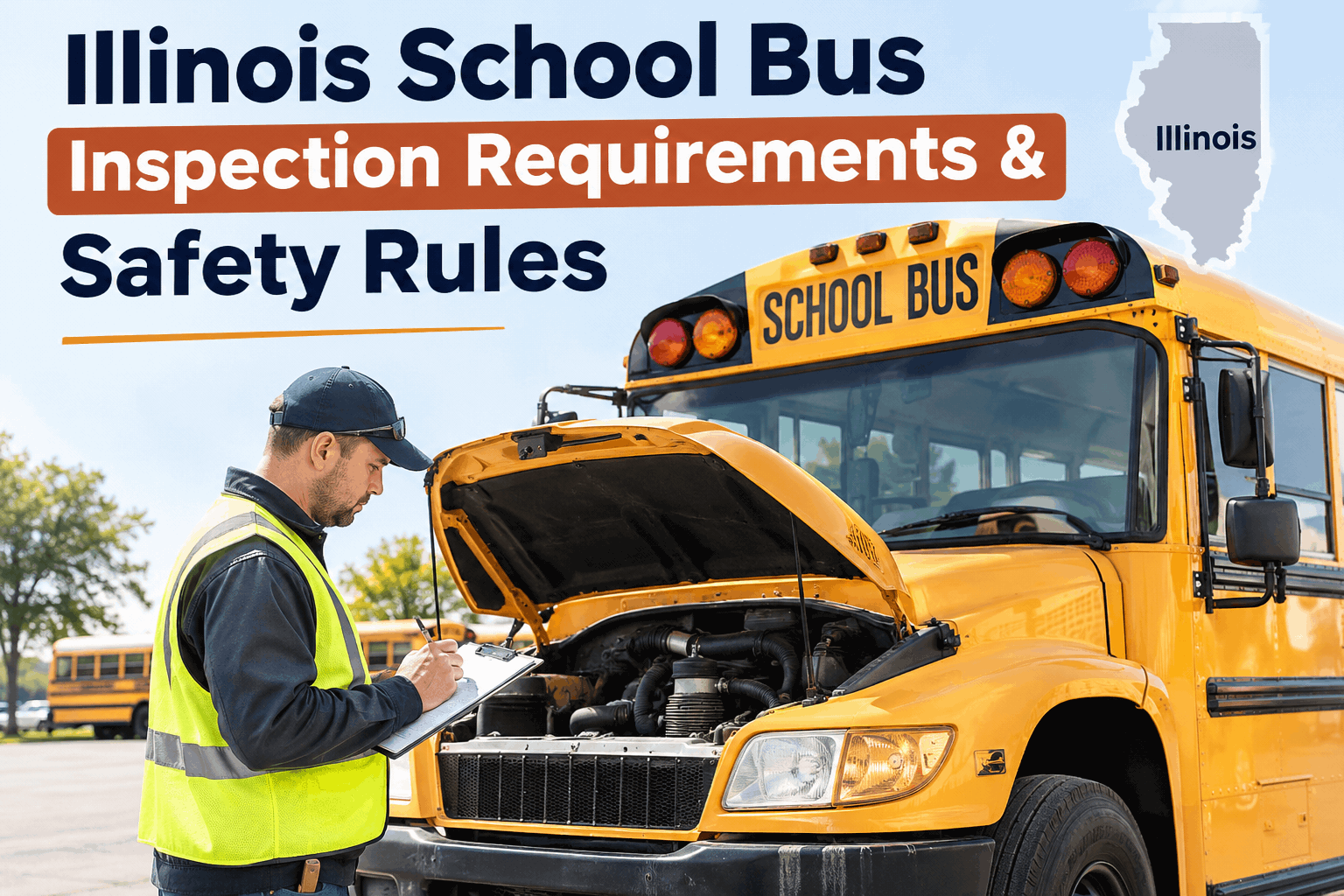
Illinois School Bus Inspection Requirements & Safety Rules
Two triggers run at once in Illinois: a six-month clock and a 10,000-mile odometer. Whichever reaches the line first sends the bus to an Official Testing Station. Miss neither, and you are ahead of the state.
How Illinois school bus inspection works
Illinois runs its program through the Department of Transportation's Division of Traffic Safety. Most states settle for a single annual or semiannual date; Illinois deliberately layers a mileage trigger on top, because a bus running heavy daily routes wears far faster than the calendar alone would suggest. Buses are tested at licensed Official Testing Stations by a Certified Safety Tester, and a bus that passes gets a Certificate of Safety affixed on the spot. A bus that fails cannot go back on the road until it is repaired and re-tested — no exceptions for an empty run to the shop. Because a Certified Safety Tester at a licensed station makes the call, there is no talking your way past a failed component. What you bring to the lane is what gets judged, which is why the weeks before a visit matter far more than the visit itself.
6 mo / 10k mi
Safety inspection interval, whichever comes first
~200 stations
Official Testing Stations across Illinois
5,500+ a year
Unannounced IDOT inspections on top of scheduled ones
i Those 5,500 surprise checks are the reason readiness cannot be a once-every-six-months event — which is exactly where a purpose-built bus CMMS pays off.
The safety test and the brake inspection are not the same thing
This is the Illinois detail that trips up operators coming from other states. The brake inspection is separate from and in addition to the safety test. It is a visual check of the brake system — usually with the wheels pulled — and it has its own report that you hand to the Certified Safety Tester at the testing station. In practice the brake work happens on your own schedule, in your own shop, before the bus ever reaches the lane. Skip it or lose the report, and an otherwise road-ready bus can still be turned away.
Swipe sideways to see both columns
Two inspections on two clocks means two records that have to be current and in the right place at the right time. A short-route bus and a long-route bus in the same yard can come due in completely different months, and the system that loses track is usually the one keeping it in a drawer. You can see how both are tracked in a demo instead of chasing paperwork before a station visit.
Your Illinois school bus inspection checklist
Because two inspections run on two clocks, this list covers both the vehicle and the mileage math. The red items can stop a bus; the amber items are the habits that keep you ahead of whichever trigger hits first. Run it per bus, not per fleet — the whole point of the Illinois rule is that no two buses are on the same clock.
- CRITICALCurrent Certificate of Safety on every bus.Without a valid certificate the bus cannot legally operate.
- CRITICALBrakes, steering, tires and lights within inspection limits.These are the systems the safety test fails buses on.
- CRITICALBrake Inspection Report completed and ready for the tester.The report must be presented at the Official Testing Station.
- PLANEvery bus's odometer tracked against the 10,000-mile trigger.Mileage can come due long before the six-month date.
- PLANPreventive maintenance scheduled by both mileage and date.The whole state program runs on whichever comes first.
- PLANDaily driver pretrip inspections logged and retained.Required of every Illinois school bus driver, every service day.
Nearly every missed inspection in Illinois is a mileage trigger nobody was watching. A calendar reminder will not save you when the miles run ahead of the months. You can start tracking every odometer free instead of finding out at a roadside check.
Why mileage tracking is the whole game in Illinois
Most compliance tools only understand a calendar. Illinois does not. A bus that runs long rural routes can hit 10,000 miles in a quarter, while a short-route bus coasts to the six-month date. BusCMMS ships with bus-specific inspection forms and triggers readiness on whichever comes first, tied to each bus. The odometer reading itself becomes a compliance date, updated every time a bus logs miles. A fleet of thirty buses can carry thirty different due dates, and keeping them straight by hand is exactly the kind of quiet error that surfaces at the worst possible moment, usually the morning of a surprise inspection.
Mileage + date PM
Schedules the safety and brake inspections on whichever trigger hits first, per bus.
Work orders from defects
A failed item auto-creates a work order and tracks the repair through to a retest.
Certificate & report alerts
Reminders for the Certificate of Safety and the Brake Inspection Report before they lapse.
i BusCMMS reports districts saving an average of about $2,800 per bus a year and holding 95%+ availability — its own published customer figures, worth testing against yours in a quick demo.
We used to inspect on the calendar and get burned by the high-mileage buses. Now the system flags a bus the second it crosses 10,000, whichever month that lands in. We have not been caught out of date since.
Transportation Director, central Illinois school district
Every trigger, and what it means
A clean Illinois school bus inspection record comes down to watching two clocks per bus and keeping two documents current. Track mileage and dates in one place, and whichever-comes-first stops being a trap. The districts that never scramble are not inspecting more often than anyone else; they just always know which bus is due next, and why. You can set up your fleet free and start building that record today.