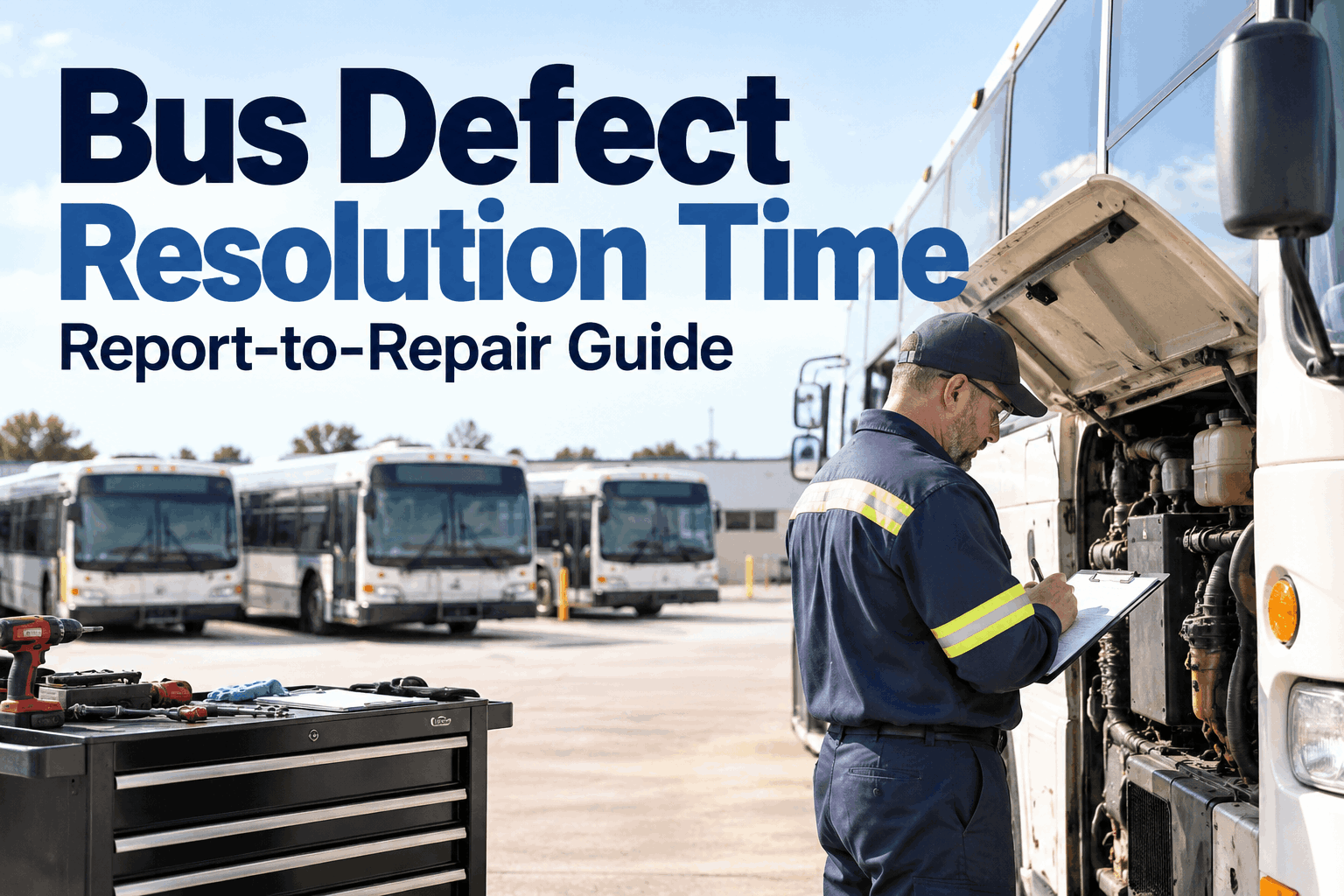
A defect reported at 6 AM and repaired by dinner can still mean a missed run, a bus pulled from service, and a sign-off nobody remembered. Here is how to measure report-to-repair time and shorten it, so open defects stop piling up.
Where the Hours Actually Go
Repairs themselves are rarely the slow part. Most of the delay hides in the handoffs before and after the wrench turns, and each one has a straightforward fix.
Fix the first three and most fleets recover the bulk of the lost hours. Sign up to turn every reported defect into a tracked work order from the moment it is filed.
Triage First: Not Every Defect Is an Emergency
A backlog grows fastest when everything is treated equally. Sorting defects into three tiers sends the right ones to the front of the line and keeps minor items from blocking the shop.
Tiering only works if it happens automatically at the moment of the report. Book a demo to see defects prioritized and routed to the right technician without a dispatcher in the middle.
Five Numbers That Show Whether You're Winning
If you can only track a handful of measures, track these. Together they show how fast defects move, how long they linger, and whether the same problems keep coming back.
The last measure matters most. A repeated brake complaint closed three times is not three solved problems, it is one unsolved one. Sign up to see open-defect age and repeat failures by bus instead of rebuilding them from paper.
Closing the Loop: The Three-Signature Chain
Under 49 CFR 396.11 and 396.13, a defect is only truly closed when the record shows who reported it, who fixed or cleared it, and who confirmed it before the next trip.
Expert Review: The Same Defect, Two Mornings
A soft brake pedal is reported at 6:10 AM. Here is how the next few hours unfold with a manual process versus a work order workflow.
Same defect, same technician, roughly 22 fewer hours. Book a demo to walk through this exact report-to-repair flow on your own buses.
Conclusion: Speed Comes From the Handoffs
Defect resolution time is not a shop-floor speed problem, it is a handoff problem. Get reports to maintenance instantly, triage by severity, track five simple numbers, and close every defect with a signature, and the backlog stops growing on its own. Book a demo with the BusCMMS team to see it running on a live fleet.
Frequently Asked Questions
What is a good bus defect resolution time?
Industry benchmarks put manual fleets at roughly 18 to 30 hours from defect report to completed repair, versus 2 to 4 hours with automated work order workflows. For safety-critical defects, the practical goal is repair and certification before the bus is dispatched again.
What is the difference between defect closure time and closure rate?
Closure time measures how long a defect takes to resolve, usually in hours or days. Closure rate measures the share of defects closed within their target for their severity tier. Time shows speed, rate shows consistency, and you need both.
How do I reduce a growing open defect backlog?
Triage every defect by severity, review open items daily, track the age of the oldest ones, and look for repeat failures rather than closing them one by one. Batching minor items into scheduled service keeps them from crowding out safety-critical work.
What do 49 CFR 396.11 and 396.13 require after a defect is reported?
For vehicles covered by the rules, the reported defect must be repaired or certified as not needing repair before the vehicle returns to service, with the mechanic signing the original report. The next driver then reviews and acknowledges it, and records are generally kept for at least three months. Public agencies and school districts should confirm how their state applies these rules.
How do work orders in BusCMMS help close defects faster?
Work orders connect each reported defect to an assignee, a status, and a completion record, with time stamps at every step. Maintenance sees problems sooner, managers see what is overdue, and every closure leaves a record you can show in an audit.