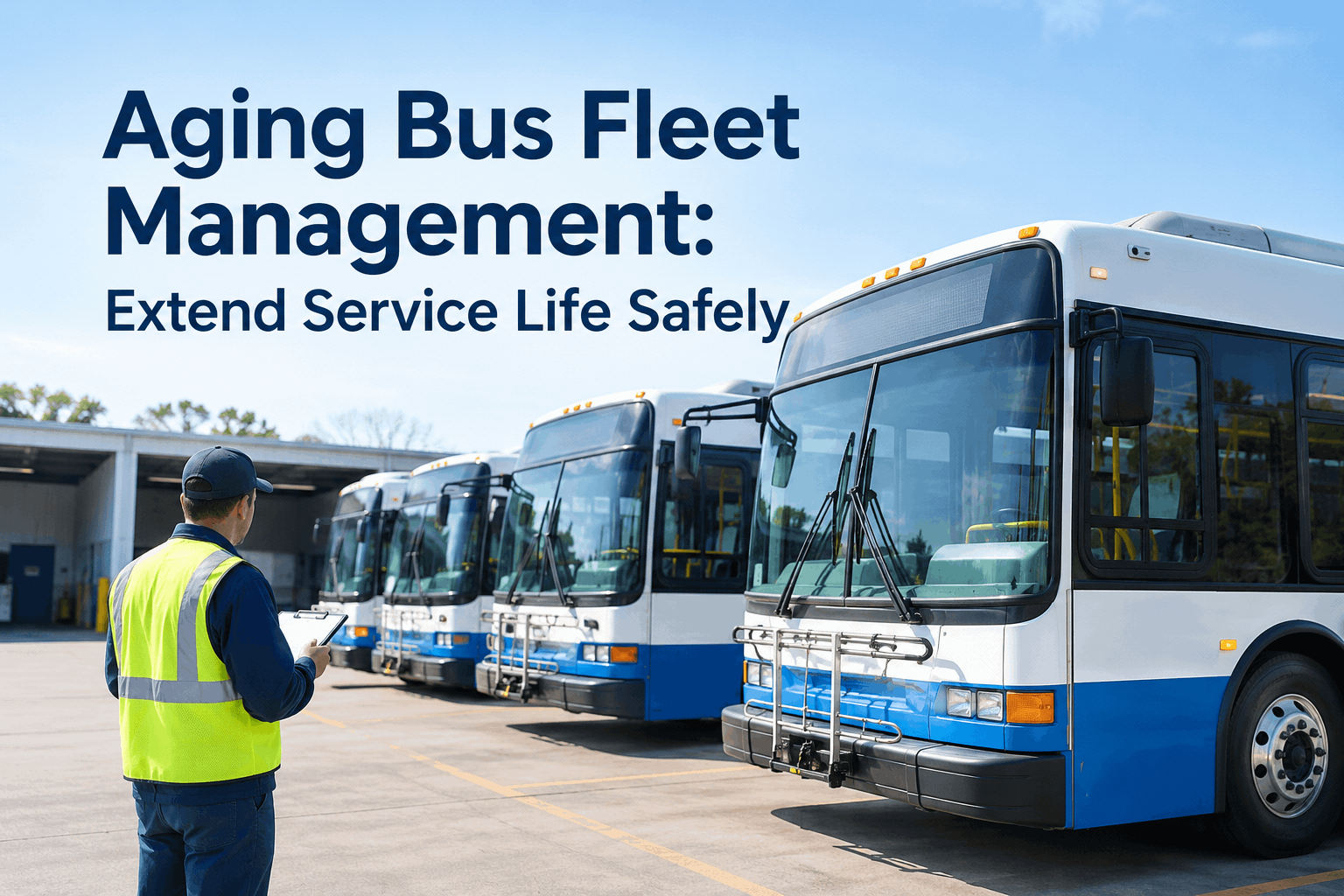
Your maintenance software holds inspection records. Your telematics tracks every vehicle in real-time. Your ELD logs driver hours. And right now, hackers are scanning for fleets exactly like yours. Transportation cyberattacks have surged 48% since 2020, with ransomware gangs increasingly targeting fleet operations. When they strike, the average breach costs $4.44 million—and 60% of small fleets never recover. This guide reveals exactly what attackers target in your systems ,and how to lock them out.
The 6 Threats Targeting Your Fleet Right Now
Modern bus fleets aren't just vehicles—they're connected networks. Every telematics unit, GPS tracker, and cloud platform creates an entry point attackers can exploit.
The scariest part? 85% of ransomware attacks go unreported—and attackers target small fleets specifically because they lack dedicated IT security. Sign up for BusCMMS with enterprise-grade security built in.
What Attackers Target First
Cybercriminals follow a predictable playbook. Understanding their attack sequence helps you defend the right systems in the right order.
The FBI warns that insecure ELDs can be exploited to install malware across your entire fleet network. Book a demo to see how BusCMMS protects your data.
Expert Review: The Defense Playbook
The fleets surviving cyberattacks share common traits: layered defenses, encrypted data, and trained staff. Here's the framework security experts recommend.
If you checked fewer than 4 boxes, your fleet is at elevated risk. The good news: modern CMMS platforms handle most of these security requirements automatically. Sign up for BusCMMS and let the platform handle your security.
Why Cloud CMMS Is Safer Than On-Premise
Many fleet operators assume keeping data "in-house" is more secure. The reality is the opposite—cloud platforms from reputable vendors invest millions in security that no individual fleet could match.
Ready to protect your fleet data with enterprise-grade security? Book a demo to see BusCMMS security features in action.
Frequently Asked Questions
Are bus fleets really targets for cyberattacks?
Yes. Transportation cyberattacks have increased 48% since 2020, with 98% financially motivated. Attackers specifically target fleets with fewer than 500 employees because they typically lack dedicated IT security staff. Bus fleets hold valuable data: driver PII, GPS locations, financial records, and compliance documentation that commands high prices on dark markets or enables ransom demands.
What's the average cost of a fleet data breach?
According to IBM's 2025 Cost of a Data Breach Report, the average transportation sector breach costs $4.44 million. This includes direct costs (forensics, ransom, recovery) and indirect costs (downtime, reputation damage, legal fees, increased insurance). For small and medium fleets, 60% go out of business within six months of a major cyberattack.
How do hackers typically attack fleet management systems?
The most common attack vectors are: phishing emails that steal admin credentials (18% of attacks), ransomware that encrypts systems until ransom is paid (38% of attacks), and DDoS attacks that overwhelm systems (24%). Attackers also exploit insecure ELD devices, vulnerable telematics APIs, and GPS spoofing to gain network access or manipulate operations.
Is cloud-based CMMS more secure than on-premise software?
Generally yes, when using a reputable provider. Cloud CMMS platforms invest millions in security infrastructure that individual fleets can't match: 24/7 monitoring, automatic security patches, encrypted data storage, redundant backups, and compliance certifications like SOC 2. On-premise systems are only as secure as your IT team can make them—and most small fleets lack dedicated security expertise.
What should I do if my fleet systems are compromised?
Immediately isolate affected systems from your network to prevent spread. Document everything for forensic analysis. Contact your insurance provider and consider engaging a cybersecurity incident response firm. Report the incident to the FBI's IC3 (Internet Crime Complaint Center). Most experts advise against paying ransoms—it encourages further attacks and doesn't guarantee data recovery. Having automated cloud backups makes recovery possible without paying.