Your best diesel tech just gave notice, and you know how hard he is to replace right now. When you ask why, it is rarely only the paycheck — it is the daily grind: firefighting, parts hunts, doing the same repair twice because nobody logged the first. Bus mechanic retention is a workforce fight the whole industry shares, and a shop that runs on chaos quietly pushes good people out. You can see an organized shop workflow in a demo.
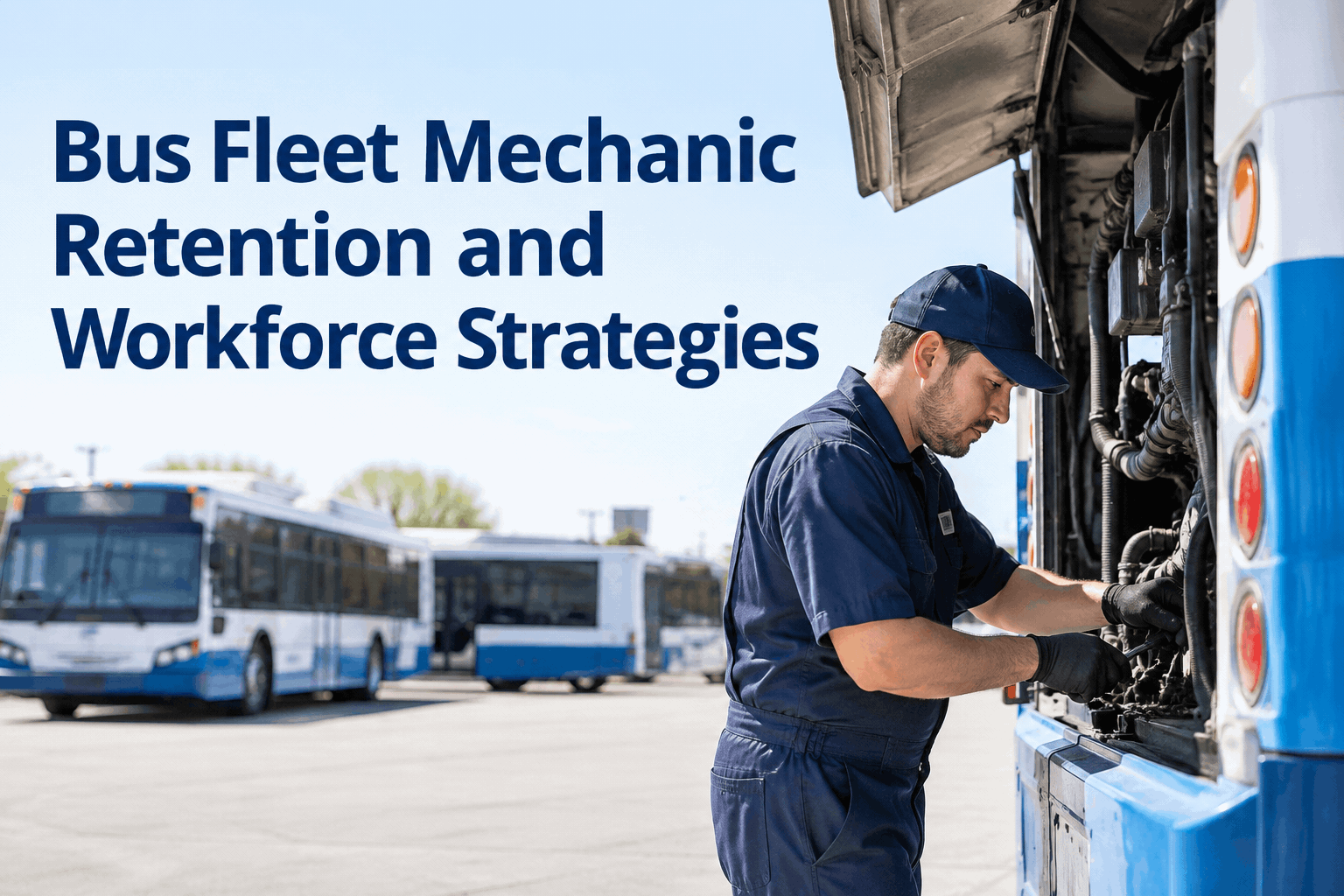
Bus Fleet Mechanic Retention and Workforce Strategies
Keeping skilled bus technicians is one of the hardest problems in fleet operations. Pay and culture matter most — but so does the daily experience of the job. Here is what pushes a good tech out, and the part of it a better maintenance workflow can fix.
Pushes them out
- Pay that lags the local market
- Constant firefighting and burnout
- Hunting for parts and past-repair info
- Doing the same fix twice, no history
- Skills not respected, no path to grow
Keeps them
- Competitive pay and benefits
- A planned day, not pure reaction
- Parts and history at their fingertips
- Clean handoffs, work that sticks
- Respect, training, and a path forward
Highlighted items are the ones a better maintenance workflow directly improves — the daily-experience half of retention.
The Bus Mechanic Shortage Is Real — and Structural
This is not a tight quarter you wait out. The maintenance workforce is aging, and for years more experienced diesel and transit technicians have been leaving the trade than entering it. Every tech who walks takes years of fleet-specific knowledge with them, and the replacement — if you can find one — needs training before they are fully productive. That math is why retention beats recruiting: the cheapest tech to hire is the one you keep.
Directional, not a precise count — the shape is the point: the trade loses more than it replaces, so every tech you keep matters more.
You cannot out-hire a structural shortage, but you can be the shop techs do not want to leave. A big piece of that is within your control — you can walk through a workflow built to respect a tech's time in a demo or start free and set it up yourself.
Why Bus Technicians Actually Leave
Exit interviews rarely come down to a single number. Technician turnover tends to cluster into three buckets — and only looking at all three honestly tells you where you can move the needle.
Pay and benefits
The foundation. If your pay lags the shop down the road, nothing else holds a tech for long. This is a budget and benefits conversation, not a software one.
Budget leverRespect and growth
Techs stay where their skills are respected and there is a path — training, certification support, and recognition. Culture work, led by you, not a tool.
Culture leverThe daily grind
The quiet one. Firefighting, parts hunts, repeat work, lost paperwork — the friction that burns a good tech out even at fair pay. This part a workflow fixes.
Workflow leverPay and culture are the big levers — and the slowest to move. The daily-grind lever is the one you can pull this month, and techs feel it every shift.
That is the lever worth pulling first because it moves fast and costs little — you can see the daily-grind fixes in a demo.
The Part You Can Fix This Month: the Daily Grind
Be honest about what a maintenance system can and cannot do. It will not set your pay scale or build your culture — those are yours. What it does is remove the daily friction that makes a good tech dread coming in. Here is what changes when the workflow is organized instead of chaotic.
A clear queue instead of chaos
Work orders are assigned and prioritized, so a tech starts the shift knowing what to do next — not standing in a huddle sorting out who takes what.
History at their fingertips
The last time this bus had this symptom is one search away, so a tech is not re-diagnosing a fault a colleague already solved. Their time goes to fixing, not hunting.
Parts tracked, not chased
Knowing a part is on the shelf — or on order — before pulling the bus in kills one of the most maddening time-wasters in any shop.
Less firefighting overall
Preventive maintenance that actually runs means fewer 4 p.m. roadside surprises — and a shift that ends on time is the quietest retention tool there is.
None of this replaces a raise. All of it makes the job feel respected instead of chaotic — and that daily feeling is a real part of why people stay. Book a demo and see what a calmer shop day looks like.
A Retention-Friendly Shop Checklist
Pay and culture sit above this list — but these are the operational pieces that make a shop a place techs want to stay. Run it against yours, and the unchecked items are quiet reasons good people drift away.
- Work is assigned, not scrambled forEvery tech knows their queue at the start of a shift instead of sorting it out in a huddle.WORKFLOW
- Repair history is searchableA tech can find how a fault was solved before, instead of starting diagnosis from zero.WORKFLOW
- Parts availability is visibleTechs know what is on the shelf before a bus comes in, not after it is up on the lift.WORKFLOW
- PM actually runs, so reactive work dropsFewer end-of-day emergencies means shifts that end on time and less burnout.WORKFLOW
- Training and certification supportedA path to grow — ASE or diesel certs, with time and incentive to pursue them.CULTURE
- Good work is seen and recognizedTracked output means a tech's reliability is visible — and can be acknowledged.CULTURE
The workflow items are the ones a bus-built system closes out for you, fast. Start free and get the workflow pieces in place.
How BusCMMS Supports a Shop Techs Want to Stay In
BusCMMS does not claim to solve retention — pay and culture are yours to own. What it does is take the daily friction out of a mechanic's day, which is the half of the problem most shops leave on the table. For a bus-specific operation, that is built in from day one.
Clear work-order management
Jobs assigned, prioritized, and tracked, so techs spend the shift fixing buses instead of figuring out what is next.
Searchable repair history
Every bus's past work is one search away, so a tech builds on what the shop already knows instead of starting over.
Parts and PM that just work
Parts tracked and PM scheduled so techs are not chasing components or firefighting breakdowns all shift.
Give your techs a shop that respects their time, and you have handled the piece of retention that is squarely in your hands. You can book a demo and see the mechanic's day in the system.
A Fleet Maintenance Manager's Take
I lost two good techs in one year, and in both exit talks the paycheck was only half of it. The other half was "I'm tired of fighting the same fire every day." We cleaned up the workflow — real work orders, searchable history, parts we could actually find. I will not pretend it replaced a raise, because we did that too. But the shop feels different now. Techs end their shift on time more often, and the two we have hired since have stayed. You keep people with pay and respect, but the daily chaos was quietly costing me both.
Key Takeaways on Bus Mechanic Retention
The shortage is structural
More techs leave the trade than enter it, so keeping people beats out-hiring the gap.
Three levers, different speeds
Pay and culture are the big, slow levers; the daily grind is the one you can pull now.
Chaos quietly costs you techs
Firefighting, parts hunts, and repeat work burn out good people even at fair pay.
A calmer shop is a real tool
An organized workflow is the half of retention that is squarely in your control.
Treat bus mechanic retention as a whole-shop effort — competitive pay, genuine respect and growth, and a daily workflow that does not fight your techs — and you keep the skilled people a tight labor market makes almost impossible to replace. You cannot fix the whole workforce shortage, but you can be the shop nobody wants to leave.