The bus maintenance technician shortage is structural, not cyclical. By 2030, approximately 110,000 experienced diesel technicians—nearly half the current workforce—will retire, taking 20-30 years of institutional knowledge with them. Technical schools graduate only 10,000 diesel technicians annually, but the industry needs 28,000+ annually just to replace retirees and meet growth. In 2026, 65.5% of shops are understaffed, with 19.3% of technician positions sitting unfilled. New technicians require $8,200 in wages and 357 hours of training before they're productive, and 42% leave within two years. The technician shortage is no longer a recruitment problem—it's a multiplication problem. Modern CMMS and AI-powered diagnostic tools help your existing technicians maintain more buses by reducing diagnostic time 40-60%, preventing repeat repairs through better documentation, and automating routine work. This guide explains how technology transforms your team from being overwhelmed to being highly productive.
Bus Technician Shortage 2026: How CMMS Multiplies Your Team's Output
The technician shortage is real and structural. Learn how modern CMMS and AI-powered diagnostics help smaller teams maintain more buses. Reduce diagnostic time, prevent repeat repairs, and maximize technician productivity to overcome workforce shortages.
The Technician Crisis: Why Shortages Are Structural, Not Temporary
Demographic Reality: The transportation maintenance workforce is aging dramatically. The median age of diesel technicians is 48 years old. In the next four years (2026-2030), approximately 110,000 experienced diesel technicians will reach retirement age. This represents nearly 50% of the current workforce. When experienced technicians retire, they take institutional knowledge: diagnostic shortcuts learned over decades, problem-solving instincts, tribal knowledge about specific vehicle types and recurring issues that never got documented. This knowledge loss compounds the staffing shortage.
Education Pipeline Failure: Technical schools graduate approximately 10,000 new diesel technicians annually. Industry demand exceeds 28,000+ technicians annually to replace retirees and accommodate growth. The education system produces one new technician for every three who retire. This fundamental supply-demand imbalance cannot be solved through recruitment alone—there simply aren't enough trained technicians entering the workforce.
New Technician Economics and Attrition: New technicians cost $8,200 in wages during 357-hour training period before they're productive. New technician starting wages ($35,000-$40,000 annually) lag automotive shop positions ($40,000-$50,000), creating competition for entry-level talent. Technician positions are physically demanding with irregular hours and emotional stress. Result: 42% of new technicians leave the field within two years, exacerbating the shortage. You invest heavily training technicians who leave before recovering investment.
2026 Staffing Reality: Industry data shows 65.5% of shops are understaffed, with 19.3% of technician positions sitting vacant. Many shops operate with 20-30% open technician positions that cannot be filled. Understaffed shops face quality issues, safety risks, and schedule pressures that make remaining technicians even more prone to leaving. This creates a vicious cycle: shortage creates stress that increases attrition that worsens shortage.
EV Transition Complexity: Electric bus adoption compounds workforce challenges. Electric vehicles require training in high-voltage systems, battery management, and regenerative braking technologies. Traditional diesel technician skills don't transfer directly. Many experienced diesel technicians resist transitioning to electric technology. You need technicians experienced in electric systems, yet few exist. New technicians entering the field often choose automotive EV work (higher pay, better working conditions) over transit bus EV work.
The CMMS Multiplication Effect: Technology Multiplying Your Existing Team's Productivity
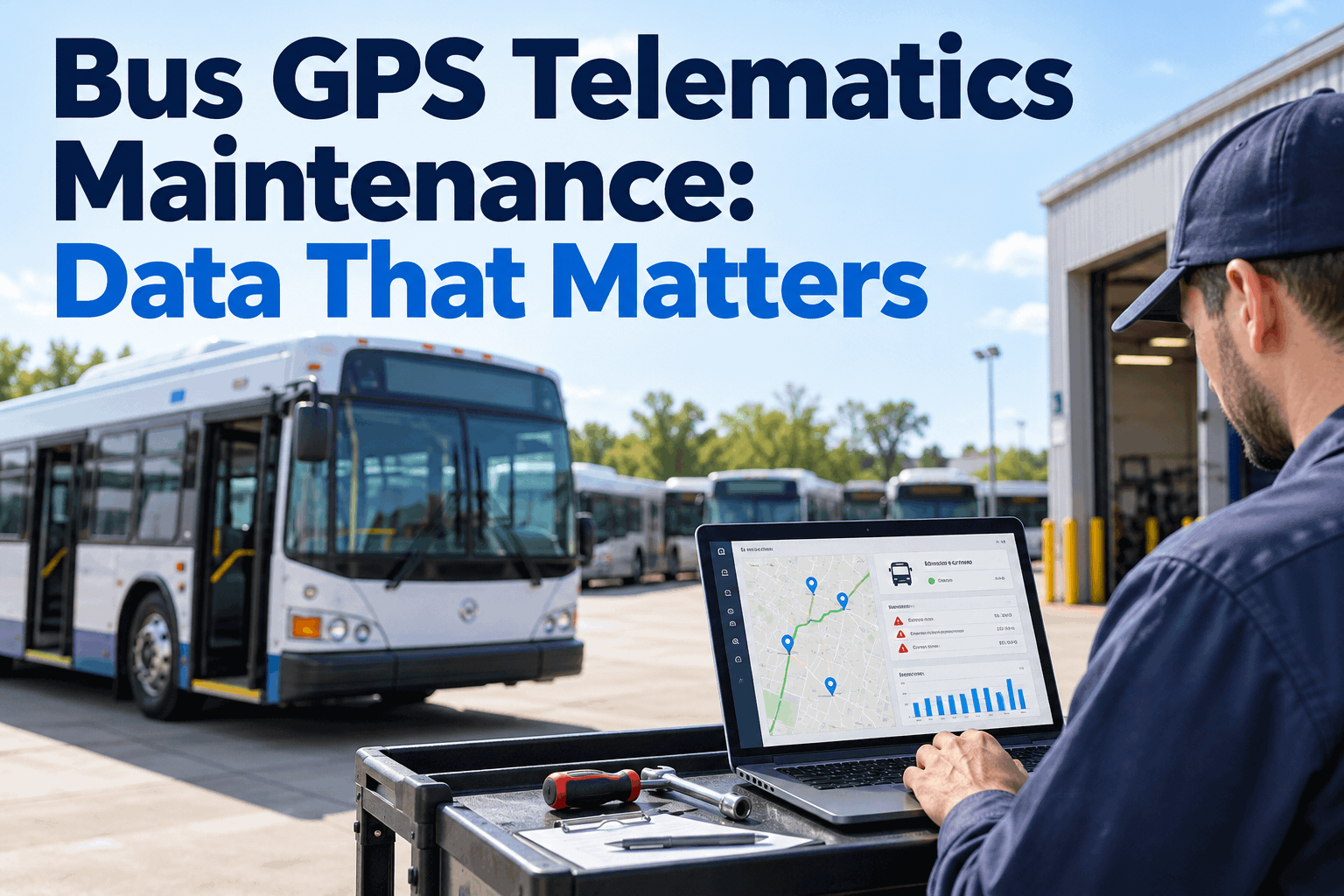
Diagnostic Time Reduction: Diagnostic work consumes 30-40% of technician time. A technician spends 2-4 hours diagnosing a problem before knowing what repair is needed. CMMS systems with diagnostic support reduce diagnostic time 40-60% by providing historical data on similar problems. When a bus arrives with a symptom, the CMMS searches historical maintenance records for similar issues: previous diagnostic findings, parts replaced, solutions that worked. AI-powered systems suggest likely causes based on pattern analysis. Technician diagnostic time drops from 2-4 hours to 45-90 minutes. Multiply this across 50 buses: if each bus averages 2 diagnostic procedures annually requiring 3 hours each, diagnostic work totals 300 hours yearly. Reducing to 1.5 hours per diagnostic saves 75 hours annually. For a technician billing $85 per hour, this equals $6,375 annual productivity gain per technician.
First-Time Fix Rate Improvement: Without systematic documentation, technicians repeat past diagnoses. A brake problem that required transmission fluid top-up on Bus A now costs time when Bus B exhibits similar symptoms and the technician doesn't recall the previous solution. CMMS systems document every repair: problem found, diagnosis process, solution implemented, and outcome. When similar problems appear, technicians immediately access proven solutions, increasing first-time fix rates from 75-80% to 90-95%. Repeat repairs consume 15-20% of shop time. Reducing repeat repairs through better documentation captures significant productivity. A 50-bus fleet preventing just 20-30 repeat repairs annually saves 80-120 technician hours—equivalent to 1-1.5 FTE annually.
Preventive Maintenance Automation: Preventive maintenance is the most valuable technician activity—preventing breakdowns saves far more than fixing emergencies. However, preventive maintenance gets deferred under time pressure because reactive emergency work takes priority. CMMS systems automate PM scheduling: the system alerts when PM is due, schedules appointments, and tracks completion. Preventive maintenance becomes systematic rather than ad-hoc. Your technicians spend more time on high-value preventive work and less time on emergency repairs. Studies show proactive maintenance costs approximately 1/7 the cost of emergency maintenance. A fleet capturing just 10% more preventive maintenance multiplies effective technician output dramatically.
Work Order Prioritization and Scheduling: Without CMMS, technician time is consumed by searching for work, figuring out what needs to be done, hunting for parts, and coordinating with drivers. CMMS provides work orders pre-populated with requirements, necessary parts, estimated duration, and safety considerations. Technicians move directly to work. Scheduling optimization reduces vehicle wait time: technicians perform multiple services per vehicle visit rather than multiple visits per vehicle. A 50-bus fleet might reduce daily vehicle downtime from 4-6 hours to 2-3 hours through better scheduling. This improves vehicle availability, which often becomes the bottleneck in understaffed shops.
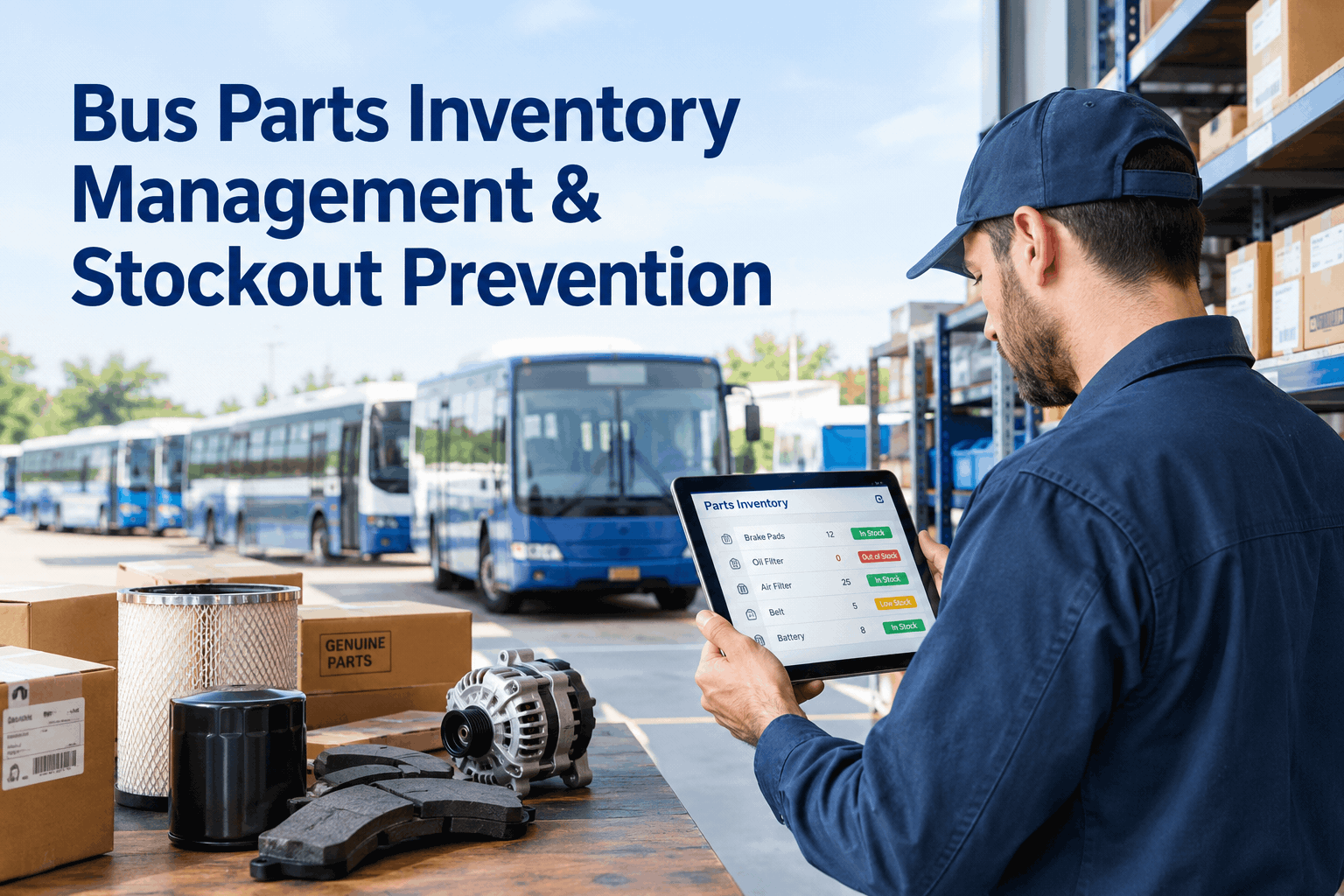
Parts Inventory Optimization: Poor parts inventory creates technician downtime waiting for parts. When parts aren't in stock, technicians either wait for delivery or move to other work and return later, requiring re-learning the job context. CMMS systems track parts usage, predict demand, and optimize inventory levels. Fast-moving parts are stocked; slow-moving items are ordered as-needed. Technician downtime waiting for parts decreases dramatically. Industry data shows 10-15% of shop time is spent waiting for parts in unoptimized shops. Reducing this to 2-3% recovers 80-120 hours annually for a 50-bus fleet.
Knowledge Preservation and Sharing: Experienced technicians possess knowledge not documented anywhere. When they retire, that knowledge leaves. CMMS systems capture this knowledge: why a specific repair approach works, what common issues exist with certain model years, troubleshooting shortcuts. New technicians learn from documented historical decisions, accelerating their development. Knowledge preserved and systematized creates a knowledge base that survives personnel transitions.
How CMMS Multiplies Technician Productivity Impact
Practical Implementation: Building Technician Capacity Through Technology
Phase 1: Systematic Work Capture (Weeks 1-4): Implement CMMS to systematically capture all maintenance work. Every repair, inspection, and service is documented in the system. Technicians record what was found, what was repaired, and what parts were used. This foundational data collection is critical—without it, subsequent improvements cannot occur. Initial documentation seems like overhead, but it enables everything else.
Phase 2: Historical Analysis and Root Cause Patterns (Weeks 5-12): With 8-12 weeks of data accumulated, analyze patterns. Identify recurring issues: brake problems on a specific bus model, cooling system failures on particular serial numbers, transmission issues on certain production years. Recognize patterns invisible in daily operations. Use this analysis to guide technician training and preventive maintenance strategy.
Phase 3: Preventive Maintenance Optimization (Weeks 13-24): Based on historical patterns, adjust preventive maintenance intervals. Increase inspection frequency for identified problem areas. Use this intelligence to focus technician efforts where they matter most. Preventive maintenance that works becomes systematic; maintenance that doesn't show results gets reevaluated.
Phase 4: Technician Efficiency Improvements (Months 6-12): Implement diagnostic support tools and work order prioritization. Train technicians on using historical data to accelerate diagnostics. Optimize scheduling to reduce wait time. Implement parts inventory improvements based on usage data. These refinements build on the foundation of systematic data capture.
Expected Timeline for Results: Initial CMMS implementation requires 4-8 weeks before you see significant productivity improvements. Most fleets observe 15-25% productivity gains within six months as systems mature and technicians adapt workflows. After 12 months, productivity gains of 25-40% are achievable with committed CMMS discipline.
Retention: Making Technician Roles More Attractive and Rewarding
Shift Work from Emergency to Preventive: Technicians dislike emergency repairs: high stress, long hours, irate drivers, impossible schedules. Preventive maintenance is more satisfying: planned work, methodical diagnostics, problem-solving opportunities. CMMS that enables more preventive work makes technician roles more attractive. Your best technicians stay when their work is engaging and manageable.
Knowledge Development and Career Progression: Technicians attracted to continuous learning want skill development. CMMS systems that preserve knowledge and provide learning opportunities appeal to high-performers. Clear career progression from entry-level to senior technician to supervisor roles creates advancement paths. Your best technicians stay when they see growth opportunities.
Reduced Overtime Through Better Scheduling: Technicians leave partly due to irregular hours and excessive overtime. CMMS that improves scheduling reduces emergency overtime. Technicians with predictable work schedules are more likely to stay. This retention benefit alone can offset CMMS cost.
Cross-Training and Specialization Opportunities: Rather than all technicians doing all work, CMMS enables specialization. Talented technicians develop expertise in specific areas. This creates career progression (generalist to specialist) and improves quality. Technicians who develop expertise feel valued and are less likely to leave.
Wage Improvements Through Productivity: Fleets seeing 25-40% productivity improvements can direct a portion of gains to higher technician wages. If CMMS generates $30,000+ in annual productivity gains per technician, dedicating $5,000-$10,000 to wage increases improves retention. Wage improvements funded by efficiency gains are sustainable.
Strategic Workforce Planning: Technology as Bridge to Solve Shortage
Realistic Assessment: Your organization cannot solve the national technician shortage. You cannot significantly increase technician supply through recruitment alone. The shortage is structural—there simply aren't enough trained technicians graduating. Instead, focus on what you can control: maximizing your existing team's productivity and retention.
Technology as Multiplier: Modern CMMS and diagnostic tools multiply your existing technicians' effectiveness 25-40%. A 5-technician team operating with CMMS effectively delivers output equivalent to 6-7 technicians without it. This multiplier effect is the most realistic strategy for fleets facing technician shortages.
Retention Focus: Your biggest competitive advantage is retaining your current technicians. Investing in CMMS tools, scheduling improvements, and career development keeps your experienced team intact. Even losing one technician costs $8,200 in training replacement plus productivity loss during transition. Retaining experienced technicians is far more cost-effective than recruiting.
Gradual EV Transition with Technology Support: As electric buses replace diesel, technician skill requirements shift. CMMS systems documenting EV maintenance accelerate technician transition from diesel to electric skills. High-voltage diagnostic systems provide decision support. Technicians transitioning from diesel to EV work need scaffolding and support—CMMS provides this.
Partnership with Training Programs: Consider partnering with technical schools to create apprenticeships. Offering entry-level technician positions to school graduates builds pipeline while providing labor. Apprenticeships reduce training cost per technician from $8,200 to $4,000-$5,000. CMMS systems accelerate apprentice learning by providing structured knowledge.
Technician Shortage Impact and CMMS Solutions
Current Challenge: 110,000 experienced technicians retiring by 2030. Schools graduate 10,000/year; industry needs 28,000+/year. 65.5% of shops understaffed. 42% new technicians leave within 2 years. Wage/condition competition from automotive EV shops.
CMMS Solution Strategy: Reduce diagnostic time 40-60% through historical data. Increase first-time fix rates from 80% to 95% through systematic documentation. Improve PM capture from 60% to 85% through automation. Reduce parts wait time from 10-15% to 3% through inventory optimization. Preserve institutional knowledge through captured documentation. Expected result: 25-40% technician productivity gain equivalent to 1-2 additional FTE per 5-technician team.
Retention Strategy: Shift work from emergency to preventive through planning. Provide career development through specialization. Reduce overtime through better scheduling. Improve wages through productivity gains. Technicians stay when work is engaging, advancement is visible, and conditions are reasonable.
Technician Shortage and Productivity Questions
Is the technician shortage really structural or just temporary due to post-pandemic challenges?
Definitely structural. 110,000 experienced technicians retire by 2030 while schools graduate only 10,000 annually (industry needs 28,000+). This supply-demand gap is fundamental. The shortage will worsen over the next decade absent major changes.
How much productivity improvement can CMMS realistically deliver for my fleet?
25-40% productivity gain is achievable within 12 months with committed CMMS discipline. This includes diagnostic time reduction, repeat repair prevention, PM optimization, and scheduling improvements. Conservative estimates average 30% per technician—equivalent to 0.3-0.5 FTE gain per technician.
Will investing in CMMS help with technician retention or mainly just output?
Both. CMMS improves retention by shifting work from emergency to preventive (more satisfying), providing career development through specialization, reducing overtime, and enabling wage improvements from productivity gains. Retention improvements often exceed output improvements.
Can CMMS help bridge the gap when we transition to electric buses and need different technician skills?
Yes. CMMS systems document EV maintenance procedures and diagnostic processes. New technicians transitioning from diesel to electric learn from captured knowledge. High-voltage diagnostic systems provide decision support during learning phase. CMMS accelerates skill transition.
How quickly do we see ROI from CMMS investment in reducing technician time requirements?
Break-even typically occurs 6-12 months after implementation as productivity improvements accumulate. Initial months show 10-15% improvement as technicians adapt workflows. Months 6-12 show 25-35% improvement as systems mature. After 12 months, sustained 30-40% productivity gains.
What's the biggest mistake fleets make when trying to address the technician shortage?
Assuming recruitment alone can solve it. There simply aren't enough qualified technicians to hire. Smart fleets focus on multiplying existing team productivity and improving retention. This is the realistic strategy for sustainable workforce management.
USA Based - Are there federal programs helping transit agencies address technician workforce shortages?
Limited federal funding exists for technician training programs. Some states offer technician apprenticeship subsidies. FTA recognizes technician shortage as significant industry challenge. Consider partnering with technical schools for apprenticeships and exploring state workforce development grants.
How do I measure whether CMMS is actually improving technician productivity for my fleet?
Track metrics monthly: average diagnostic time per vehicle, first-time fix rates, PM completion rates, technician utilization percentage, and average maintenance hours per bus. Compare pre-CMMS to post-CMMS. Most fleets see measurable improvement within 2-3 months of systematic CMMS use.
Our fleet had a crisis: 3 of 5 technicians left within 18 months, and we couldn't recruit replacements. We couldn't expand our way out of shortage, so we implemented BusCMMS to maximize our remaining team's output. Within 6 months, our remaining technicians were doing the work of our previous five-person team. Diagnostic time dropped, repeat repairs disappeared, and our team felt valued again. We kept the technicians we had.
Transform Your Technician Shortage Into a Productivity Advantage
The technician shortage is real and structural. Recruitment alone won't solve it. Modern CMMS multiplies your existing team's productivity 25-40% through better diagnostics, systematic documentation, and preventive maintenance optimization. Schedule a consultation to analyze your fleet's potential productivity gains and workforce optimization strategy.