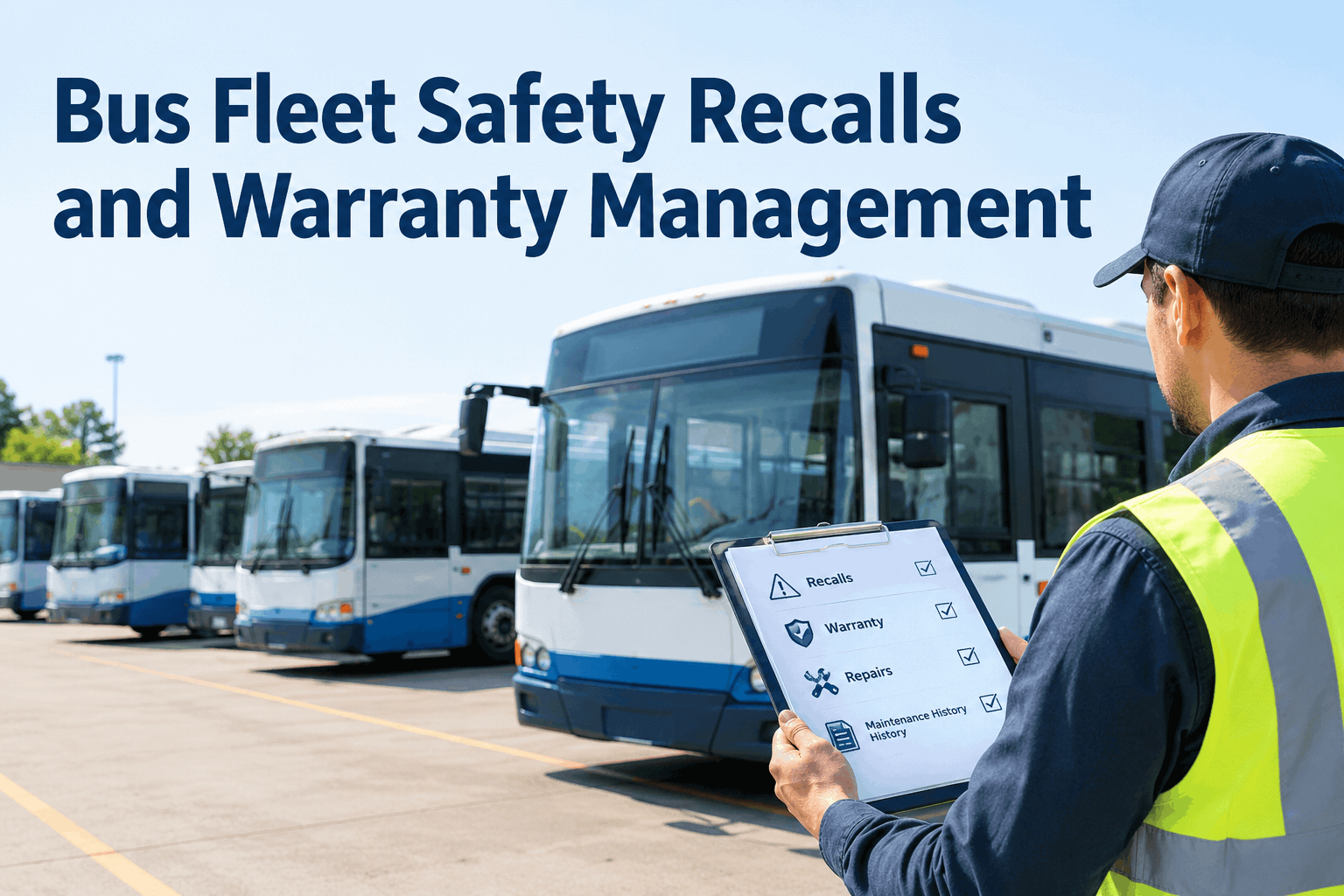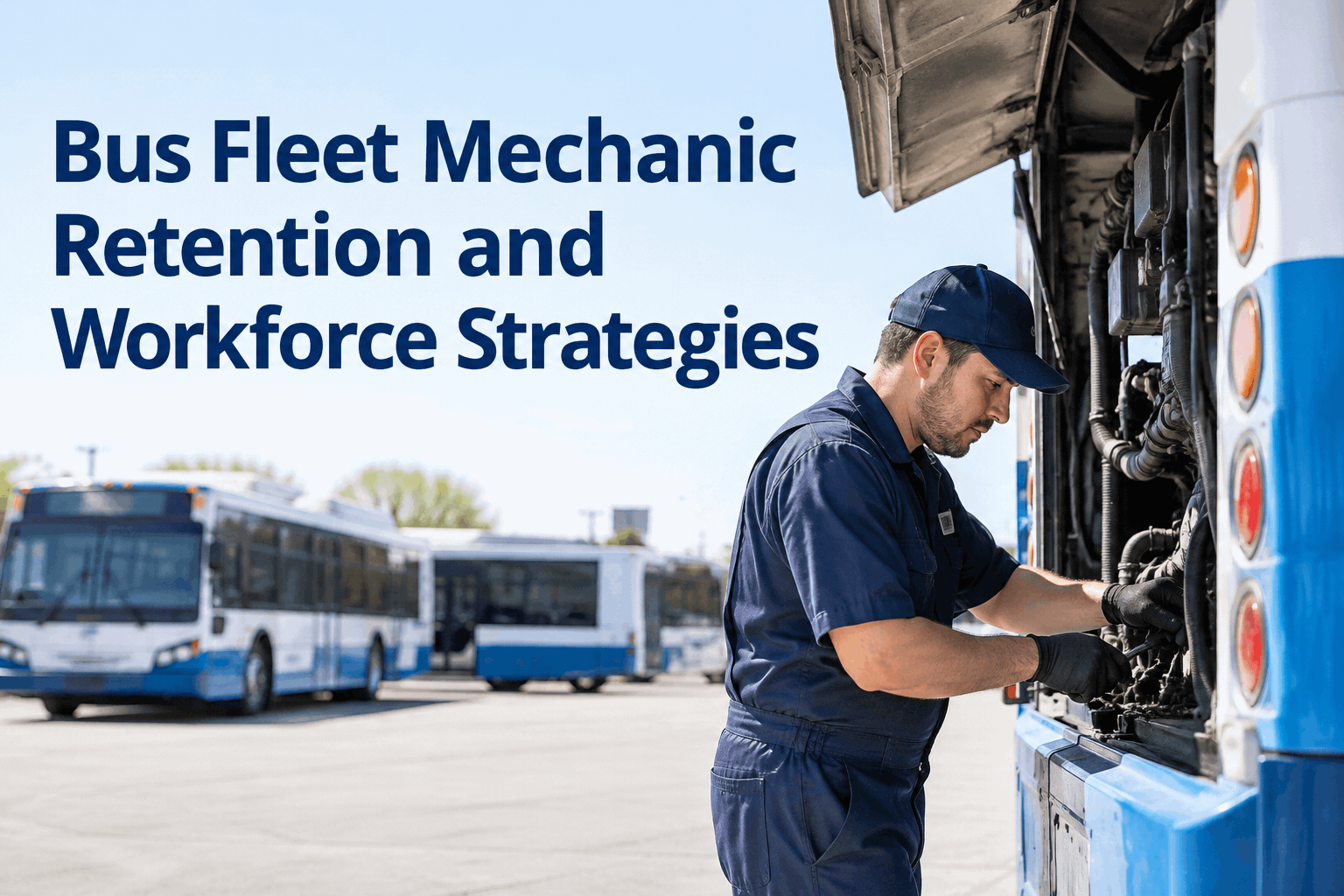
Your mechanic quit in March. The district hasn't approved the job posting yet. Your other tech is covering 3 bus routes a week because drivers are short too. You've got 47 buses, a PM schedule that's slipping, and a DOT audit in September. Welcome to bus fleet maintenance in 2026 — where 81% of districts still face driver shortages, 83% of staff are pulling double duty outside their core roles, and the maintenance shop is expected to do more with a team that keeps getting smaller. You can't hire your way out of this. But you can automate your way through it.
Staffing Crisis Playbook 2026
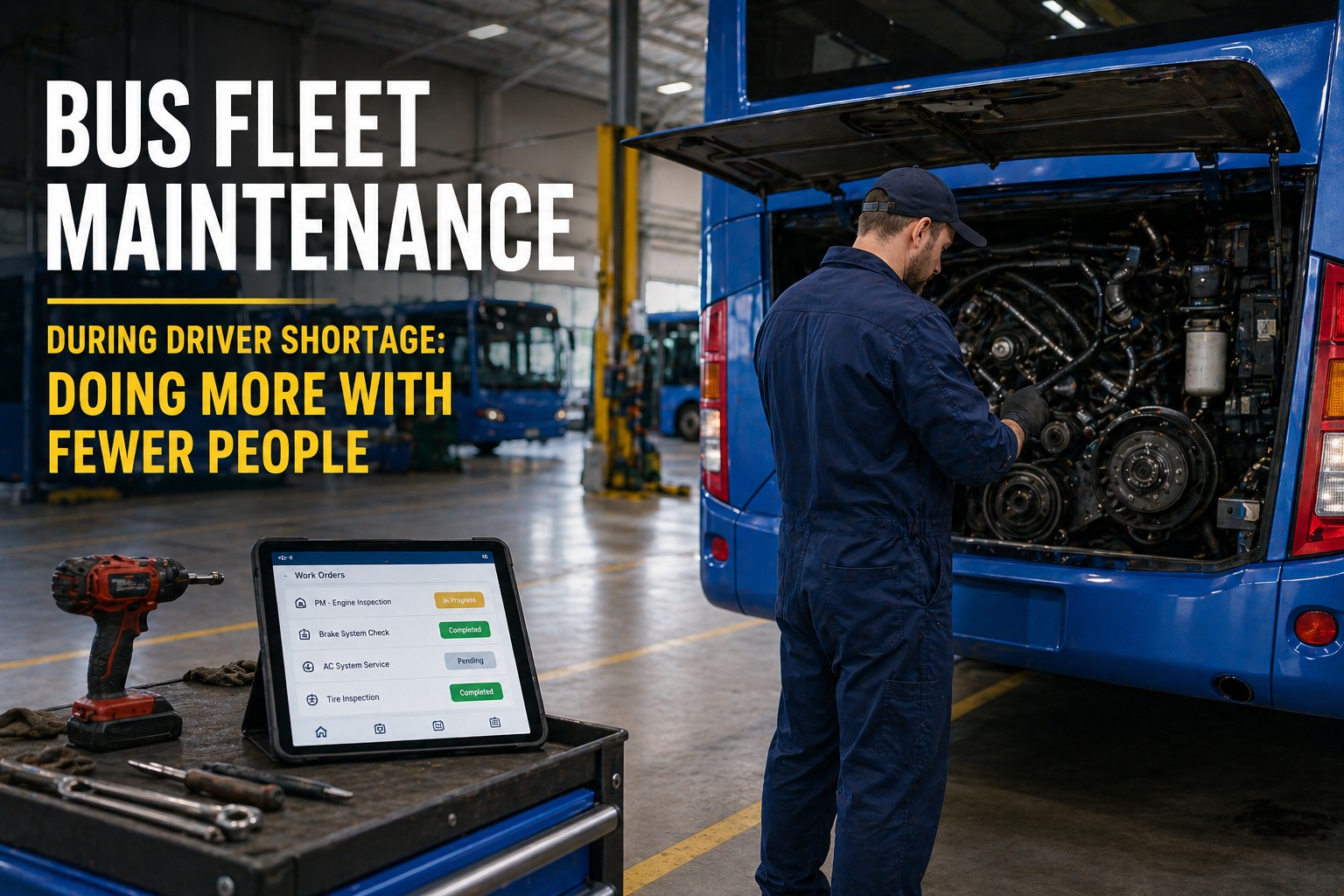
Bus Fleet Maintenance During Driver Shortage: Doing More With Fewer People
Your team is stretched. Your PM schedule is slipping. Here's how lean maintenance teams keep 50+ buses running — without burning out.
The 2026 Maintenance Reality
1–2 techs (3rd quit or on routes)
50 buses — same fleet, half the crew
The Staffing Crisis Isn't Just Drivers — It's Your Maintenance Shop Too
Everyone talks about the driver shortage. Nobody talks about what it does to your maintenance operation. Here's the cascade that's crushing shops in 2026:
Drivers are short — so your mechanics and supervisors cover bus routes
Mechanics on routes = fewer hours in the shop doing PM and repairs
PM schedules slip — services get pushed, inspections get rushed
Breakdowns increase — costing 3–5x more than the PM that was skipped
More breakdowns = more emergency work = more stress = more turnover
One Cypress-Fairbanks ISD transportation director solved part of this by pulling all techs and supervisors OFF routes in 2024 to focus on preventive maintenance. The result? Their vacancy rate dropped to 0.47%. But most districts can't afford that luxury — so the question becomes: how do you keep PM running when your team is half the size it should be?
5 Ways a CMMS Replaces the Staff You Can't Hire
You can't clone your best mechanic. But you can automate the 60% of their day that isn't wrench time — the scheduling, tracking, paperwork, and chasing that eats hours your team doesn't have.
Auto-Generated PM Work Orders
Without CMMS
Someone has to remember which bus is due, check the mileage, create the work order, assign it. With 47 buses, that's a full-time admin job.With BusCMMS
Mileage + calendar + engine hour triggers auto-generate work orders. Nobody has to remember anything. PM compliance hits 95%+ even with a skeleton crew.Driver-Completed Digital Inspections
Without CMMS
Your mechanic does the pre-trip inspections because drivers won't fill out paper forms correctly — or at all.With BusCMMS
Drivers tap through guided checklists on their phone. Pre-loaded templates mean they can't skip items. Photos and GPS are automatic. Your mechanic stays in the shop.Priority-Ranked Work Queue
Without CMMS
Your one mechanic decides what to fix first based on gut feel and who yelled loudest this morning.With BusCMMS
Work orders are auto-prioritized by safety severity, route impact, and due date. Your mechanic opens the app and starts on #1. No guessing, no politics.Fault Code Auto-Alerts
Without CMMS
Nobody sees the check engine light until the driver calls from the side of the road. Emergency mode again.With BusCMMS
Telematics fault codes auto-create work orders. Your mechanic sees the coolant warning at 3 PM and schedules the repair — instead of getting the 6 AM emergency call.One-Click Compliance Reports
Without CMMS
DOT audit in 3 weeks. Your team spends 2 days pulling paper records, rebuilding spreadsheets, and praying nothing's missing.With BusCMMS
Every inspection, work order, PM service, and driver certification is already logged with timestamps. Compliance report: one click, 30 seconds.See how a 2-person shop manages 50 buses — book a 20-min demo
Your Team Is Small. Your Tools Should Be Powerful.
BusCMMS was built for the reality of 2026 bus maintenance — lean teams, tight budgets, and 50+ buses that all need to be DOT-ready. Auto-PM, digital DVIRs, smart work queues, and one-click reporting. No extra headcount required.
Monday Morning: Without CMMS vs. With CMMS
6:15 AM — Check which buses "might" need service based on memory
6:45 AM — Do pre-trips yourself because 2 drivers didn't show
8:30 AM — Finally start shop work. Phone rings: Bus #12 broke down
10:00 AM — Emergency repair. Parts not in stock. Rush order placed
2:00 PM — Planned PM work: didn't happen. Again.
4:30 PM — Leave late. Nothing documented. Tomorrow's the same.
6:15 AM — Dashboard shows all buses green except #27 (flagged amber)
6:45 AM — Drivers complete digital DVIRs on their phones. You review alerts
8:30 AM — Start on priority work queue. Bus #27 part already ordered
10:00 AM — Two PM services completed. Work orders auto-closed
2:00 PM — Third PM done. Afternoon defect from DVIR knocked out
4:30 PM — Fleet health: 96%. Zero breakdowns. Leave on time.
The maintenance staffing crisis in 2026 is real — more than half of school bus fleets operate with fewer than 50 vehicles and most shops are 1–3 people. When one tech quits or gets pulled to drive a route, the entire PM program collapses. I've seen it happen in districts across the country.
The shops that survive this aren't the ones with bigger budgets. They're the ones that automated the non-wrench work. A CMMS that auto-generates work orders, lets drivers handle their own inspections, and prioritizes the queue so your one mechanic works on the right bus first — that's the difference between a functioning shop and one that's permanently in crisis mode. The technology exists. The ROI is immediate. The only question is how long you wait while your PM compliance keeps slipping.
Bus driver employment is still 9.5% below pre-pandemic levels. 83% of district staff are pulled from core duties to cover routes. Maintenance shops are running on skeleton crews while the bus count stays the same. You can't hire your way out of this — not at current wages, not with 12-week CDL training pipelines, not with retirement rates accelerating.
What you can do is automate the 60% of maintenance work that doesn't require a wrench: PM scheduling, inspection tracking, work order generation, priority ranking, parts alerts, and compliance documentation. BusCMMS does all of it — purpose-built for the 1–3 person shop managing 50+ buses. Every hour you save on paperwork is an hour your mechanic spends keeping buses on the road.
Your team is small but capable — give them the right tools free
Hiring Takes Months. BusCMMS Takes 10 Minutes.
Your next mechanic might take 6 months to hire. BusCMMS starts working the day you sign up — auto-PM, digital inspections, smart work orders, and one-click audit reports. Built for the lean reality of 2026.
How bad is the bus maintenance staffing shortage in 2026?
It's severe. According to the Economic Policy Institute, bus driver employment is still 9.5% below August 2019 levels — with 21,200 fewer drivers. The maintenance side is worse: School Bus Fleet's 2026 survey found that more than half of fleets maintain fewer than 50 vehicles with skeleton crews, and shops without in-house techs rely on expensive mobile mechanics or dealership labor. 83% of district staff are pulled from core duties to drive routes or manage transportation — including mechanics and supervisors who should be in the shop.
Can a CMMS really help a 1–2 person maintenance shop?
That's exactly who it helps most. A 1–2 person shop can't afford to waste time on scheduling, tracking, and paperwork. BusCMMS auto-generates PM work orders from mileage and calendar triggers, lets drivers complete their own digital inspections, prioritizes the work queue by severity, and tracks parts inventory with reorder alerts. The result: your mechanic spends 80%+ of their time with a wrench in hand instead of 58%. For a 50-bus fleet, that's the equivalent of adding a half-time employee without the salary.
How do digital inspections help with the staffing shortage?
In most understaffed shops, the mechanic does pre-trip inspections because drivers either skip them or fill paper forms incorrectly. That's 30–60 minutes per day of mechanic time lost to inspection duty. Digital DVIRs on the driver's phone solve this: pre-loaded templates guide drivers through every checkpoint, photos are automatic, defects create work orders instantly, and the mechanic never leaves the shop. The inspection quality actually improves because the system won't let drivers skip items.
What's the fastest way to improve PM compliance with a small team?
Three steps: First, auto-generate PM work orders from mileage and calendar triggers — this alone eliminates the "forgot to schedule it" failures that cause 40% of missed PMs. Second, prioritize the work queue so your mechanic always works on the most critical bus first. Third, pre-stage parts by connecting inventory to PM schedules — so when the work order fires, the parts are already on the shelf. Districts implementing all three see PM compliance jump from 50–60% to 90%+ within 90 days, even with the same staff count.
How much time does a CMMS actually save per week?
Based on fleet data: auto-PM scheduling saves 6–10 hours/week of manual tracking. Digital inspections save 30–60 minutes/day of mechanic inspection time. One-click compliance reports eliminate 2–3 full days of audit prep per cycle. Priority work queues increase productive wrench time from 58% to 80%+. For a 2-person shop managing 50 buses, that's roughly 15–20 hours/week recovered — the equivalent of a third team member working 2.5 days. All for a fraction of what it would cost to hire, train, and retain another technician.