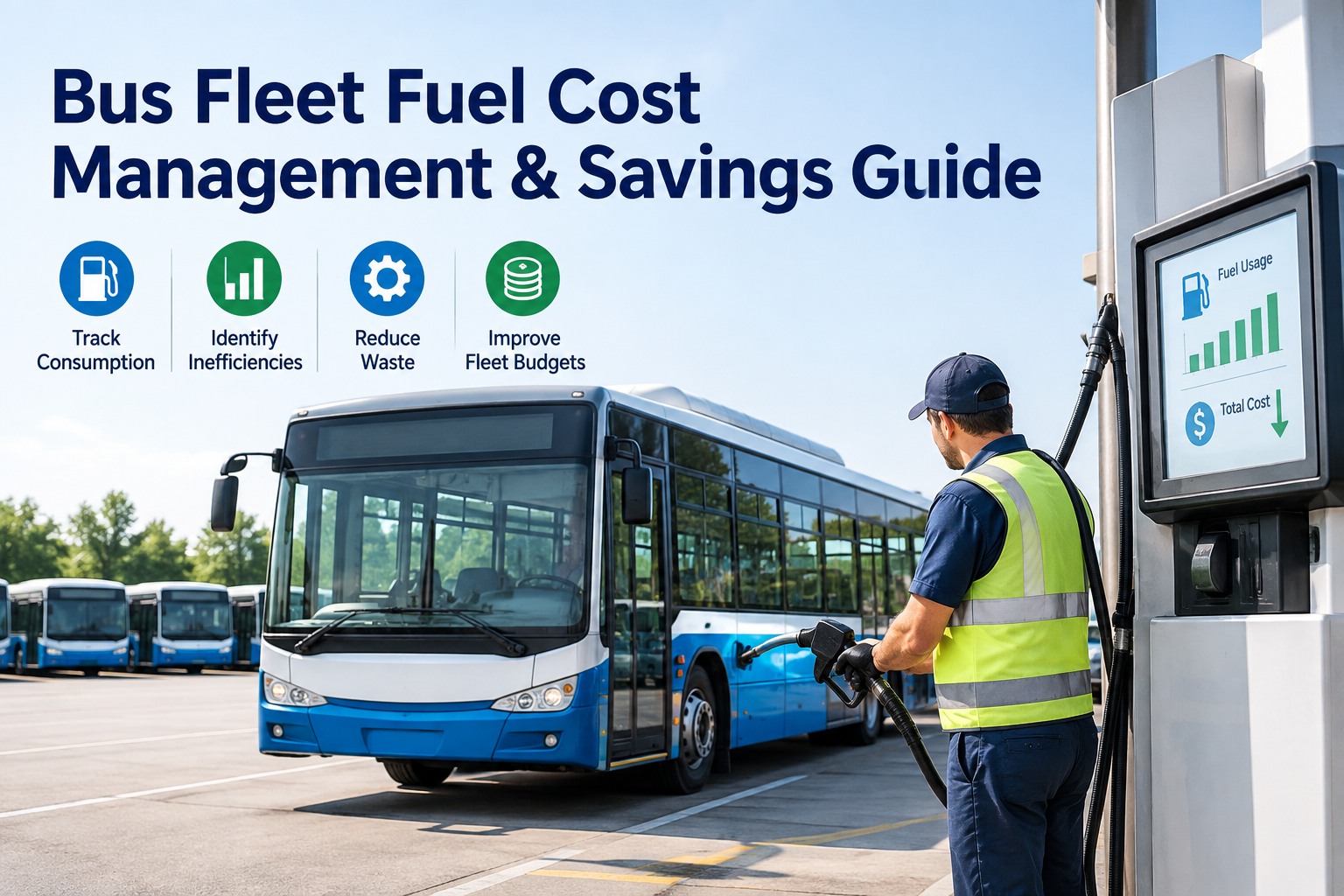
Diesel prices move whether or not your budget is ready for them, and fuel is usually the single largest controllable expense on a transit or school bus fleet's books — often larger than driver wages, insurance, or maintenance combined. The uncomfortable part isn't the price per gallon. It's that a meaningful share of every fleet's fuel budget disappears before a single mile gets driven — burned idling, misused on a fuel card, or wasted on a route that's longer than it needs to be. You can't negotiate diesel prices. You can absolutely stop paying for gallons nobody used.
The Real Cost of Managing Fuel by Spreadsheet
Most fleets know fuel is expensive. Far fewer can say exactly where each gallon went, because receipts, fuel cards, and mileage logs rarely get reconciled until the numbers are already old.
Four Places Fuel Dollars Disappear
None of these show up on a fuel card statement by themselves. They only become visible once consumption, GPS, and driver data sit in one place.
Individually, each of these looks like a small leak. Added up across a full fleet and a full year, they're usually the biggest recoverable cost on the books. Sign up to see exactly where your fleet's fuel dollars are going.
Expert Review: Spreadsheet Reconciliation vs. Connected Fuel Management
Here's the same fuel budget question — "are we actually spending what we should be?" — answered two different ways.
What 90 Days of Visibility Typically Recovers
Fuel savings from connected tracking don't usually happen all at once — they show up in stages as leaks get identified and closed.
The finance team doesn't need to trust a promise — they need a number they can hold your fleet to, quarter over quarter. Book a demo to see what a 90-day fuel visibility rollout looks like for your fleet.
Fuel prices are volatile by nature — nobody controls that. What's fully in your control is whether every gallon your fleet buys goes toward a mile actually driven. Sign up and start closing your fuel leaks this month.
Frequently Asked Questions
How much of a bus fleet's budget does fuel typically consume?
Fuel commonly represents 20-30% of total fleet operating cost, making it the largest controllable expense for most transit and school bus fleets — often larger than driver wages, insurance, or maintenance individually.
How much fuel does idling actually waste?
A bus can burn roughly 0.8 to 1.5 gallons of fuel per hour while idling, depending on the engine and accessory load. Across a fleet running significant idle time daily, that adds up to thousands of dollars a month in fuel spent without a single mile driven.
How does fuel card fraud go undetected for so long?
Without GPS cross-referencing, a fuel card transaction that doesn't match the vehicle's actual location has no automatic flag — it simply looks like a normal purchase on the statement until someone manually reconciles receipts against routes, which often doesn't happen until a quarterly or annual review.
How quickly can a fleet see fuel savings from connected tracking?
Many fleets see measurable results within 90 days: visibility into consumption and waste in the first month, enforced idling and card policies by the second, and a typical 15-25% fuel cost reduction by the third as the routine leaks close.
Can fuel management data be shared directly with finance teams?
Yes. A connected fuel management system produces consistent, real-time cost-per-mile and consumption figures that finance teams can use directly in budget reviews, instead of a manually reconciled spreadsheet that's often weeks out of date by the time it's reviewed.