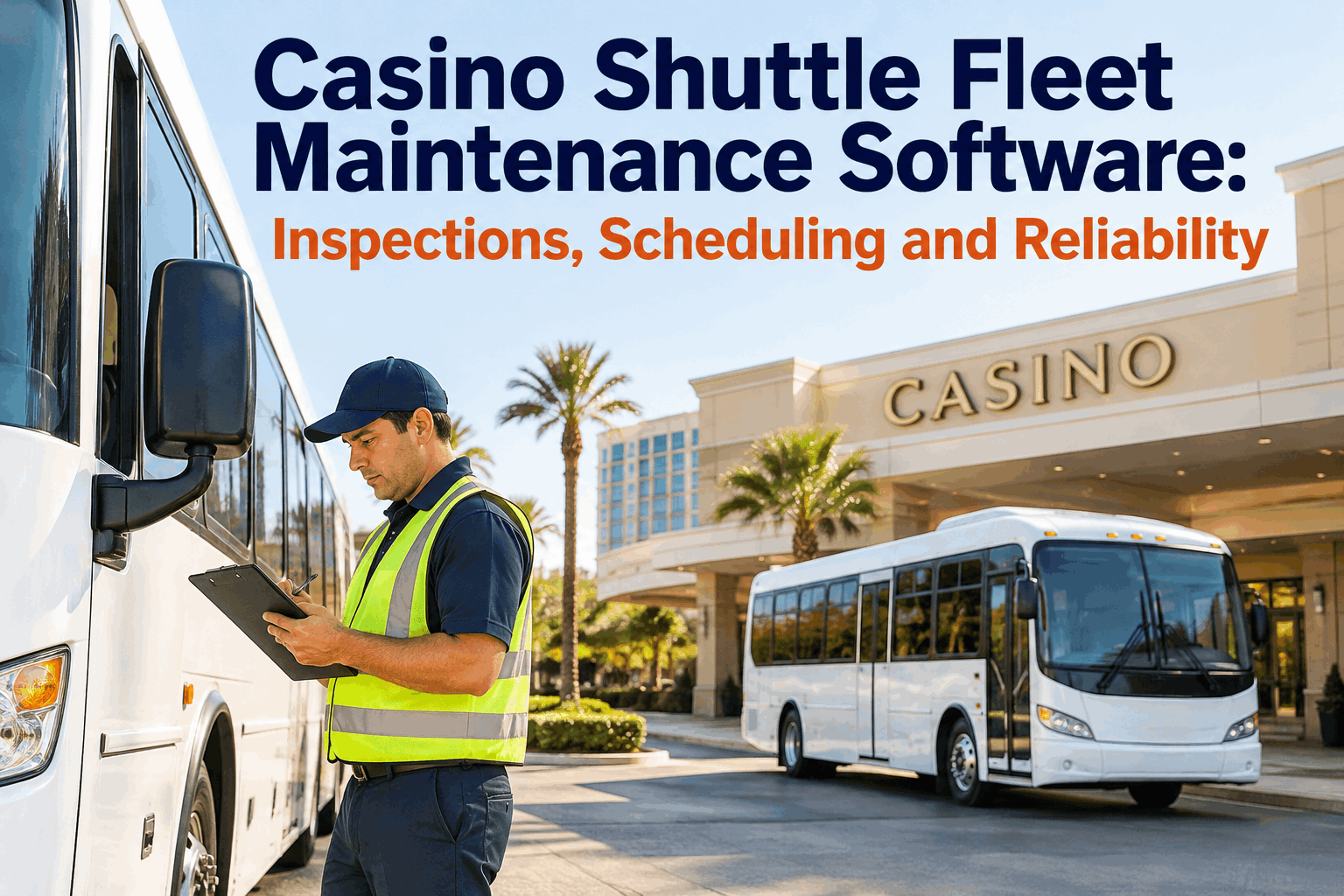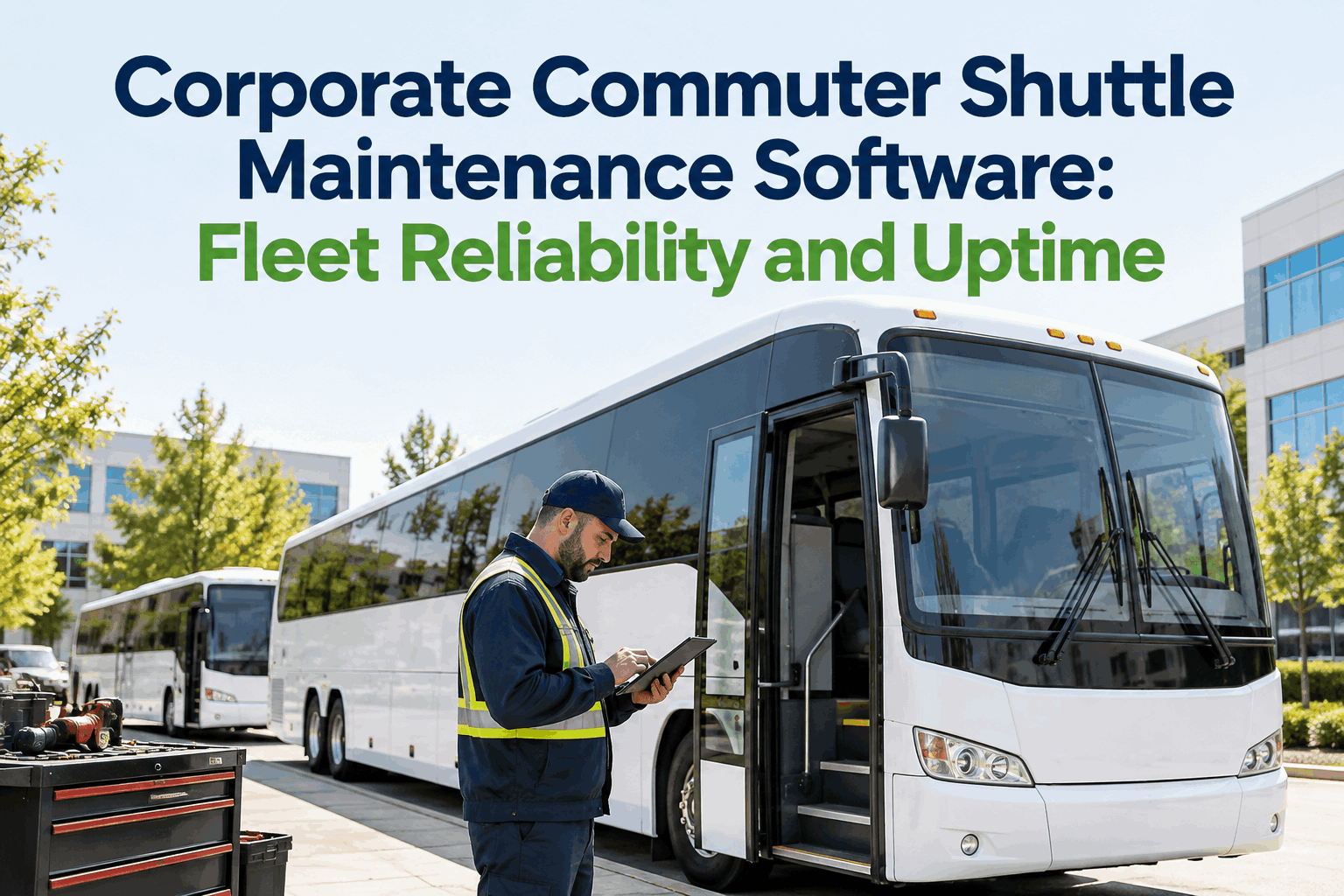
Corporate shuttle fleet maintenance software helps transportation teams keep employee commutes dependable when every morning and evening departure matters. A shuttle can look available on a schedule while an unresolved door defect, overdue service, or repeat HVAC repair makes it unsuitable for its next run. The practical goal is to connect inspections, preventive maintenance, repair work, and vehicle history so managers can make better readiness decisions before peak commute hours.
Your Employees Count on the Shuttle. Your Shuttle Counts on Maintenance.
Keep maintenance decisions connected to real commute windows—from first vehicle checks to verified repair completion—without relying on scattered spreadsheets and last-minute calls.
Why Shuttle Maintenance Has a Different Clock
Corporate shuttles often work around concentrated employee arrival and departure periods. A repair delay at midday may be manageable; the same unresolved defect just before a shift change can disrupt a full passenger load. Fleet teams need to see maintenance status in the context of service windows, not only calendar due dates.
Review driver findings and open defects before vehicles enter service.
Plan eligible PM, diagnostics, and repairs during actual downtime.
Check repair closure and identify vehicles needing replacement coverage.
BusCMMS can organize inspections and maintenance work so the operations team has clearer information to review. Book a demo to see corporate shuttle vehicle readiness tracking.
A Shuttle Inspection Should Protect Both Safety and Passenger Experience
Inspection content must follow applicable regulations, manufacturer guidance, and company procedures. For employee shuttle service, passenger-facing defects deserve attention alongside core mechanical systems because a vehicle that repeatedly fails to deliver a comfortable trip can undermine confidence in the service.
Brakes, steering & tires
Capture handling concerns, visible tire damage, fluid leaks, and braking defects for qualified assessment.
Doors & entry systems
Document abnormal operation, steps, handrails, and any applicable accessibility equipment issues.
Lighting & visibility
Record lamps, mirrors, windshield condition, and wiper problems before service.
HVAC & cabin
Log recurring cooling, heating, seating, and ventilation concerns affecting commuters.
Record the vehicle, date, symptom, operating conditions, and follow-up owner. An inspection checkbox alone does not explain what happened next.
Sign up free to organize employee shuttle inspections and defects.
Fit PM Around Commute Peaks Without Cutting Corners
Shuttle preventive maintenance should follow manufacturer instructions, applicable regulations, and the fleet's duty cycle. Frequent stop-and-go trips, idle time, passenger loading, and seasonal HVAC demand can affect what the maintenance team needs to monitor. Schedule work early enough to allow diagnosis, parts availability, and verification—not just the repair itself.
Use the service triggers appropriate to each vehicle and OEM.
Choose a workable shop window and account for spare vehicles.
Record tasks, parts, technician notes, and exceptions.
Confirm required checks are complete before operations reassigns the vehicle.
BusCMMS helps teams plan PM and retain service history by vehicle. Book a demo to plan shuttle maintenance around peak commute hours.
Don't Let the Same Shuttle Problem Reappear Every Monday
A driver reports weak cooling, the shop recharges the system, and a week later the complaint returns. Without a connected history, the team may treat the second visit as a new problem. A useful maintenance record links the original symptom, diagnostic work, repair decision, and post-repair result.
Cabin cooling weak on afternoon route
Inspect and diagnose using approved procedures
Document repair, parts, and test findings
Compare any later complaints to prior work
Use BusCMMS defect and repair history to identify repeat maintenance visits—not to substitute for mechanical diagnosis. Start free to track shuttle defects and repair history.
Measure Maintenance Results in Terms Operations Understands
Managers need more than a count of closed work orders. Review the relationship between maintenance activity and scheduled shuttle service. Keep definitions consistent so monthly comparisons are meaningful.
Completed scheduled services ÷ services due in the period
Hours vehicles are unavailable due to maintenance
Recurring issues on the same vehicle or system
Time from work-order opening to verified closure
Service disruptions specifically linked to maintenance issues
BusCMMS maintenance records can support these reviews; trip completion and dispatch outcomes may require data from an operations system.
What to Look for in Corporate Shuttle Fleet Maintenance Software
Ask vendors to demonstrate a realistic shuttle defect from initial inspection through repair closure. Book a demo to review corporate shuttle fleet maintenance reporting.
Start With One Commute Cycle, Then Scale
Set up the fleet
Add shuttle identifiers, relevant vehicle details, and maintenance responsibilities.
Standardize inspections
Choose suitable inspection templates and a clear defect escalation process.
Build PM schedules
Apply manufacturer-aligned tasks and coordinate shop availability.
Review the handoff
Check open defects, repair closure, and recurring problems before the next service cycle.
This is an illustrative rollout sequence; actual implementation depends on fleet size, existing records, and operational procedures.
Reliable Corporate Shuttle Service Starts Before Departure
Corporate shuttle fleet maintenance software is most valuable when it turns disconnected maintenance tasks into a clear, vehicle-specific process. Consistent inspections, realistic PM planning, traceable repairs, and regular downtime reviews help teams make informed decisions before the morning and evening commute. BusCMMS supports those maintenance workflows while dispatch and employee transportation systems continue to manage their own operational responsibilities.
Corporate Shuttle Maintenance Questions, Answered
Practical guidance for employee transportation and fleet maintenance teams.
01What is corporate shuttle fleet maintenance software?+
It helps operators manage the maintenance side of employee shuttle fleets, including inspections, preventive maintenance, repair work orders, and vehicle service records. It is not necessarily a shuttle booking or route dispatch platform.
02How can shuttle operators reduce maintenance-related missed trips?+
Use consistent pre-service inspections, schedule PM before it becomes overdue, address safety-critical defects promptly, and verify repairs before returning vehicles to service. Spare-vehicle planning is also important.
03How often should corporate shuttles receive preventive maintenance?+
Follow the applicable manufacturer service schedule, regulatory requirements, and vehicle duty cycle. There is no single universal interval suitable for every shuttle type and operating pattern.
04Which shuttle fleet reliability KPIs should managers track?+
Useful measures include PM completion, maintenance downtime, repeat defects, repair turnaround, and maintenance-related service disruptions. Keep definitions consistent and combine maintenance data with operations data where necessary.
05Can BusCMMS track employee shuttle bookings and live routes?+
BusCMMS is positioned here for inspections, maintenance scheduling, work orders, and service history. Do not assume employee reservations, route dispatch, or real-time passenger tracking are included without separately verifying those capabilities.