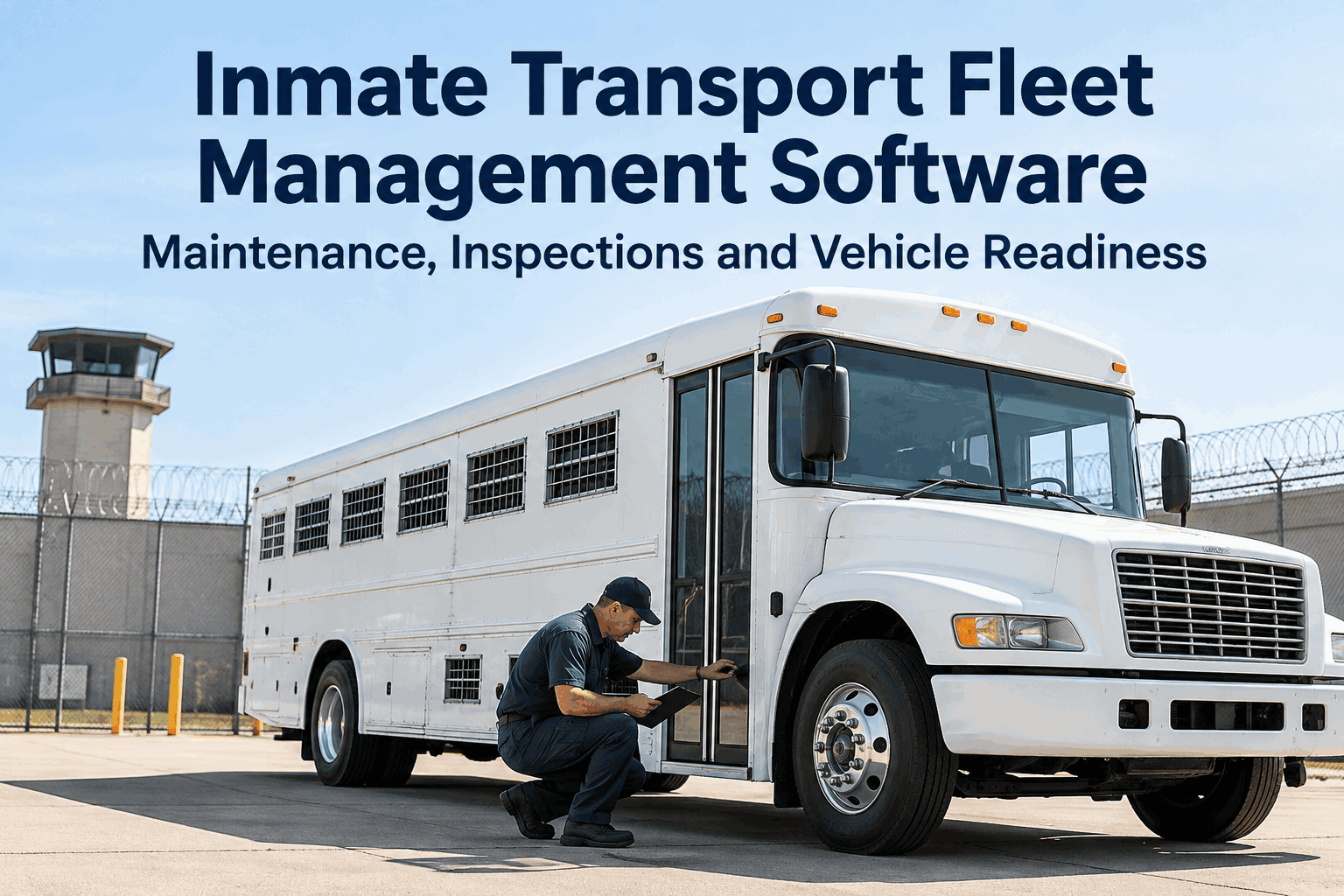
Inmate transport fleet management software helps corrections transportation teams keep buses, vans and support vehicles ready for scheduled movements without losing track of inspections, repairs,or preventive maintenance. When a vehicle develops a door fault, brake concern or unexpected mechanical issue, the maintenance record needs to be clear before the next assignment. BusCMMS helps organize the vehicle side of that process, so fleet managers can see what needs attention and document work completed.
Transport Readiness Starts Before the Vehicle Leaves the Yard
A missed inspection or unresolved defect can disrupt a planned movement. Connect vehicle checks, repair work and preventive maintenance in one traceable workflow.
Why Corrections Transport Vehicles Need a Different Maintenance Rhythm
Corrections transportation teams often work around scheduled court appearances, interfacility transfers and other time-sensitive assignments. The fleet maintenance challenge is to prevent avoidable vehicle interruptions while preserving documented safety checks.
Little room for disruption
Unexpected vehicle downtime can require a replacement vehicle or a revised transport plan. Tracking open work orders helps supervisors identify maintenance constraints early.
Specialized vehicle equipment
Passenger compartments, door hardware, climate control and vehicle-specific modifications require checks appropriate to the vehicle and its approved procedures.
Accountable maintenance history
Supervisors need a record of reported defects, technician findings, corrective work and verification rather than scattered notes.
With book a demo to review corrections vehicle maintenance history, teams can review prior work before planning additional service.
A Practical Inmate Transport Vehicle Inspection Map
Use an agency-approved inspection procedure and the vehicle manufacturer's instructions. The examples below are maintenance checkpoints, not a universal legal checklist or security operating procedure.
Record observable defects and refer suspected safety issues to qualified maintenance personnel.
Check required lighting, glazing, mirrors and wipers according to the vehicle inspection program.
Document faults in vehicle doors, latches and installed transport equipment for authorized review.
Track heating, cooling and ventilation concerns that affect vehicle operating conditions.
Capture fluid leaks, dashboard warnings and unusual sounds with vehicle and date details.
Review unresolved maintenance findings before the vehicle is considered for assignment.
From a Reported Fault to a Documented Return to Service
A reliable maintenance process preserves the sequence of events. It should be easy to see when a fault was reported, who assessed it, what was repaired and whether the result was verified.
Driver or inspector records the vehicle defect.
Qualified staff assess urgency and required action.
Technician completes and documents the work order.
Required checks and closure evidence are recorded.
This is where sign up free to connect transport inspections and repair work orders can reduce repeated manual follow-up.
Know Which Transport Vehicles Need Maintenance Attention
Use BusCMMS to organize inspections, preventive service and corrective repairs by vehicle. Give your maintenance team a clearer record before the next scheduled assignment.
Schedule Service Around Vehicle Use, Not Just the Calendar
Inmate transport fleet maintenance is easier to coordinate when maintenance due dates are visible alongside mileage and vehicle history. Follow manufacturer recommendations and agency policy when setting service intervals.
BusCMMS preventive maintenance scheduling can help supervisors plan service without relying on separate spreadsheets. Book a demo to plan preventive maintenance around transport assignments.
Five Maintenance Signals Worth Reviewing Each Week
A short, consistent review is more useful than a crowded dashboard. Start with measures that explain maintenance workload and readiness constraints.
PM due / overdue
Which vehicles are approaching required service?
Open safety-related defects
Which findings need qualified assessment or repair?
Repair turnaround
How long do maintenance work orders remain open?
Repeat defects
Are the same symptoms returning after repairs?
Maintenance downtime
Which vehicles are unavailable due to maintenance?
Use sign up free to track corrections vehicle defects and downtime to build a more consistent review routine.
What to Look for in Corrections Fleet Maintenance Software
Not every product marketed as inmate transportation software manages maintenance. Separate vehicle maintenance needs from custody, dispatch, movement authorization and other agency systems.
For an agency-specific fit review, book a demo to evaluate BusCMMS for corrections fleet maintenance.
Start With One Vehicle Group and a Clear Maintenance Process
Implementation does not have to begin with every vehicle and every report. A pilot makes it easier to validate the inspection template, maintenance intervals and work-order closure rules.
Build the fleet register
Add vehicles, identifiers, mileage and existing maintenance information.
Set PM and inspection routines
Use approved checklists and manufacturer-specific maintenance schedules.
Connect defects to repairs
Standardize work-order ownership, documentation and closure.
Review and refine
Check overdue PM, open defects and maintenance downtime before expanding.
These are example rollout phases, not guaranteed implementation durations. Keep vehicle maintenance records separate from sensitive custody information unless an authorized system design explicitly requires otherwise.
Keep Corrections Transport Fleet Records Organized in BusCMMS
See how preventive maintenance, inspection findings, repair work orders and vehicle history can support more reliable transport fleet operations.
Reliable Transport Begins With Reliable Maintenance Records
Inmate transport fleet management software should help the maintenance team answer straightforward questions: Which vehicles need service? What defects remain unresolved? What repairs were completed? And what does the maintenance history show? BusCMMS provides tools to organize those records, while the agency retains responsibility for operational security, vehicle authorization and applicable compliance requirements.
Inmate Transport Fleet Maintenance FAQs
Clear answers for corrections fleet supervisors and software buyers.
01What does inmate transport fleet management software do?+
Fleet maintenance software organizes vehicle inspections, preventive maintenance, repairs and service history. Custody tracking, secure routing and movement authorization are separate operational functions unless a specific product explicitly supports them.
02What should be included in an inmate transport vehicle inspection?+
Follow agency-approved and manufacturer-specific procedures. Common maintenance areas include brakes, tires, steering, lights, doors, warning indicators, fluid leaks and installed vehicle equipment. Qualified staff should assess defects and decide corrective action.
03How often should corrections transport vehicles receive preventive maintenance?+
Intervals depend on vehicle specifications, manufacturer instructions, duty cycle and applicable agency or regulatory requirements. Software can track mileage- and time-based tasks but should not replace the approved maintenance schedule.
04Can BusCMMS help reduce inmate transport vehicle downtime?+
BusCMMS helps teams plan preventive work, record defects, manage repairs and review maintenance history. Those practices can support better maintenance planning, but downtime results depend on fleet condition, staffing, parts and operating practices.
05Does BusCMMS manage inmate custody or certify corrections compliance?+
No such capability is claimed here. BusCMMS is presented as a vehicle maintenance management tool, not a custody system or automatic compliance certification platform. Agencies must apply their own policies and legal requirements.