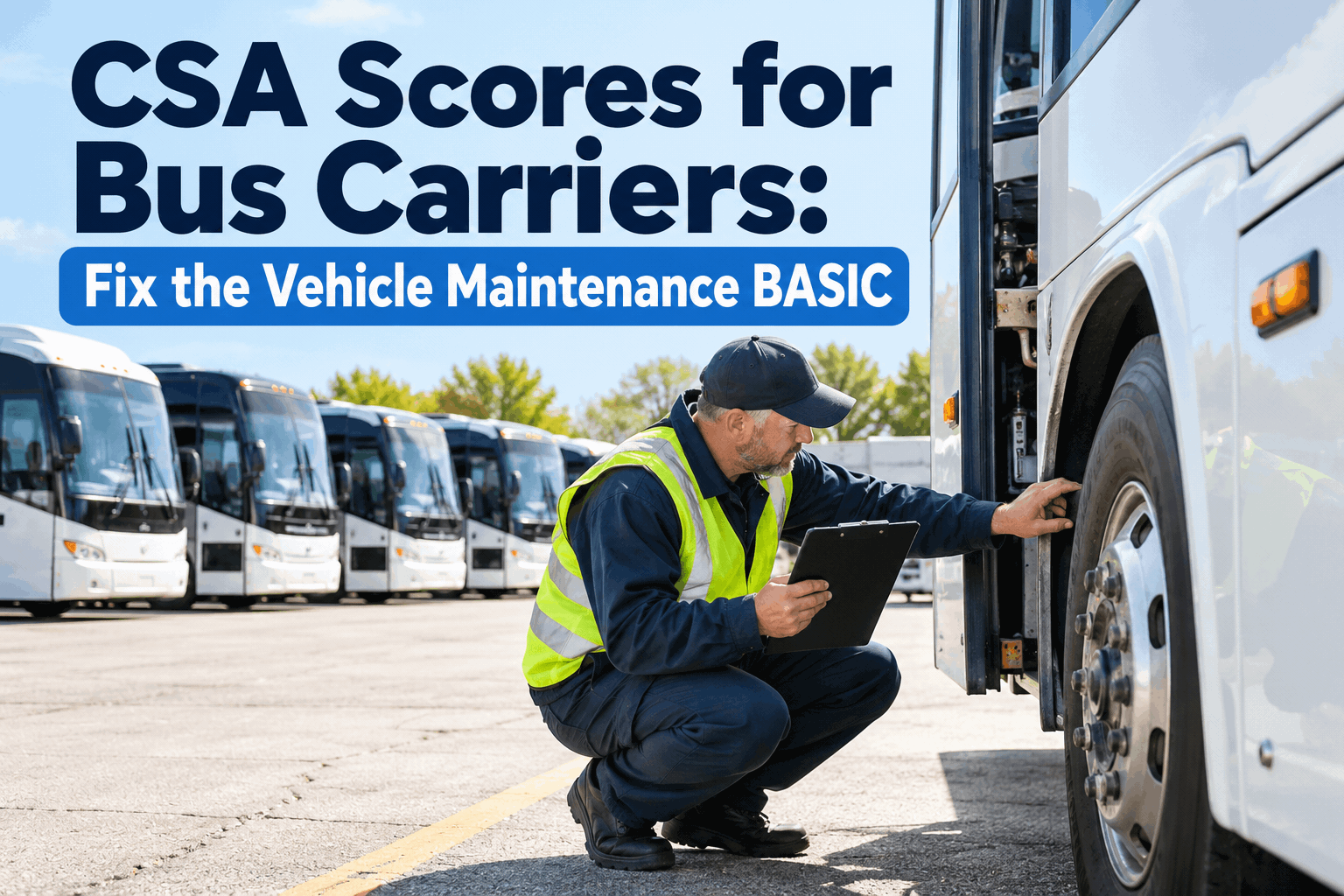
Under the Federal Motor Carrier Safety Administration (FMCSA) regulations, vehicle lighting is not just a minor safety consideration—it is one of the most frequent targets for roadside enforcement and a leading driver of compliance penalties. According to commercial vehicle safety data, lighting compliance failures consistently rank among the top five most common roadside defects discovered during Level I and Level II DOT inspections. Under Title 49 CFR Section 393.11, every commercial transit vehicle, school bus, and motor coach must maintain an array of operational lamps, reflective devices, and electrical signaling systems. A single cracked clearance lens, a dimmed high-beam bulb, or an intermittent turn signal can serve as an immediate reason for a DOT inspector to pull an asset offline for a comprehensive inspection. These easily preventable violations damage a fleet's Compliance, Safety, Accountability (CSA) scores, lower overall safety measurement rankings, and trigger costly unexpected operational delays. Moving away from superficial visual inspections and implementing digital, systematic lighting verification protocols is essential for protecting fleet uptime. This detailed guide explores the structural weak points of heavy-duty vehicle lighting networks, breaks down key DOT regulatory inspection zones, and presents a comprehensive playbook to digitize your lighting audits and eliminate vehicle compliance vulnerabilities.
Inspection
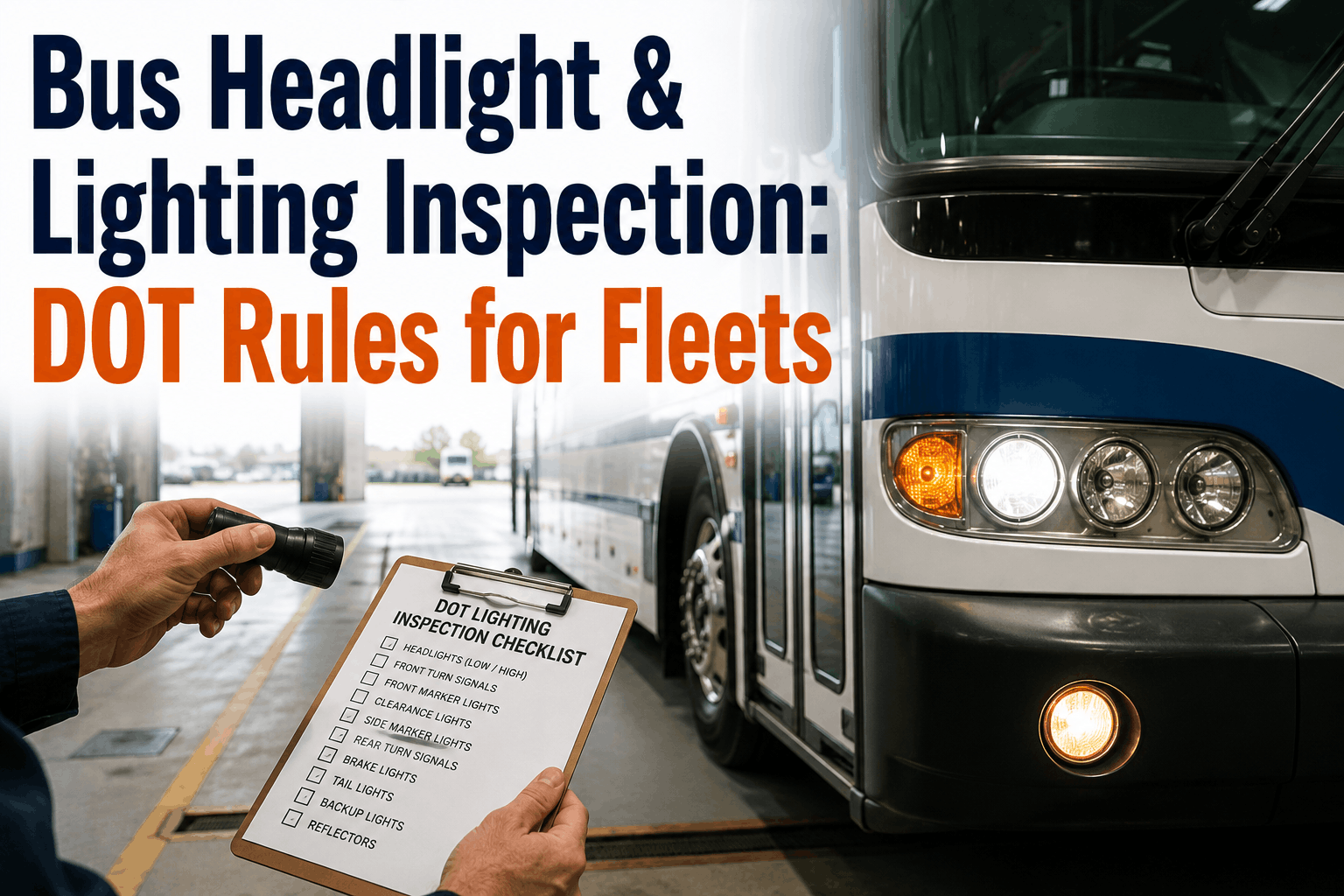
Bus Headlight & Lighting Inspection: DOT Rules for Fleets
Defective lighting is a major driver of roadside enforcement actions and vehicle downtime. Learn the exact DOT regulations governing commercial bus lighting and establish foolproof inspection processes.
Why Traditional Fleet Lighting Audits Regularly Fail
Relying on old-school paper inspection logs or quick driver walkarounds frequently allows minor electrical and lighting defects to go unnoticed. Because commercial bus electrical systems operate under harsh conditions, structural vulnerabilities require a precise, systematic tracking method.
Reason 1: Vulnerability to Constant Road Vibration
Buses endure hours of continuous operation over uneven urban streets and rough highways. This constant physical vibration stresses fragile lamp filaments, loosens electrical grounding screws, and disconnects wiring connectors inside sealed structural channels.
Reason 2: Environmental Corrosion and Moisture Intrusion
Exterior lighting assemblies are continuously exposed to rain, pressure washes, and winter road salt. Micro-cracks in plastic lenses allow moisture to seep inside, causing rapid corrosion of lamp sockets, circuit boards, and wiring harnesses.
Reason 3: Supervised "Pencil Whipping" Habits
When drivers are pressed for time, paper pre-trip forms are often quickly filled out. A driver might check off "All Systems Operational" while sitting in the driver's seat, entirely missing a dead rear side marker or an inoperable license plate light.
Reason 4: Complex Multiplex Electrical System Architectures
Modern transit buses distribute electrical power through complex computerized multiplex networks rather than traditional simple fuses. Intermittent voltage drops or control module glitches can cause lighting dropouts that require detailed digital diagnostics.
The Strategic Checkpoints of DOT Bus Lighting Compliance
To remain fully compliant with Department of Transportation guidelines, maintenance teams must verify every category of vehicle lighting against strict performance and visibility parameters.
Regulatory Visibility Zones vs. Operational Requirements
Zone: Front Illuminator Assemblies
Every bus must have at least two functional white headlights (high and low beams). These must be properly aimed to ensure adequate road illumination without blinding oncoming traffic, and lenses must be clear of severe oxidation or cloudiness.
Zone: Identification and Clearance Indicators
Vehicles wider than 80 inches require three amber identification lights on the front center roof line and three red lights on the rear center line. Two amber clearance lights must mark the widest front corners, with two red clearance lights tracking the rear corners.
Zone: Turn Signals and Hazard Warning Networks
Front and rear directional signals must flash between 60 and 120 cycles per minute. Heavy-duty transit buses also require mid-body side marker turn signals to warn surrounding traffic during lane changes and tight turns.
Zone: Rear Braking, Tail, and Auxiliary Lamps
Tail lights must activate automatically when headlights are turned on. Brake lamps must illuminate instantly when the service brakes are applied and provide a significantly brighter output than standard tail lights to prevent rear-end collisions.
The Fix: Implementing a Digital Lighting Inspection Protocol
Stop allowing missed lighting defects to impact your company's safety records. Integrate structured, electronic vehicle inspection workflows directly into your centralized CMMS asset tracking platform:
1
Build Step-by-Step Mobile DVIR Walkaround Paths
Structure your digital inspection templates to guide drivers through a logical path around the vehicle. The software ensures users must complete front, side, and rear verification steps sequentially before submitting the report.
2
Mandate Visual Confirmation Photos for System Faults
When a driver or mechanic flags a broken lens or an inoperable bulb, require a mandatory photo attachment through their mobile device. This provides the garage floor with clear visual context to plan repairs quickly.
3
Automate Critical Lighting Work Order Generation
Configure the CMMS platform to instantly convert any failed lighting inspection item into an active, high-priority work order, ensuring safety-critical defects are addressed before the vehicle is dispatched.
4
Track Lamp Component Lifespans and Failure Trends
Analyze parts usage patterns within the system. Tracking how often specific vehicle models require replacement headlight bulbs or marker lenses helps identify underlying electrical issues or poor component quality.
"Lighting violations used to be a persistent issue for our regional transit operations. We were constantly dealing with roadside warnings and minor fines for dead side markers or cracked lenses that our drivers simply overlooked on paper logs. Transitioning our vehicle inspection workflows onto an automated, mobile-focused CMMS changed our entire approach. By requiring a structured digital walkaround and mandating photo confirmation for any structural defects, we caught lighting issues right at the garage bumper. Our roadside lighting violations dropped to absolute zero within three months, our CSA safety scores improved significantly, and our mechanical team saves hours of diagnostic time by having clear visual documentation before an asset even arrives at the repair bay."
— Maintenance Director, Tri-State Transit Authority, Pennsylvania
Eliminate Lighting Violations and Protect Fleet Compliance
Take control of your vehicle safety metrics before roadside inspectors flag your assets. Prevent unexpected breakdowns, simplify daily DVIR workflows, and manage electrical part inventory with a modern fleet management solution.