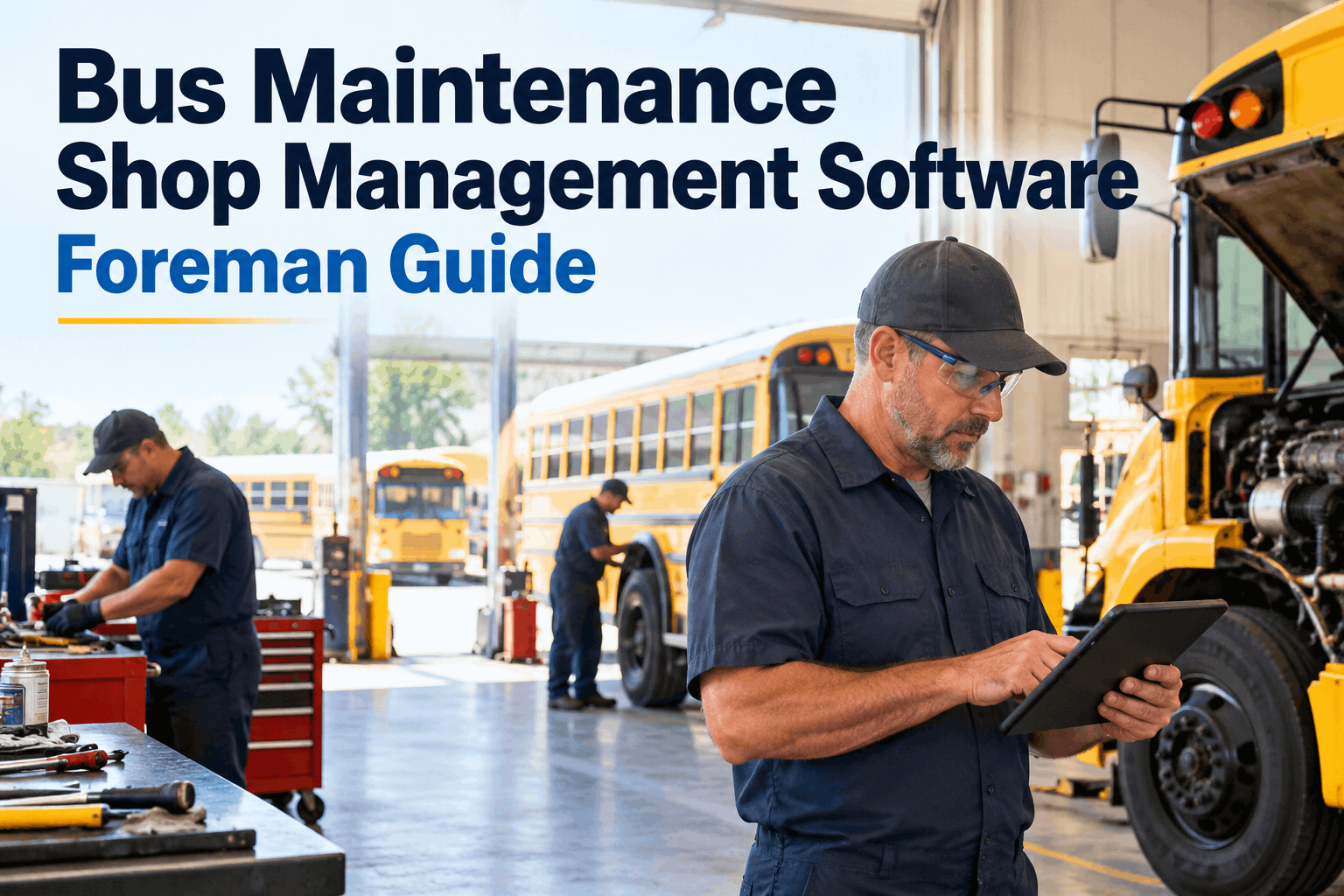
Bus routing software and bus maintenance software solve two different problems. Routing tools decide where buses go, when they depart, and which vehicles serve each route. Maintenance tools help teams inspect, service, and repair those vehicles before they are assigned. Understanding the difference helps school districts, transit agencies, and private operators avoid gaps in vehicle readiness. Book a demo to see how BusCMMS organizes bus maintenance.
Bus Routing Software vs Maintenance Software: Key Differences
One system builds the service plan. The other helps keep the buses ready to deliver it. Compare their responsibilities, workflows, and purchasing priorities.
Routing is about the trip. Maintenance is about the vehicle's condition.
At a Glance: What Each Platform Actually Does
A bus can have a perfect route assignment and still be unavailable because of a failed brake inspection or overdue repair. The tools support different decisions.
Bus routing software
Builds and adjusts routes, stops, pickup times, vehicle assignments, and driver schedules. Depending on the platform, it may support live dispatch, passenger information, or route optimization.
Bus maintenance software
Organizes inspections, reported defects, preventive maintenance, repair work orders, parts usage, and vehicle service histories.
Feature-by-Feature Comparison
The differences become clearer when you compare the everyday work performed by dispatch teams and maintenance shops.
| Fleet task | Routing software | Maintenance software |
|---|---|---|
| Route design and stop sequencing | Primary function | Not its core purpose |
| Pickup times and driver assignments | Primary function | Not its core purpose |
| Vehicle inspection records | May display limited status | Primary function |
| Preventive maintenance schedules | Usually limited or absent | Primary function |
| Defect and repair work orders | May receive status updates | Primary function |
| Parts and maintenance cost history | Not usually a focus | Primary function |
| Day-of-service vehicle availability | Needs current availability information | Helps maintain repair and service status |
Exact features and integrations vary by vendor and plan. A shared vehicle status does not automatically mean the two products integrate.
What Happens When a Bus Fails Its Pre-Trip Inspection?
This is where the distinction has an immediate operational consequence: the route still exists, but the assigned vehicle may no longer be suitable for service.
Do You Need Routing Software, Maintenance Software, or Both?
Start with the operational gap you need to close. Many fleets need both disciplines, even when the systems are purchased separately.
A Practical Software Buying Checklist
Before requesting quotes, ask each vendor to demonstrate the workflow—not just show a feature list.
Routing workflow: Can planners edit routes, stops, and assignments when service changes?
Inspection workflow: Can drivers or staff document defects against the correct vehicle?
Repair workflow: Can the shop track an issue from report through completed work?
PM workflow: Can managers schedule service and see what is overdue?
Vehicle status: Who decides when a bus is ready for service, and how does dispatch learn about changes?
Integration: Is there a documented connector or API? Which fields sync, and how often?
Where BusCMMS Fits in Your Bus Fleet Software Stack
BusCMMS is positioned on the maintenance side of the operation. Its value is helping fleet teams move from disconnected inspection and repair records to an organized maintenance workflow.
Inspection tracking
Keep vehicle checks and reported issues tied to individual buses.
Preventive maintenance
Plan recurring service and review upcoming or overdue work.
Repair work orders
Organize tasks, repair activity, and maintenance follow-up.
Service history
Review past inspections and repairs when making fleet decisions.
To see how this works for your buses, book a BusCMMS maintenance demo or sign up to start organizing fleet maintenance.
Key Takeaways
The best purchase decision comes from separating trip planning from vehicle upkeep, then deciding how your teams will share readiness information.