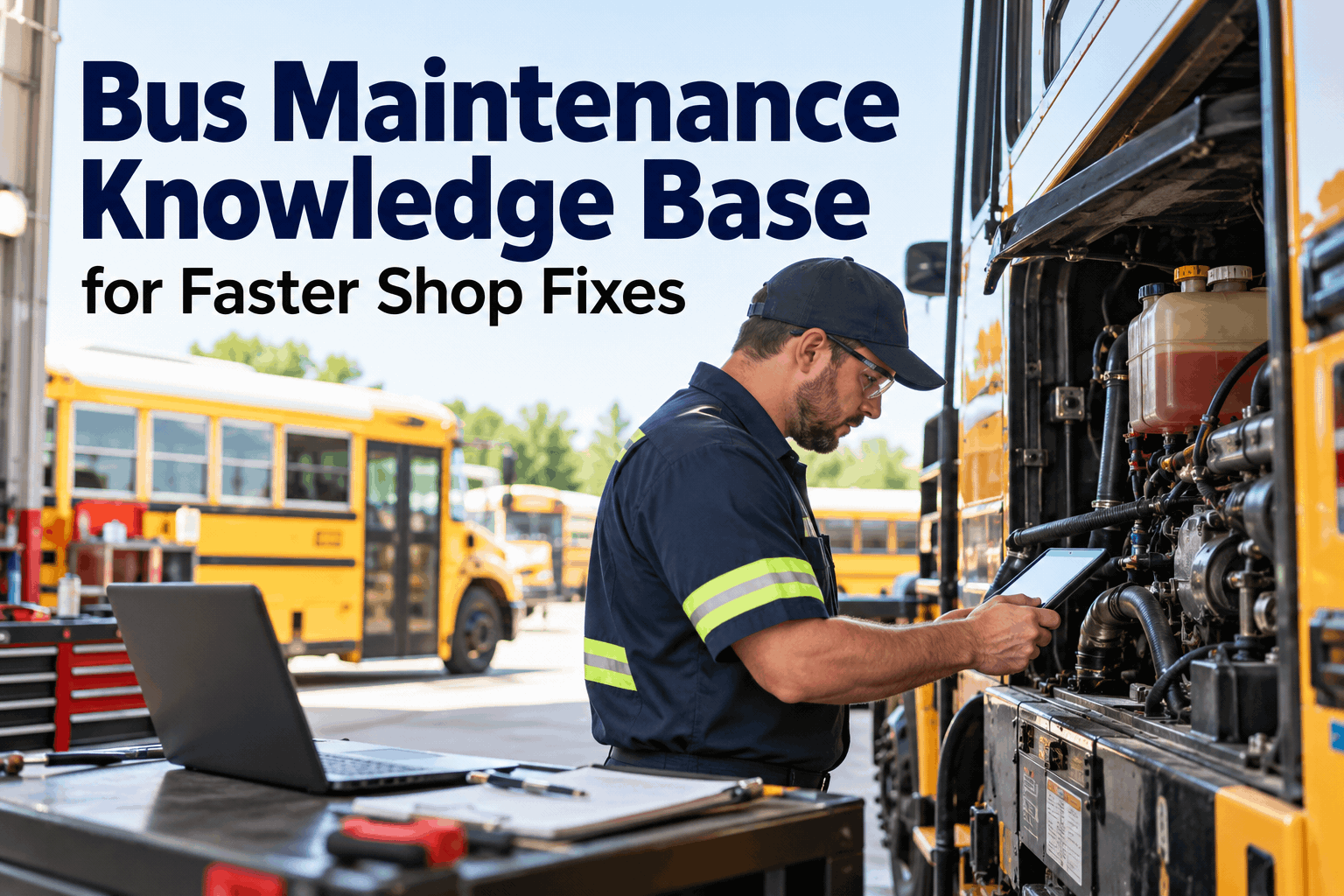
You are down two technicians, the ones who retired took decades of fleet knowledge with them, and the postings have sat open for months — while the buses keep rolling and the PM list keeps growing. A bus shop staffing shortage is not a hiring problem you can wait out; it is a capacity problem you manage today, with the crew you have. The fastest lever is making every shop hour you already pay for count, and you can see how a short-staffed shop covers more buses in a demo.
Bus Shop Staffing Shortage: Getting More Capacity From the Crew You Have
You cannot hire your way out of it fast enough. So the real question is how to stretch the technician hours you already have across a growing fleet — without burning out the people who stayed.
Why the Bus Mechanic Shortage Hits Capacity So Hard
The shortage is not just a headcount number. A technician who leaves takes diagnostic speed and fleet know-how with them, and the people who stay absorb the overflow until something gives. Three forces squeeze capacity at once.
A retiring generation
Veteran diesel techs are aging out faster than new ones enter the trade. When they go, their speed and fleet memory go too — a replacement, if you find one, takes months to match it.
A growing, aging fleet
Buses are kept in service longer and need more attention while the fleet grows. More work lands on the same or fewer hands — buses-per-technician climbs every year.
Months-long open roles
Skilled technician postings sit unfilled for months. You cannot schedule around a hire that has not happened, so the gap has to be covered by capacity you already control.
You control one variable immediately: how much of each technician's paid hours become actual wrench time instead of paperwork and hunting.
Where a Short-Staffed Bus Shop Loses Hours
Before adding people, find the hours you are already losing. In most shops a surprising share of a paid technician day never reaches a bus — capacity you can win back without a single hire.
Walking to the parts room, waiting on approvals, digging for a bus's history or the right torque spec.
Filling out work orders by hand, re-keying the same defect into three places, reconstructing what was done.
Dropping a planned job for a road call, then losing the thread on what was half-finished when you get back.
Hands on the bus, fixing it. Every hour clawed back from the three above is a hour added here — free capacity.
Cutting the parts-chasing and paperwork drains is the cheapest headcount you will ever add — you can see where your shop's hours go in a demo.
The Maintenance Backlog Spiral
Short-staffed shops slide into a predictable trap. Once you see the loop, you can break it at the point that matters — protecting preventive maintenance even when you are slammed.
Short-staffed, so PM slips first — it feels safe to defer.
Deferred PM turns into roadside breakdowns.
Breakdowns force reactive repairs that eat the day.
Even less time for PM — and the loop tightens.
A reactive repair costs far more shop time than the PM that would have prevented it. Protecting PM is how a short crew stops drowning.
Five Ways to Stretch a Short-Staffed Bus Shop
You cannot conjure technicians, but you can get more finished work out of the hours you have. These moves add the most capacity for the least cost, in rough order of payback.
- Triage the work, protect PM firstRank every job by what prevents a road call. PM that keeps buses out of the reactive queue comes before cosmetic or deferrable work — always.HIGHEST PAYBACK
- Cut the non-wrench timeDigital work orders, parts tied to the job, and bus history on a phone end the walking and re-keying. Hours move from paperwork to repairs with zero new hires.FAST WIN
- Balance load across the crewSee each technician's open work orders at a glance and spread the work instead of overloading your fastest person until they leave too.RETENTION
- Capture fleet knowledge in the systemWhen repair history and standard jobs live in the CMMS, a newer tech can follow the trail a retiring veteran left — so experience walking out the door hurts less.LONG GAME
- Use overflow help for the right jobsRoute simple, deferrable work to mobile mechanics or vendors so your in-house crew stays on the safety-critical and fleet-specific repairs only they can do.PRESSURE VALVE
None of this needs a new hire — just the work organized so every hour lands where it matters. You can sign up free and start triaging your backlog today.
How BusCMMS Stretches Bus Maintenance Staffing
Managing a short crew is a coordination problem — exactly what a bus-built CMMS is for. BusCMMS turns a stack of paper and a whiteboard into one assignable, prioritized queue the whole shop works from.
Assign & track every tech's load
See who has what, balance the queue, and stop overloading your best person — one board the whole shop works from.
Failed DVIRs auto-become work orders
Defects flow straight into the prioritized queue, so nothing falls through the cracks when the shop is slammed.
PM scheduled, not deferred by default
Automatic PM triggers keep preventive work on the board so it is protected first — breaking the backlog spiral.
BusCMMS reports fleets on its platform lift technician wrench time and cut maintenance costs by roughly 25 to 35 percent in the first year — company-reported figures from its own customer data, and exactly the kind of gain a short-staffed shop needs. To size it to your crew, book a demo and bring your backlog.
A Maintenance Manager's Take
Key Takeaways on the Bus Shop Staffing Shortage
A bus shop staffing shortage is a capacity problem first, a hiring problem second. Four things to act on while the postings stay open.
Manage capacity, not just hiring
You control wrench hours today; a hire is months away.
Win back non-wrench time
Paperwork and parts-hunting are free capacity waiting.
Protect PM first
Deferring it is what feeds the backlog spiral.
Balance the load
Overloading your best tech is how you lose them too.
You may not be able to fill the open roles this quarter, but you can make the bus shop staffing shortage hurt a lot less by organizing the work so every hour you already pay for lands on a bus. You can sign up free and start covering more buses with the crew you have — the difference between a crew that is drowning and one that is merely busy.