The bus pulls into the yard showing 184,620 miles. Yesterday's fuel transaction says 184,481. Your telematics platform says 184,637. None of those numbers looks obviously wrong — but only one can drive the next preventive maintenance trigger. That is the real challenge behind bus mileage capture methods: getting a current, trustworthy mileage value into maintenance before a service interval slips past unnoticed.
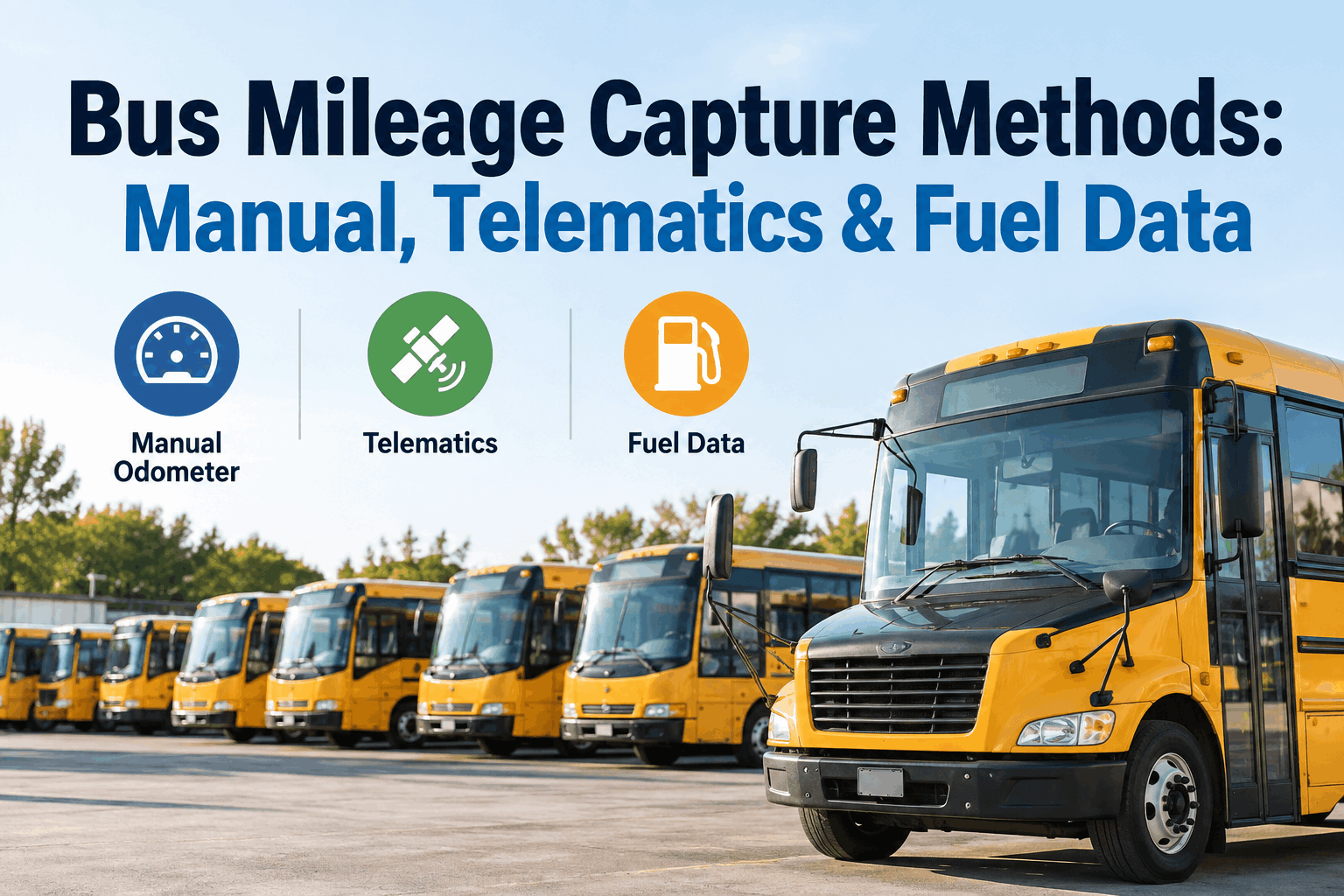
Bus Mileage Capture Methods: Manual, Telematics & Fuel Data
Three ways to capture mileage. Three different failure modes. One number ultimately needs to reach your maintenance schedule with enough confidence to trigger the right service at the right time.
Three Ways Mileage Reaches a Bus Maintenance System
There is no single mileage source every fleet must use. The better question is how each source behaves in your operation: how current it is, where errors can enter, and whether someone has to move the reading manually before preventive maintenance can use it.
Manual Odometer
A driver or technician reads the dashboard and enters the mileage.
Telematics
Connected vehicle data sends odometer information electronically.
Fuel-System Mileage
An odometer value is captured when the vehicle is fueled.
A practical setup can use telematics as the primary maintenance reading while manual or fuel mileage provides an independent checkpoint when the system sees something unusual.
BusCMMS supports telematics/GPS integration so mileage can move into the maintenance workflow rather than remaining isolated in a vehicle-data dashboard. See how connected mileage can support mileage-based PM.
Three Different Readings Can All Be Correct
The most common reason mileage values do not match is simple: they were captured at different times. Before treating a mismatch as an error, put the readings on a timeline.
Compare the change with actual bus use before accepting the newest reading.
Which reading is actually newest?
Is every record mapped to the same vehicle?
Does the mileage change fit actual use?
Promote one trusted value to maintenance.
The Mileage-to-PM Signal Path
The important part is not where the mileage comes from. It is what happens after a trustworthy reading enters the system. A useful mileage workflow should turn movement into maintenance visibility.
The odometer changes during normal route operation.
Manual or connected mileage updates the vehicle record.
The current mileage is compared with the next service point.
The approaching service becomes visible to maintenance.
This is where connected mileage creates operational value. Instead of copying an odometer from one platform into another, the fleet can use the latest mileage to keep service visibility current. Book a demo to see mileage-based preventive maintenance in BusCMMS.
Which Bus Mileage Capture Method Fits Your Fleet?
Fleet size alone does not decide the answer. Look at the technology already on the buses, how often mileage changes need to reach PM, and how much administrative work the current process creates.
Start with disciplined manual capture
Assign ownership, timestamp every reading and make the maintenance system the record of action.
Connect telematics to maintenance
Use the connected reading as the primary source and send exceptions through a validation step.
Use it as another checkpoint for usage and data-quality review rather than leaving it isolated in the fuel system.
Why Mileage Accuracy Compounds Over a Bus's Working Life
Mileage errors rarely create one obvious problem. Their effect is cumulative. When a stale reading repeatedly delays a mileage-based service trigger, small timing gaps can follow the bus across years of operation.
The point is scale: buses can accumulate substantial mileage during their service lives, making mileage quality important far beyond fuel reporting. A current odometer supports better service timing, cleaner asset history and more useful maintenance planning.
What the Maintenance Team Actually Needs
One Trusted Mileage Record Is the Goal
It needs clear ownership and consistent entry.
Connected mileage can keep maintenance information more current.
Use fueling mileage as another useful checkpoint.
Different readings often represent different moments, not bad data.
The accepted reading should ultimately update the PM decision.
The best bus mileage capture methods are the ones your maintenance operation can trust consistently. Manual, telematics and fuel data can each play a role. The strongest workflow defines which source leads, how exceptions are checked and how quickly the accepted reading reaches preventive maintenance.