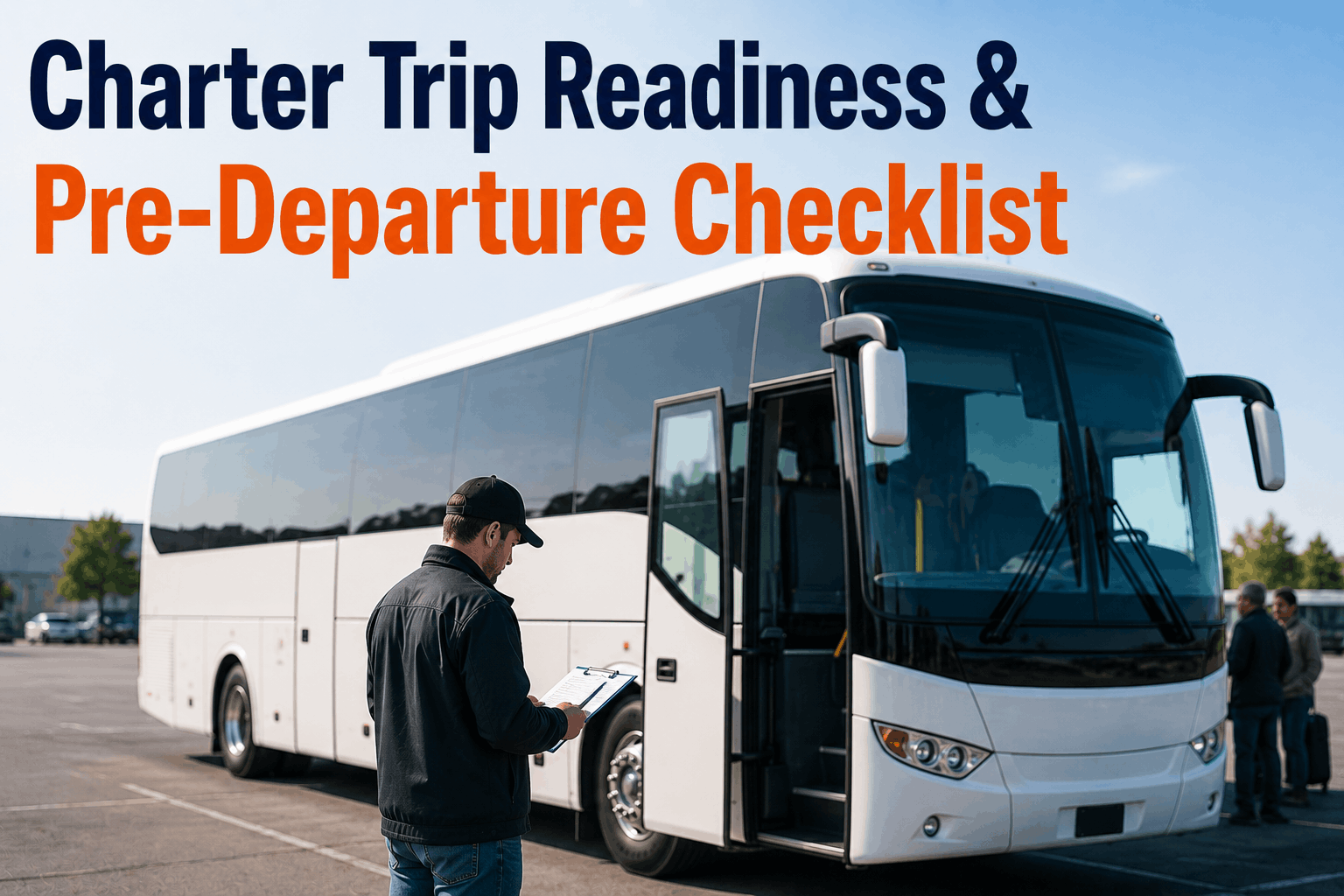
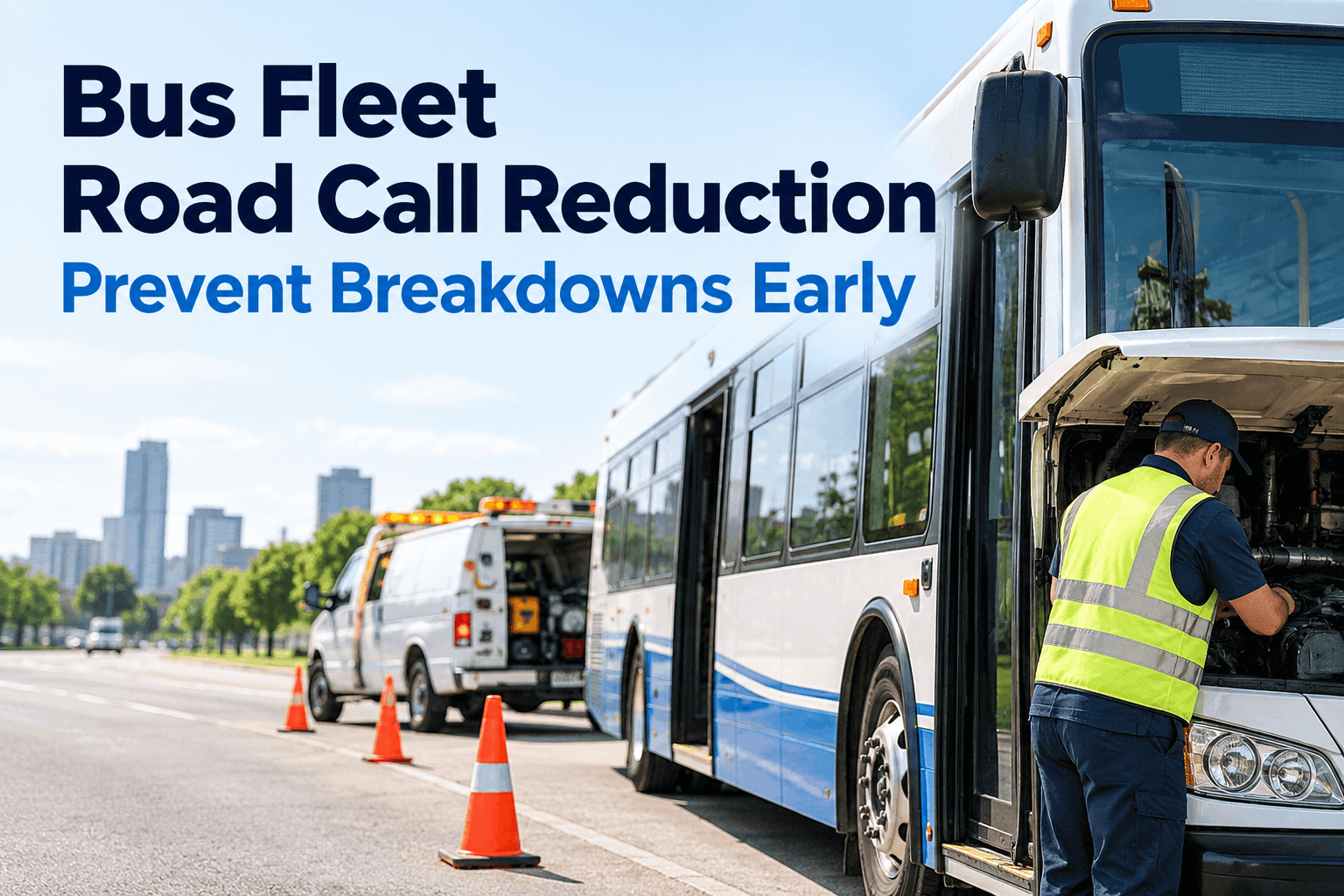
A charter bus departure is a carefully orchestrated event. Passengers arrive, luggage is loaded, the driver performs a final walk-around, and the bus pulls from the yard. Pre-departure checks are the last line of defense before passengers board. This checklist covers mechanical readiness, safety equipment, passenger comfort, and documentation—everything needed to ensure a charter trip departs properly prepared.
Trip Operations
Charter Trip Readiness Checklist
Don't leave the yard unprepared. Use this charter pre-departure checklist covering mechanical, safety, comfort, and documentation items.
Complete this checklist before every charter departure. Critical items must be addressed before departure. Recommended items should be addressed but can be deferred if minor.
Common Pre-Departure Mistakes
Rushing the Walk-Around
Drivers sometimes perform a quick visual scan instead of a complete inspection. This can miss tire damage, leaks, loose panels, lighting issues, or safety equipment problems.
Skipping Passenger Comfort Checks
Mechanical systems may be fine, but broken air conditioning, restroom issues, dirty seats, or faulty audio systems can still create complaints and refund requests.
Not Documenting Minor Issues
Small issues often become repeat problems when they are not logged. A digital checklist helps maintenance teams spot patterns before they become trip failures.
Checking After Boarding Begins
The checklist should be completed before passengers board. If a critical issue is found after boarding, the operator faces delay pressure and customer frustration.
How long does the pre-departure checklist take?
A thorough pre-departure checklist typically takes 15-30 minutes depending on bus condition and driver familiarity.
What if a critical item fails?
Critical items must be functional before departure. If a critical item fails, contact maintenance or arrange alternative transportation.
Who should complete the checklist?
The driver should complete and verify the checklist because the driver is responsible for vehicle safety and operation.
How should the checklist be documented?
Save the completed checklist with date, driver name, departure time, and noted issues for compliance and maintenance tracking.
Should the checklist be completed for short charter trips?
Yes. Short trips still require the same safety, mechanical, and documentation checks because failures can happen even on local routes.
Can recommended items delay departure?
Recommended items usually do not stop departure unless they affect passenger safety, comfort commitments, or trip requirements.
How often should checklist results be reviewed?
Fleet managers should review checklist results weekly to identify recurring defects, driver compliance gaps, and buses needing maintenance attention.
Turn every charter departure into a documented, repeatable safety process. BusCMMS helps teams complete digital pre-trip inspections, flag failed items, assign maintenance tasks, and keep records ready for compliance reviews.
Checklist Completion Instructions
Before departure: Complete all critical items. If any critical item fails, address the problem before the bus departs.
Recommended items: Address if possible. Note minor issues for maintenance attention after the trip.
Documentation: Save the checklist with date, driver name, and noted issues for compliance records.
How long does the pre-departure checklist take?
A thorough pre-departure checklist typically takes 15-30 minutes depending on bus condition and driver familiarity.
What if a critical item fails?
Critical items must be functional before departure. If a critical item fails, contact maintenance or arrange alternative transportation.
Who should complete the checklist?
The driver should complete and verify the checklist because the driver is responsible for vehicle safety and operation.
How should the checklist be documented?
Save the completed checklist with date, driver name, departure time, and noted issues for compliance and maintenance tracking.
Use this checklist on every charter departure to ensure mechanical readiness, safety, and passenger comfort.