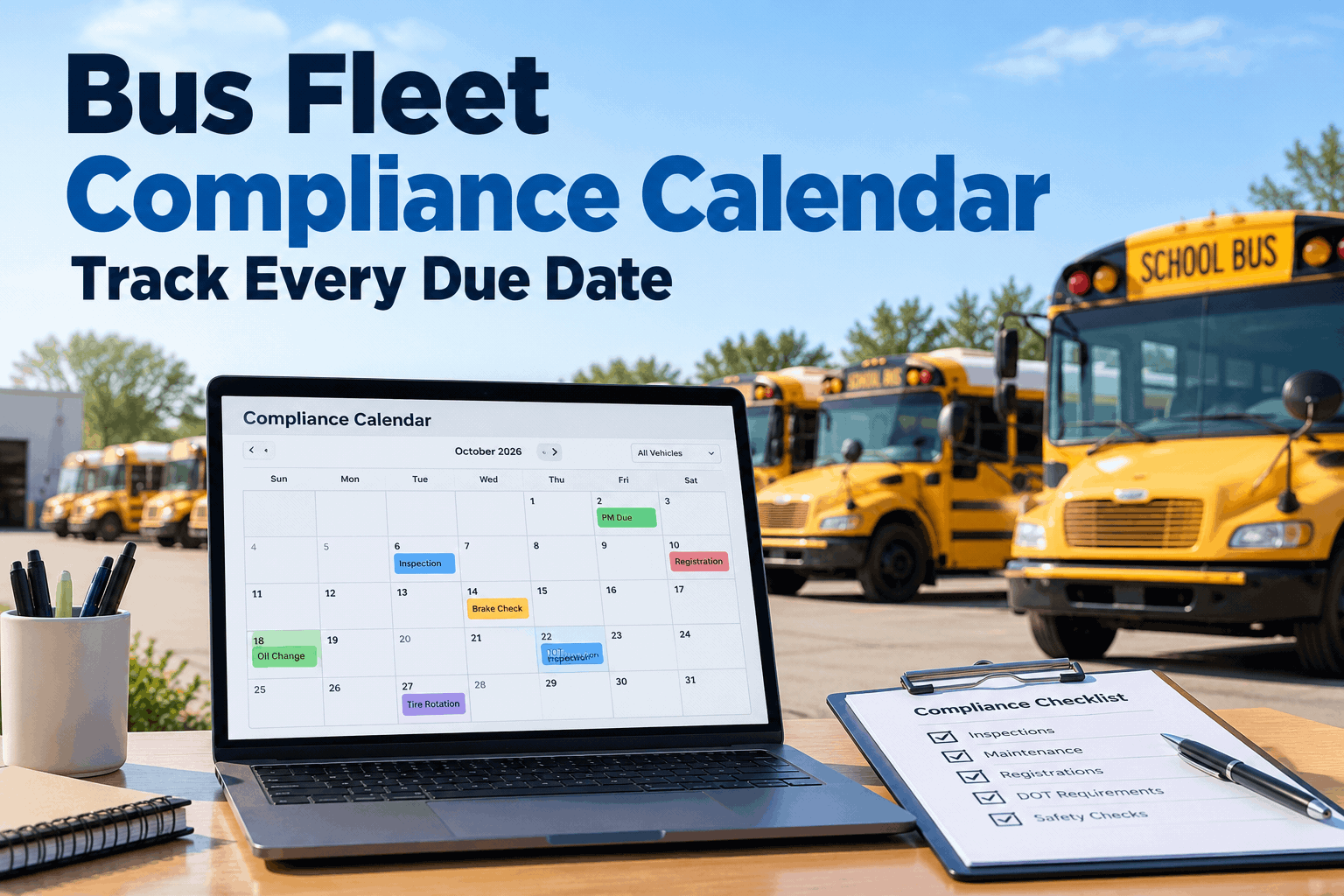
Congress authorized $5 billion for the Clean School Bus Program. So far, $2.7 billion has been awarded to 1,200+ school districts — funding 8,500 bus replacements. That leaves roughly $2.3 billion on the table. The EPA is revamping the program in 2026 with expanded fuel options and a competitive grant format. Your fleet data is what separates a winning application from a rejection letter .
Clean School Bus Program 2026: Applying for $5 Billion — and Using Your Fleet Data to Win
How fleet maintenance records, emissions data, and CMMS reports turn your application from "maybe" to "funded."
Where the $5 Billion Stands Right Now
Rounds 1–3 (2022–2024)
2026 Grant Round (Coming)
2022–2024
Rounds 1–3 Complete
~$2.7B awarded to 1,200+ districts. 95% electric, 5% propane. Nearly 8,500 buses funded across 49 states.
2024 Rebate
Cancelled
EPA confirmed Feb 2026: no awards. Applicants encouraged to re-apply under the 2026 grant framework.
2026 Grant
Coming Soon
RFI issued Feb 2026. Expanded fuels: electric, propane, CNG, LNG, biofuels, hydrogen. NOFO expected later this year.
What Your District Can Get Per Bus
$375K
Electric
Bus + charging infrastructure + workforce training
$65K
Propane / CNG
Bus + fueling equipment
TBD
Biofuel / LNG / H2
New in 2026 round — amounts pending NOFO
Priority Funding For:
Get your fleet data organized before the NOFO drops — sign up free
The 6 Data Points That Win Grants
The 2026 round is competitive — application quality determines funding. EPA observed that the most successful past applications had all partners engaged and replacement justifications thoroughly documented. Here's what your CMMS should generate:
01
Bus Age & Replacement Eligibility
Model year, mileage, remaining useful life. Older diesel buses score higher. Your CMMS proves exactly which buses qualify.
Critical
02
Maintenance Cost History
Per-bus repair costs per year. Escalating costs make the strongest replacement case.
Critical
03
Fuel Consumption Records
Gallons consumed per bus calculates your emissions baseline — what EPA measures impact against.
High
04
Downtime & Reliability
Days out of service, breakdown frequency. Proves operational need — not just environmental benefit.
High
05
Inspection History
DVIRs, DOT results, defect logs. Proves your district manages fleets responsibly.
Medium
06
Fleet Composition Report
Breakdown by fuel type, age, emissions tier. The 2026 round rewards fuel choice analysis.
Medium
The NOFO Could Drop Any Month. Is Your Data Ready?
Districts with organized CMMS data will apply in days. Districts rebuilding records from scratch will scramble for weeks. BusCMMS gives you every data point EPA looks for — right now.
What Won vs. What Lost: Lessons from 1,200 Awards
EPA's Inspector General reviewed the program and identified specific patterns. The 2026 round has even stricter oversight — here's what separated winners from losers.
Funded Applications
School board notified and engaged before applying
Complete fleet inventory with age, mileage, fuel data
Clear bus-by-bus replacement justification
All partners (dealers, utilities) committed pre-application
Demonstrated fleet management capability
VS
Problematic Applications
No proof old buses were eligible for replacement
Applicants lacked financial controls
Couldn't demonstrate ability to manage new buses
Grant funds commingled with general accounts
Single-manufacturer dependency risk
Show EPA you manage your fleet responsibly — start tracking free
Your Pre-Application Checklist: Do These Before the NOFO Drops
Register on Grants.gov + SAM.gov (takes 2–4 weeks)
Get school board approval documented
Complete fleet inventory: every VIN, year, fuel, mileage
Identify highest-cost buses — prioritize for replacement
Pull 2–3 years of per-bus maintenance cost data
Evaluate fuel options (electric, propane, CNG)
Contact utility about electrical capacity (if electric)
Identify workforce training needs for new fuel type
Draft fleet transition narrative for the application
Set up separate accounting for grant funds
I've helped districts across three rounds of Clean School Bus applications. The pattern is consistent: districts that win can document their fleet with precision. "We have old buses" isn't compelling. "Bus #47, a 2009 diesel, 187K miles, $14,200 in maintenance last year, out of service 23 days" — that's compelling.
The 2026 round is competitive, not a rebate lottery. More fuel types are eligible, oversight is tighter, and your data is the application. Get your fleet into a CMMS now, build 60–90 days of clean records, and be ready to submit the week the NOFO opens. $2.3 billion doesn't last long when every district in America is watching.
~$2.3 billion remains. The 2026 grant round is competitive with expanded fuel options and stricter oversight. Whether your district pursues electric, propane, or CNG, the strongest applications will be backed by verifiable fleet data — bus age, maintenance costs, fuel consumption, downtime, and a clear replacement narrative. A CMMS gives you all of it.
BusCMMS is purpose-built for school bus fleets. It tracks every bus by fuel type, generates per-bus cost reports, logs inspection records, and produces fleet composition data that grant applications require.
$2.3 Billion Is Still On the Table.
When EPA publishes the 2026 NOFO, districts with organized fleet records will submit winning applications in days. BusCMMS gives you the fleet inventory, cost history, and compliance documentation EPA requires.